Browse articles on EyeWorld.org from the Refractive section. EyeWorld is the award-winning member publication of ASCRS. The magazine provides news and updates from the Society as well as clinical features in the areas of cataract, refractive, cornea, glaucoma, and practice management. It publishes quarterly with editorial direction from its medical editorial board and staff.
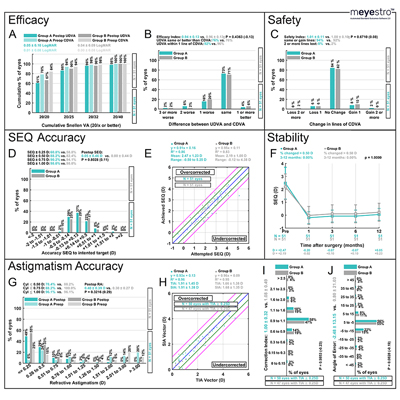
Avi Wallerstein, MD, FRCSC, and Mathieu Gauvin, PhD, discussed mEYEstro, a new software they created to automate and standardize the reporting of refractive surgery outcomes. They shared why this is an area of need and the features of mEYEstro.
What’s the latest tool in the refractive surgeon’s toolbox? As with many fields from marketing to medicine, it’s artificial intelligence (AI). Several surgeons discussed how AI is impacting refractive surgery, as well as some other areas of the anterior segment.
With expanding options in refractive surgery for patients at different ages, many physicians are seeing an uptick in refractive lens exchange (RLE). Three physicians discussed their experience with RLE, including considerations when explaining this option to patients.
“In this issue, we look back on tried methodologies that are experiencing rapid growth and innovation, diving into the areas of corneal crosslinking, refractive lens exchange, and—you may have guessed it—artificial intelligence (AI),” said Karolinne Rocha, MD, PhD, in her introduction to the Refractive section.
With new techniques in (or having recently completed) Phase 3 clinical trials to potentially move crosslinking to the next stage in the U.S., EyeWorld spoke with specialists to look back at where keratoconus monitoring and treatment was, where it is now, and what could be coming.
Three physicians discussed measuring and quantifying higher order aberrations (HOAs), their impact on IOL selection for cataract surgery, procedure and candidate selection for corneal refractive surgery, and some of their eccentricities.
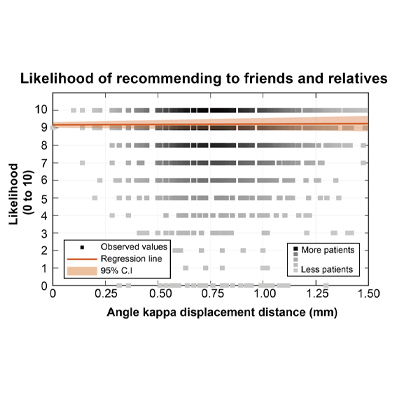
A recent study explored the influence of angle kappa on multifocal IOL outcomes. Two of the researchers shared with EyeWorld the motivation behind this study, what was discovered, and what this means for future research.
Refractive Editor Karolinne Maia Rocha, MD, PhD, previewed the articles in the section and shared a case where she knocked down a patient hurdle by using the data provided by corneal tomography and wavefront analysis.
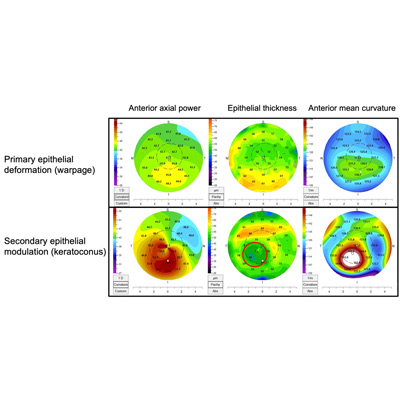
Epithelial mapping has rapidly gained attention over the last decade with the advent of high-resolution diagnostic devices, specifically high-resolution OCT and ultrasound biomicroscopy, each of which offer unique advantages. Three experts weighed in on the topic.
LASIK volumes in the U.S. have declined in the last year, but this isn’t necessarily a bad thing, according to several EyeWorld Editorial Board members who commented on their recent observations with LASIK volumes compared to refractive surgery volume as a whole.