Browse articles on EyeWorld.org from the Refractive section. EyeWorld is the award-winning member publication of ASCRS. The magazine provides news and updates from the Society as well as clinical features in the areas of cataract, refractive, cornea, glaucoma, and practice management. It publishes quarterly with editorial direction from its medical editorial board and staff.
Many surgeons have now gained experience with the EVO ICL (STAAR Surgical), which was FDA approved in April 2022. Several spoke to EyeWorld about what they’ve learned from using it in practice.
John Marshall, MD, PhD, discusses work being done on laser scleral microporation, a technique that he thinks could “rejuvenate” the eye’s natural dynamically focusing process.
The IC-8 Apthera IOL (Bausch + Lomb) is now available in the U.S., and several surgeons discussed how this technology fits in to their practice and for which patients.
Several physicians discussed their experience using Vuity (Allergan) in practice and how it has, or has not, worked for their patients. They also gave their thoughts on the future of the presbyopia drop market and other products in the pipeline.
Karolinne Maia Rocha, MD, PhD, Refractive Editor, let readers know what they can expect in the Refractive section of the issue and shared some of the research she has been doing on the IC-8 Apthera.
A patient who elected years ago to have refractive surgery is no longer seeing as well and learns they have ectasia. In many cases their vision can be preserved and/or improved. EyeWorld spoke with three ophthalmologists about how they address corneal and refractive issues for these patients.
“Best practices, or our continued efforts to improve the safety, quality, and consistency of eyecare, improve patients’ quality of vision,” said Karolinne Rocha, MD, PhD. She gave an overview of the articles in the Refractive Surgery section of this issue in her introduction.
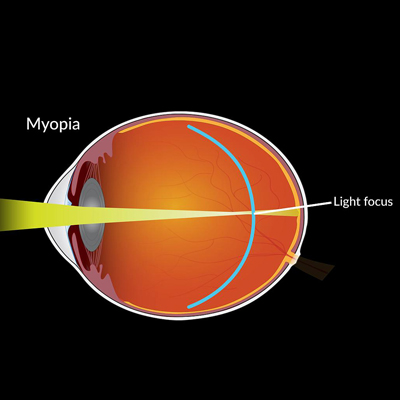
An NIH-funded trial in the U.S. sought to evaluate the effect of low-dose atropine drops on slowing myopia in a pediatric population and found an “absence of treatment benefit.” This is unlike other studies, such as that involving children in East Asia, that did show a positive effect of low-dose atropine.
When performing a refractive procedure, the surgical experience doesn’t end when the surgery is over. Surgeons often have to follow up with patients and sometimes provide touch-ups. This article explored how to handle the refractive postop experience, how to manage patient expectations, and diagnostic tools to help them.
Two physicians who have studied and used light-blocking and light-filtering IOL technology in clinical practice discussed with EyeWorld the concepts behind blocking and filtering certain violet and blue light.