Browse articles on EyeWorld.org from the Cornea section. EyeWorld is the award-winning member publication of ASCRS. The magazine provides news and updates from the Society as well as clinical features in the areas of cataract, refractive, cornea, glaucoma, and practice management. It publishes quarterly with editorial direction from its medical editorial board and staff.
Julie Schallhorn, MD, shared the topics covered in the Cornea section, specifically noting that while she is excited for cultured endothelial cell therapies, she will “remember the ingenuity that went into the development of endothelial keratoplasty and the supreme teaching and innovation that made it a procedure adopted worldwide.”
Dry eye continues to be an important topic because of the many patients impacted and different ways it can present. Two cornea specialists highlighted some of the newer treatment options and how they are handling dry eye in their practice, including how they have updated their approach with experience.
In her introduction to the Cornea section, Julie Schallhorn, MD, pointed out that more and more, physicians are turning to chat groups and listservs when they face a hurdle. “I challenge our readers to think critically about the experiences and the anecdotes they encounter on listservs, chat groups, and social media,” she wrote.
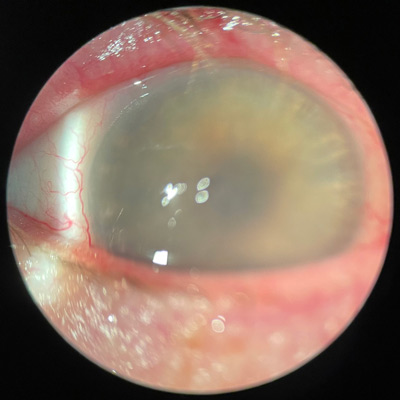
This is a failed DSAEK after 10 years. It was a late onset failure after a flu vaccine.
Source: W. Barry Lee, MD
Three physicians discussed the recent uptick in primary graft failures, the data, and the potential culprit.
Punctal occlusion remains an important resource to help dry eye patients. Several ophthalmologists shared how they use punctal occlusion in practice, available options, and a new product in this space.
When planning cataract surgery, it’s important to pay particular attention to patients who may have a compromised cornea or endothelial damage. Two cornea specialists spoke with EyeWorld about considerations for cataract surgery in these eyes.
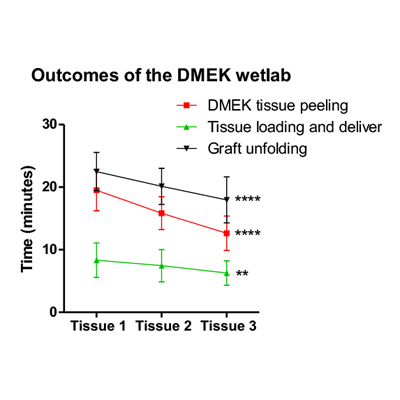
The learning curve for DMEK is steep, but most training opportunities are reserved for those in a cornea fellowship. Objective data on the efficiency of wet labs, which don’t pose a risk to patients, don’t waste valuable tissue, and are available to those at earlier skill levels, was recently published.
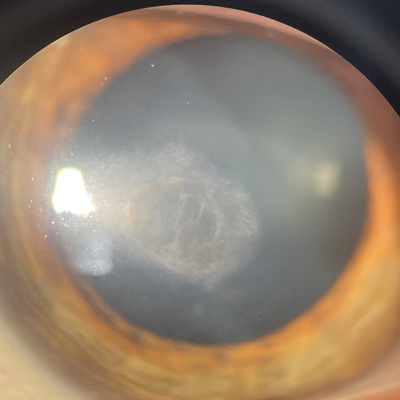
This is a photo of a 33-year-old patient who had been treated with oral antivirals only and still had multiple recurrences; the last one caused the scar pictured. Dr. Raju started the patient on topical steroids as well as continued the oral prophylaxis.
Source: Leela Raju, MD
There are several options for antiviral treatments for HSV, and in this article, two ophthalmologists spoke about the topical and oral options, when to get patients treated, how quickly the treatment works, and how this can impact patients in the future.

Severe blepharitis with prominent collarettes sheathing the base of many of the eye lashes, indicative of Demodex mites
Source: Christopher Rapuano, MD
For years, ophthalmologists had limited prescription options for patients with ocular surface disease. In the last decade, the number of available options has grown with several receiving approval in 2023. Two experts shared their thoughts and experiences with these new options.
“As we continue to see progress in ocular surface therapeutics, we need to continue to evolve our vocabulary surrounding ocular surface disease. I challenge you to start differentiating your ‘dry eye’ patients as you see them in clinic,” said Cornea Editor Julie Schallhorn, MD. Read her introduction to the Cornea section for more details.