Browse articles on EyeWorld.org from the Cataract section. EyeWorld is the award-winning member publication of ASCRS. The magazine provides news and updates from the Society as well as clinical features in the areas of cataract, refractive, cornea, glaucoma, and practice management. It publishes quarterly with editorial direction from its medical editorial board and staff.
As advanced-technology IOLs have become more mainstream and more enter the market, surgeons have refined their understanding and use of these. The EyeWorld
Even with a successful cataract surgery, there are a variety of issues that can pop up postoperatively that can be problematic for patients, warranting further follow-up from the physician. Two physicians discussed some of the most common issues that they see following cataract surgery and how to address them.
Cataract Editor Mitchell Weikert, MD, offers a glimpse into what readers will find in both the ASCRS Annual Meeting Preview section and the Cataract section of the issue.
Jim Ellis, MD, won The Winning Pitch Challenge at the 2021 ASCRS Annual Meeting in Las Vegas, Nevada, for the JelliSee accommodating IOL. Dr. Ellis spoke to EyeWorld about the progress made with the product since winning the competition.
Cataract Editor Rosa Brage-Mele, MD, previewed the articles in the section and introduced the new Cataract Editor, Mitchell Weikert, MD.
While the concept of monovision to enhance distance vision in the dominant eye and provide functional near vision in the non-dominant eye is not new, advances in IOL technologies are providing a more coordinated visual experience compared to prior monovision options.
The use of NSAIDs in the context of cataract surgery remains a hot topic among surgeons. EyeWorld spoke with two ophthalmologists to hear their current perspectives on NSAID use in cataract surgery.
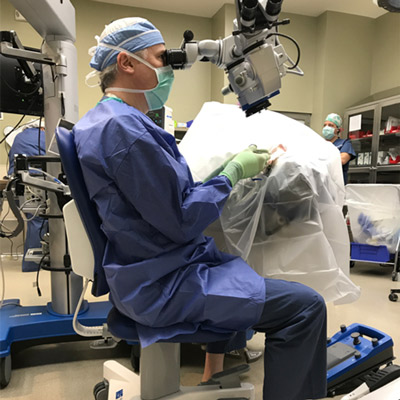
Four surgeons discussed the importance of ergonomics in ophthalmology, including their personal experiences and how they arrange their clinics and ORs for better ergonomics.
Ever since Shin Yamane, MD, PhD, introduced flanged intrascleral haptic fixation with a double-needle technique, surgeons have been refining and building upon this technique. A recent paper adds to the body of research on the flanged method of intrascleral haptic fixation, with Kronschläger et al. describing how to “[attain] optimal flange size with 5-0 and 6-0 polypropylene sutures for scleral fixation.”
The Light Adjustable Lens is still a relatively new technology, offering the ability to adjust the refractive settings of the lens after implantation with “lock-in” treatments. Several ophthalmologists discussed their decision to bring it into practice, implementation considerations, and overall impressions.