Browse articles from EyeWorld.org related to eye drops. EyeWorld is the award-winning member publication of ASCRS. The magazine provides news and updates from the Society as well as clinical features in the areas of cataract, refractive, cornea, glaucoma, and practice management. It publishes quarterly with editorial direction from its medical editorial board and staff.
While glaucoma treatment is shifting toward a more interventional approach, two physicians said the use of drop therapy is alive and well. It is trending toward being an adjunctive therapy as more ophthalmologists are beginning to figure out what pharmaceutical and procedural combinations best suit their patients.
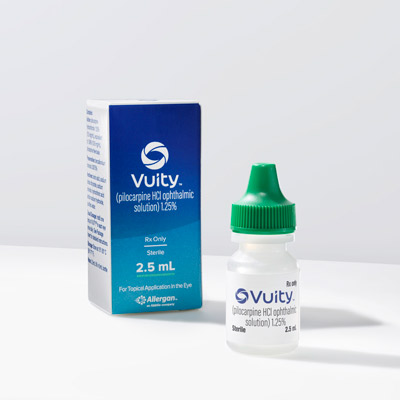
Several physicians discussed their experience using Vuity (Allergan) in practice and how it has, or has not, worked for their patients. They also gave their thoughts on the future of the presbyopia drop market and other products in the pipeline.
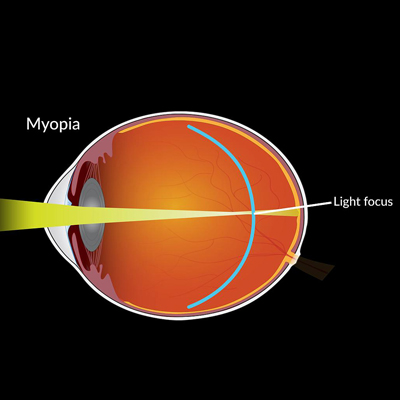
An NIH-funded trial in the U.S. sought to evaluate the effect of low-dose atropine drops on slowing myopia in a pediatric population and found an “absence of treatment benefit.” This is unlike other studies, such as that involving children in East Asia, that did show a positive effect of low-dose atropine.
In August, the Prescribing Information for VUITY (pilocarpine) was updated following a voluntary submission by Allergan to the FDA. This ASCRS Task Force was convened to develop an understanding of the data and a preliminary consensus on appropriate counseling of patients regarding risks associated with the use of Vuity.
With recent case reports showing rare but serious adverse effects with the use of Vuity (pilocarpine, Allergan), EyeWorld spoke with Dagny Zhu, MD, to gain additional insights and perspectives. She commented on the adverse effects, her recommendations for counseling and prescribing, and an off-label use she has found for the product.
Innovation is changing the philosophy of glaucoma treatment from a drop-dependent approach to an interventional, procedure-based approach, according to Savak Teymoorian, MD. Where he’s found the philosophy shift toward acceptance of interventional glaucoma among patients has been with Durysta (bimatoprost intracameral implant, Allergan).
Ensuring that the ocular surface is optimized is a key step before cataract surgery, but it is also important in the context of glaucoma. Two physicians discussed the importance of addressing the ocular surface and what to do prior to glaucoma surgery and combined cataract/glaucoma procedures.
Drops that temporarily relieve the symptoms of presbyopia are an exciting new technology, with the first product approved in this space late last year. Two physicians shared their early experience with Vuity (pilocarpine, Allergan).
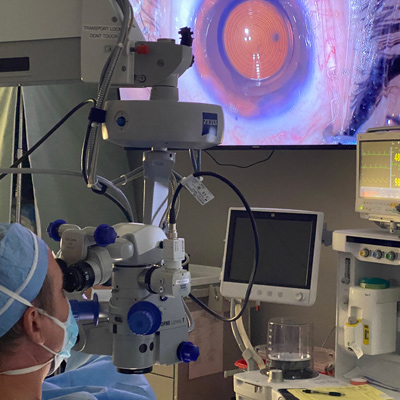
Dr. Waring implants a hybrid diffractive extended depth of focus and multifocal toric IOL during a refractive lens exchange.
Source: George Waring IV, MD, FACS
The large number of patients worldwide with presbyopia creates a unique opportunity for eyecare providers to improve patients’ quality of life, according to George Waring IV, MD, FACS. He and Shamik Bafna, MD, discussed some of the surgical and pharmacological options.
Newer steroid and NSAID options (and some off-label administration of antibiotics) that are delivered either via injection or intracanalicular insert can help avoid complicating a patient’s drop regimen that is already subject to non-compliance, instillation issues, potential for ocular surface agitation, and more.