Glaucoma Bonus Issue
February 2025
by Liz Hillman
Editorial Co-Director
A 2024 survey sent to ASCRS membership found that nearly three-fourths of respondents (73.6%) turn to topical medication as a first-line treatment for primary open angle glaucoma.1 This data comes 5 years after the LiGHT trial found SLT to be more efficacious clinically and cost effective compared to drops as a first-line treatment.2
While the mindset is shifting toward a more interventional one—with the same ASCRS survey finding that respondents who more recently completed ophthalmology residency, who performed more MIGS, or who had a significant glaucoma patient base (25% or greater) were more likely to perform SLT as first line—Jason Bacharach, MD, and Jacob Brubaker, MD, say the use of drop therapy is alive and well. It is actually trending toward finding a new home as an adjunctive therapy as more ophthalmologists are beginning to figure out what pharmaceutical and procedural combinations best suit their patients.
“Drops won’t go away,” Dr. Bacharach said, answering where he thinks they fit in the era of interventional glaucoma. “Drops will morph, as they always should have been, as an adjunctive therapy to procedural-based management. If you use drops, it doesn’t mean you don’t have an interventional glaucoma mindset, but what drops you choose and how you pair them with procedures matters.”
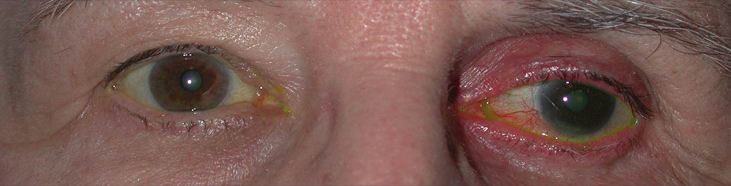
Source: Jason Bacharach, MD
Drops or SLT
Dr. Brubaker said up to 4 years ago, he was still giving newly diagnosed glaucoma patients the option of SLT or drops as a first-line therapy. However, as he’s now providing more information to patients about the efficacy of SLT compared to drops and the compliance and tolerability issues they may face with drops, he’s found more patients are choosing SLT. “This is the way we should be doing it, telling this is what’s better,” he said.
That said, Dr. Brubaker noted, “SLT doesn’t work on everybody. … Generally, I think that’s the juncture in which drops need to be used,” he said, adding, however, that recent research seems to support efficacy of repeat SLT for initial non-responders.
If first- or second-line SLT doesn’t work, Dr. Brubaker moves on to drops.
Dr. Bacharach said in his initial consultation with a POAG patient, he thinks about what the goals are for each patient’s therapy and customizing his treatment to reach that goal.
“I will have a discussion with the patient, talk about the different treatment options that are available, whether it’s SLT or pharmacotherapy, and I’ll think about the different modalities of the way to treat the disease,” he said.
Drop options and algorithms
When it’s clear a glaucoma patient needs drops, Dr. Bacharach said he follows a philosophy called “MIDS”—minimal instillation drop strategy. This term he coined, which is a play on MIGS, focuses on efficacy and tolerability that doesn’t involve additional (or more than absolutely necessary) drops. “I love streamlining drop therapy. It improves compliance and adherence, then there are the added excellent benefits of mechanism of action enhancements that are now available to us,” he said.
Dr. Bacharach said with drops, he begins with a prostaglandin. He’s especially interested in newer drops that combine with a prostaglandin and focus on trabecular meshwork outflow restoration. He mentioned VYZULTA (latanoprostene bunod 0.024%, Bausch + Lomb) and rho-kinase inhibitors, such as Rocklatan (netarsudil and latanoprost ophthalmic solution, 0.02%/0.005%, Alcon).
Dr. Brubaker also starts with a prostaglandin. “If they are doing well but maybe need something extra, it’s either going to a combination product with Rocklatan, or if you’re not going to do Rocklatan, keeping the prostaglandin and adding a combo drop, like Combigan [brimonidine tartrate/timolol maleate ophthalmic solution, 0.2%/0.5%, AbbVie] or Cosopt [dorzolamide/timolol, Merck & Co.],” Dr. Brubaker said.
Dr. Bacharach mentioned that Harrow (formerly Imprimis Pharmaceuticals), a 503A pharmacy, has a lot of preservative-free mix and match offerings that can be an option that’s “economically feasible for patients where insurance is an issue.”
New and exciting drops
In recent years, Dr. Brubaker said there have been “little splashes in the pan” in the world of new glaucoma pharmaceuticals, with preservative-free options being the most exciting to him.
“There are some products that are on the horizon … that are looking at rho-kinase inhibitors that are a little less potent as far as side effects are concerned,” he said. “My hope is that we can find some rho-kinase inhibitors that are just as effective but are maybe less inflammatory and cause less red eyes. Those are fairly early as far as Phase 2 and Phase 1 trials. It will be some time before those arrive. There is also an adenosine receptor agonist in clinical trials.”
Dr. Bacharach said for patients who have ocular surface disease and experience drop toxicity, he’s looking at IYUZEH (latanoprost ophthalmic solution, 0.005%, Thea Pharma), which received FDA approval in 2022. He also said that XELPROS (latanoprost ophthalmic emulsion, 0.005%, Sun Ophthalmics) is an alternatively preserved drop (potassium sorbate as the preservative) coming back to market in 2025.
Many new drops and those in the pipeline target different mechanisms of action or preservative-free alternatives. Dr. Bacharach mentioned omidenepag isopropyl 0.002% (OMLONTI, Santen Pharmaceutical), which is an EP2 agonist approved by the FDA in 2022, NCX 470 (Nicox), a nitric oxide-donating bimatoprost in Phase 3 development, and QLS-111 (Qlaris), a ATP-sensitive potassium channel modulator platform, in Phase 2 trials.
Final points
Taking away all drops and treating only with interventions would be hard, according to Dr. Brubaker, though he does think, with the interventional glaucoma mindset, ophthalmologists should be able to reduce patients’ drop burden.
Dr. Bacharach discussed the benefit of following a customized algorithm for glaucoma patients, something that is becoming more refined as some drops have data demonstrating that they work well with certain procedures. One example was a retrospective cohort study published in 2020 that found patients who began using netarsudil 3.0±2.9 years after SLT had additional IOP lowering.3
“The point is, it shouldn’t be a cookbook. You should think about how to mix and match today, what pharmacotherapy makes sense with which procedures,” Dr. Bacharach said. “With IRIS Registry data and big data available to us, we can go back and figure out what is the best outcome for a patient based on data.”
Dr. Bacharach also said ophthalmologists could consider using samples from industry partners to do a monotherapeutic trial with their patients, keeping them on the old drop in one eye and a sample drop in the other, to see if you they get additional efficacy over baseline.
“Look at the literature, use your own clinical acumen,” Dr. Bacharach said, noting real- world studies with different medications are available, “and get feedback from the patients on tolerability.”

article sidebar
Leon Herndon Jr., MD, EyeWorld Glaucoma Editorial Board member, shared his thoughts on interventional glaucoma:
“We know that patient compliance with glaucoma medications is suboptimal. It is a real advance that we are now able to offer safer alternatives to patients that take compliance concerns out of their hands.”
About the physicians
Jason Bacharach, MD
North Bay Eye Associates Inc.
Sonoma County, California
Jacob Brubaker, MD
Sacramento Eye Consultants
Sacramento, California
References
- Rhee DJ, et al. Primary practice patterns for the initial management of open angle glaucoma. J Glaucoma. 2024;33:671–678.
- Gazzard G, et al. Selective laser trabeculoplasty versus eye drops for first-line treatment of ocular hypertension and glaucoma (LiGHT): a multicentre randomised controlled trial. Lancet. 2019;393:1505–1516.
- Lin MM, et al. Netarsudil’s effect in eyes with a history of selective laser trabeculoplasty. Ophthalmol Glaucoma. 2020;3:306–308.
Relevant disclosures
Bacharach: Alcon, AbbVie, Bausch + Lomb, Glaukos, Harrow, Nicox, Ocular Therapeutix, PolyActiva, Santen, Sun Ophthalmics, TearClear, Thea
Brubaker: AbbVie, Alcon, Glaukos
Contact
Bacharach: jb@northbayeye.com
Brubaker: jbrubaker@saceye.com