Browse articles from EyeWorld.org on the topic of the cornea. EyeWorld is the award-winning member publication of ASCRS. The magazine provides news and updates from the Society as well as clinical features in the areas of cataract, refractive, cornea, glaucoma, and practice management. It publishes quarterly with editorial direction from its medical editorial board and staff.
Today the goal of cataract surgery is to provide patients with the best possible quality of vision. While it is common to see patients post-cataract surgery with a visual acuity (VA) of 20/20, many patients remain dissatisfied with their quality of vision. This is due to several factors, including problems with the ocular surface, pseudophakic dysphotopsia, and optical aberrations in general.
Dry eye is the single most common reason that patients come into a practitioner’s office, with a prevalence of around 40% of those seeking ophthalmic care, according to Hank Perry, MD, Ophthalmic Consultants of Long Island, New York. What may not be clear in an office visit is that the patient’s sleep position may be a prime factor in his or her condition.
Experts discuss the role of topical steroids in HSV keratitis, which medications are recommended in these cases, what to look for to diagnose these patients, and how to taper or continue to treat the problem.
Amniotic membrane is designed for use with specific corneal and conjunctival diseases. It assists in wound healing and prevents scar tissue formation as it has powerful antifibrotic and anti-scarring properties. But some experts say it is not a substitute for a bandage contact lens.
Meibomian gland dysfunction (MGD) is a common finding among patients who seek eyecare. In many patients, the disease is completely asymptomatic. In others, the severity can range from being a mild annoyance to significantly impacting vision and quality of life.
Adenoviral conjunctivitis can be tricky for practitioners because of the challenges associated with diagnosing and treating. Patients often come in with non-specific symptoms, so differentiating between bacterial and viral infections, as well as finding a treatment to manage the issue, is vital.
Using artificial tears is a fact of life for many patients with dry eye disease, according to Vincent P. de Luise, MD. Debra Schaumberg, ScD, OD, from the Harvard School of Public Health, has reported that between 25 and 40 million Americans have some level of dry eye, Dr. de Luise said, and virtually all of these patients are using artificial tears.

Meibomitis associated with evaporative dry eye
Source: John D. Sheppard, MD
A retrospective analysis suggests oral azithromycin may be beneficial.
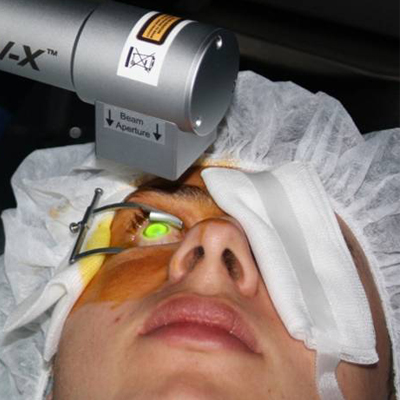
The success of any surgical intervention depends as much on postoperative care and management as it does on the surgical procedure itself. This undoubtedly also holds true for corneal crosslinking. At our hospital, we have been performing corneal crosslinking with the IROC illumination system since the development of the first prototype and continue to use the latest UV-X 2000 crosslinking device.
When will my vision stabilize after crosslinking? Could my keratoconus symptoms return? What complications might occur? Patients undergoing crosslinking have many questions, and CXL pros have the answers.