Browse articles from EyeWorld 2013 issues. EyeWorld is the award-winning member publication of ASCRS. The magazine provides news and updates from the Society as well as clinical features in the areas of cataract, refractive, cornea, glaucoma, and practice management. It publishes quarterly with editorial direction from its medical editorial board and staff.
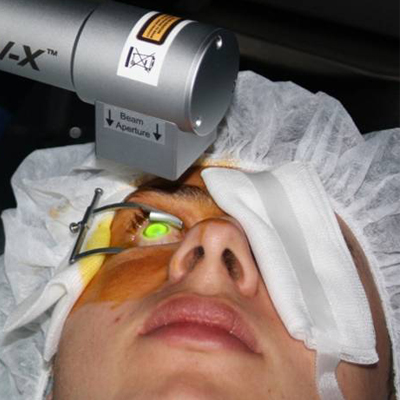
The success of any surgical intervention depends as much on postoperative care and management as it does on the surgical procedure itself. This undoubtedly also holds true for corneal crosslinking. At our hospital, we have been performing corneal crosslinking with the IROC illumination system since the development of the first prototype and continue to use the latest UV-X 2000 crosslinking device.
When will my vision stabilize after crosslinking? Could my keratoconus symptoms return? What complications might occur? Patients undergoing crosslinking have many questions, and CXL pros have the answers.
Supplements aimed at treating dry eye have garnered increasing attention from ophthalmologists, but spotty data has limited their use.
Glaucoma and retinal specialists share how they manage dry eye with other ocular comorbidities.
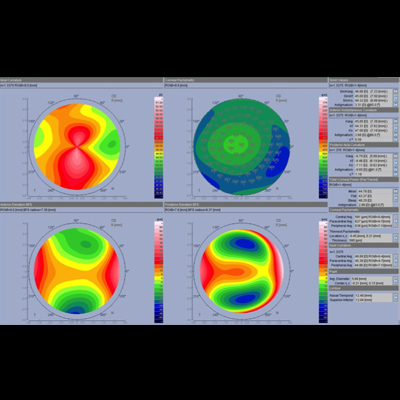
Dual Scheimpflug image showing more than 3 D of WTR astigmatism on the anterior cornea and 0.65 on the posterior cornea (which has an ATR refractive effect)
Source: Douglas Koch, M.D., and Wang Li, M.D.
Total corneal astigmatism correction during cataract surgery could be either by eliminating it or leaving slight with-the-rule astigmatism.
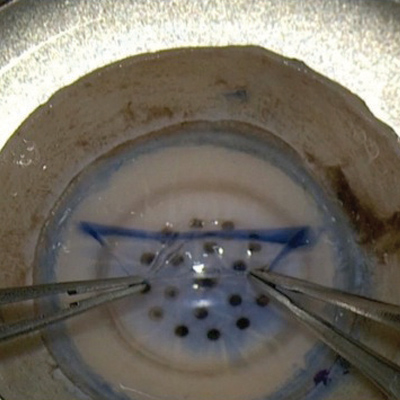
When it comes to corneal endothelial disorders, endothelial keratoplasty has become popular with ophthalmologists worldwide, and many choose between DSEK and DMEK. DSEK seems to be the current preferred method, with developments in DMEK causing the technique to gain ground.
Patients with cataract and concomitant iris defects are not seen very often in clinical practice, but when they do come in, they often present significant therapeutic challenges.