Browse articles on EyeWorld.org from the Cataract section. EyeWorld is the award-winning member publication of ASCRS. The magazine provides news and updates from the Society as well as clinical features in the areas of cataract, refractive, cornea, glaucoma, and practice management. It publishes quarterly with editorial direction from its medical editorial board and staff.
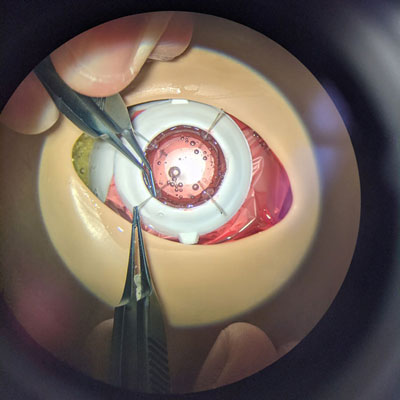
In this YES Connect column, two surgeons described their techniques for how and when to successfully fixate a secondary lens when the capsule is either not present or not secure enough for traditional IOL implantation.

Belt and suspenders approach: Callisto and iris fingerprinting photos on the microscope for accurate alignment of toric lenses
Source: Robert Osher, MD
Manual marking, digital marking, manual and digital marking—toric IOL alignment methods continue to be an important topic. Both methods still have a place, and both have their pros and cons. Four physicians discussed their preferences.
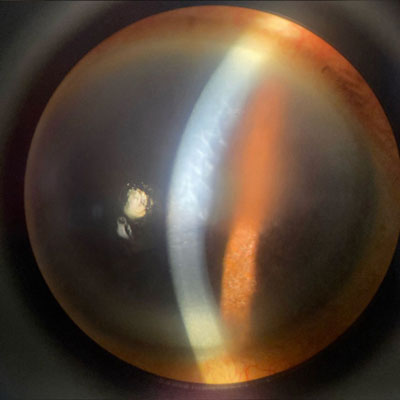
When considering uveitis and cataract surgery, you could be dealing with a patient who you know has uveitis, or you could have a patient who develops a new uveitis after surgery. Three physicians spoke about preop, surgery, and postop considerations.
Ophthalmology is constantly evolving to meet new and unmet needs. EyeWorld asked members of its Cataract Editorial Board and the ASCRS Cataract Clinical Committee to weigh in on: If I could ask industry to produce one new product, this is what it would be and why.
Cataract Editor Mitchell Weikert, MD, shared some of his favorite moments from the 2025 ASCRS Annual Meeting and previewed the articles in the section.
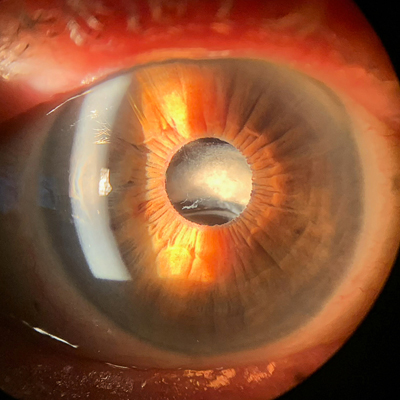
Regardless of surgical experience level, iris prolapse is something that happens to all surgeons occasionally. As such, knowledge of the risk factors that could predispose a patient to iris prolapse, how to handle the event, and postop considerations are an important refresh from time to time.
New tools in surgical training are constantly improving teaching methods. In this issue’s YES Connect column, several physicians spoke about digital tools for surgical training and how these fit in with more traditional training approaches.
In his introduction to the Cataract section, Mitchell Weikert, MD, highlighted some of the valuable offerings at the ASCRS Annual Meeting and previewed the hot topics in cataract surgery covered in the issue.
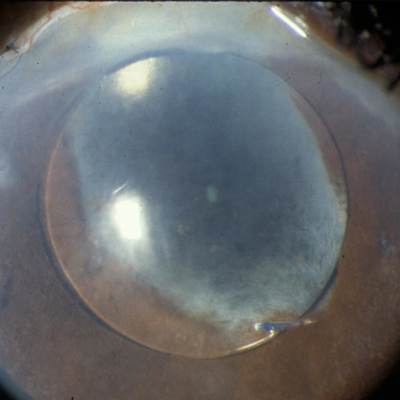
Corneal edema after cataract surgery is expected to an extent, but as postop recovery stretches to 1 month or beyond, surgeons begin to treat the situation differently. Three surgeons discussed preop contributors, prevention, diagnosis, and treatment of prolonged corneal edema.
While true allergies to materials used during cataract surgery are uncommon, this is a topic that physicians may need to discuss with patients. Two physicians highlighted some of the key concerns they hear from patients and how they approach these to identify real allergies versus intolerances.