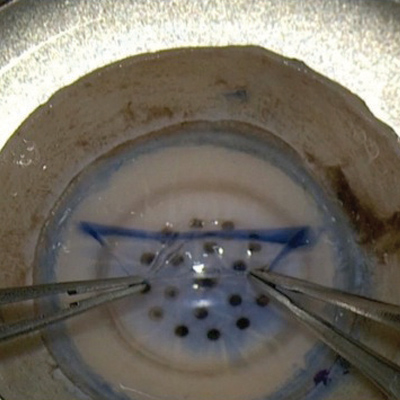
Cornea surgeons compare thin DSAEK and DMEK as options for endothelial keratoplasty procedures

When it comes to corneal endothelial disorders, endothelial keratoplasty has become popular with ophthalmologists worldwide, and many choose between DSEK and DMEK. DSEK seems to be the current preferred method, with developments in DMEK causing the technique to gain ground.

Comments Off on Cornea surgeons compare thin DSAEK and DMEK as options for endothelial keratoplasty procedures
Read more about the article The non-surgical option for vitreoretinal diseases
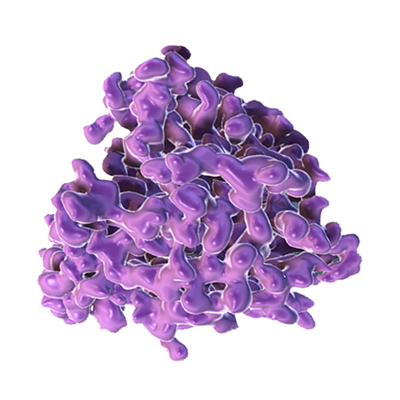
A graphic of the ocriplasmin molecule Source: ThromboGenics

The non-surgical option for vitreoretinal diseases

Ocriplasmin (ThromboGenics) is a first-in-class small molecule delivered through an intravitreal injection that targets fibronectin, laminin, and type IV collagen fibers that adhere the vitreous to the retina. The goal is to create a clean separation of the posterior vitreous cortex and the inner limiting membrane of the retina, thus avoiding a vitrectomy.

Comments Off on The non-surgical option for vitreoretinal diseases
Read more about the article Don’t exclude thin cornea patients from LASIK for fear of ectasia
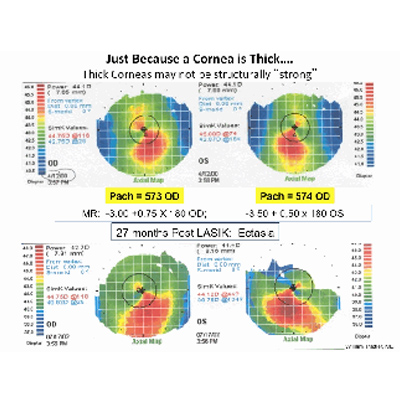
Corneal thickness is not directly related to corneal strength. This patient had a thick cornea but was obviously weak biomechanically, which can be seen on topography as FFKC pre-op. This patient developed ectasia 27 months after LASIK Source: William B. Trattler, M.D.

Don’t exclude thin cornea patients from LASIK for fear of ectasia

The belief that LASIK shouldn't be performed on thin corneas because of the risk of sight-threatening ectasia isn't scientifically valid, according to one researcher. Abnormal corneal topography is the most important preop risk factor for the complication, said William Trattler, MD.

Comments Off on Don’t exclude thin cornea patients from LASIK for fear of ectasia