Cataract
Winter 2024
by Ellen Stodola
Editorial Co-Director
While true allergies to materials used during cataract surgery are generally uncommon, this is a topic that physicians may need to discuss with patients. Two physicians highlighted some of the key concerns they hear from patients and how they approach these concerns to identify real allergies versus intolerance to certain products.
Patients often report an allergy to a product or drug used during cataract surgery, said Derek DelMonte, MD. “When I see this, the first thing I ask the patient is what the adverse reaction was. Unfortunately, there is a good deal of misunderstanding about the difference between a true allergy and an intolerance or simply a normal side effect of a medication, and figuring out which category the stated allergy is will help determine how to address the concern.”
A true allergy to an oral medication is considered a robust, whole-body reaction, a rash, trouble breathing, anaphylactic response, Dr. DelMonte said. For a topical medication, it would include severe hives, swelling, or redness that can spread with continued use. True allergies are usually only after an initial exposure, which has allowed the immune system time to build up a reaction, making it very unlikely to get a response after just one dose.
Intolerances are much more common and include uncomfortable symptoms that are bothersome but do not illicit the true allergic response. This could include swelling without a rash, nausea/upset stomach, and headaches. These can occur with just one exposure and can sometimes be managed with adjusting the dose or method of administration.
There are some side effects that are normal that might be uncomfortable to the patient. Examples include dilating agents that decrease reading vision for a time, epinephrine that causes the heart to beat faster, oral steroids that lead to excessive thirst or weight gain, and opioids that cause constipation. While these effects can be bothersome, it means the product is working as intended and is not necessarily something to avoid, he said.
“Educating the patient on these differences can sometimes be tricky but can usually be done in a manner that emphasizes the concerns the patient has with the reason it does not qualify as a true allergy,” Dr. DelMonte said. For example, patients may cite an allergy to steroids, but steroid compounds are a natural and necessary product produced by the human body, so the described reaction is either due to a preservative or other additive or simply a side effect. Steroids are actually used to treat true allergies due to their immune control properties, he added.
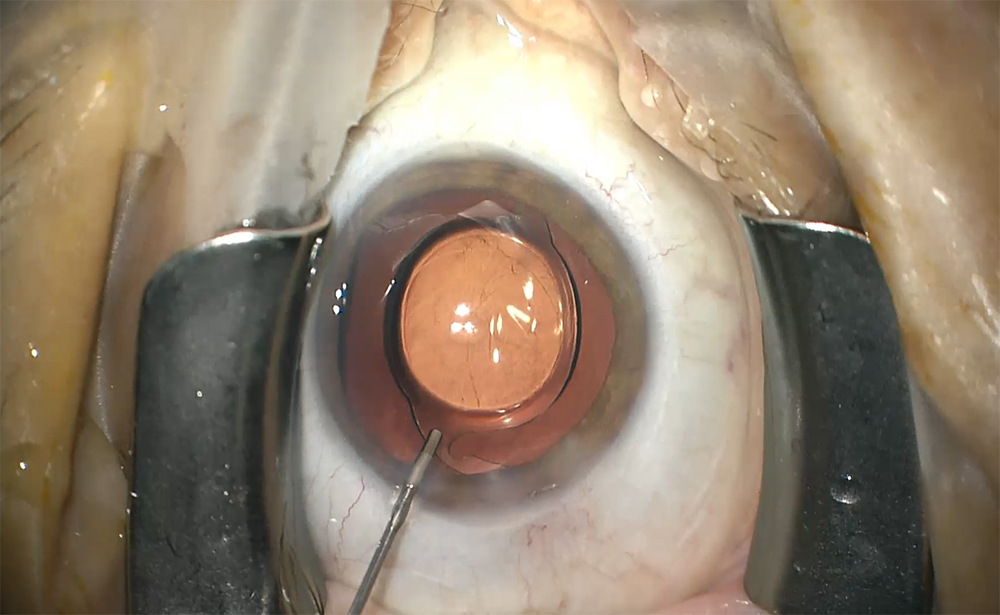
Source: Derek DelMonte, MD
While allergies to medications and materials used in ophthalmic surgery are relatively uncommon, Alice Epitropoulos, MD, stressed the importance of certain considerations for ophthalmic surgeons. She pointed out that some cataract surgery patients may be sensitive or allergic to betadine, as well as to lidocaine or other anesthetics in the “caine” family.
“We often hear patients claim they are allergic to betadine or iodine, but it’s not always a true allergy,” Dr. Epitropoulos said. She explained that while patients may be sensitive to it, this doesn’t necessarily contraindicate its use. In many cases, the procedure can continue as long as the betadine is rinsed off after the preparation.
Dr. Epitropoulos explained that not using betadine could potentially increase the risk of infection, since it is the only treatment proven to reduce the risk of infection or endophthalmitis before cataract surgery, and there are no good alternatives. “Usually, when the nursing staff informs me the patient is allergic to betadine, I advise them to still proceed with the prep, but ensure the betadine is rinsed off afterward. In the rare event of an allergic reaction, the patient is in a controlled setting with an IV, and we can manage it. I’ve never encountered a true, serious allergic reaction to betadine, but I’d rather handle an allergic reaction than deal with endophthalmitis.”
Dr. DelMonte agreed that allergies to betadine are commonly reported by patients, but large amounts of data strongly support the use of this product. “I think we should use betadine on just about everyone, whether they report a shellfish/contrast allergy or not,” Dr. DelMonte said. “Oftentimes, the rash or swelling can be managed by thoroughly washing the betadine off after the procedure. It is so valuable in preventing endophthalmitis that I think the risk of a small local reaction outweighs the risk of endophthalmitis.”
Alternatives to steroids, such as NSAIDs, and alternatives to betadine, such as chlorhexidine, can be used in place of these medications, but Dr. DelMonte said he tries to use the best available product and educates the patients on why he chooses this path.
“When discussing allergies to medications and products used inside the eye, I explain to the patient that the intraocular space is an ‘immune privileged’ space, meaning medications or products used intraocularly during surgery do not necessarily illicit the same response that a medication used orally or on other parts of the body might,” he said. “This is also very important when explaining to patients why I might recommend using an antibiotic intracamerally during surgery, despite a known reaction to this medication systemically.” Dr. DelMonte routinely uses intracameral moxifloxacin in every patient and thinks this is the best way to prevent vision-compromising complications, and the risk of a reaction is exceedingly low. Occasionally, he’ll have a patient bring up an antibiotic allergy in the OR, and the nurse may ask if he still wants to use moxifloxacin in the eye. “Often I say yes, and I describe to the patient why, and most of the time, they have no problem with it.”
Occasionally, he has a patient with a lidocaine allergy, Dr. DelMonte said. Most of them say it was used during a dental procedure, and they had cardiac issues after injected lidocaine. Usually, it’s because it was right in the bloodstream, which isn’t the same for ophthalmic surgery. “I routinely use lidocaine intracamerally inside the eye at the beginning of a procedure to help with anesthesia,” he said. “I tell the patient that it’s an option to do without it, [and there] may be a little more discomfort.” He noted that there are not a lot of pain receptors in the eye, so it’s not a huge problem not to use it, but it does make the patient more comfortable. “I’ve never had someone say they don’t want it,” he said.
When it comes to “caine” allergies, Dr. Epitropoulos said this is not very prevalent. Lidocaine is a local anesthetic, but it’s widely used in various medical procedures. It’s estimated that less than 1% have a true allergy to lidocaine, she said. Most reactions attributed to local anesthetics are not true allergies but rather side effects such as anxiety, vasovagal reactions, or toxicity due to overdose. True allergic responses are typically IgE-mediated and involve symptoms like hives, swelling, or anaphylaxis. Allergic reactions to amide local anesthetics (like lidocaine) are less common than those to ester anesthetics (such as procaine).
“If a patient is suspected of having an allergy, testing by an allergist is recommended to confirm the diagnosis,” Dr. Epitropoulos said.
Patients may claim to have an acrylic allergy, but Dr. Epitropoulos pointed out that IOLs do not cause allergic reactions. She explained that while inflammation can occur during cataract surgery, this is not typically due to an allergy. It is usually an expected response to surgery or other factors related to the procedure.
Dr. Epitropoulos agreed that a patient may indicate that they have allergies to drugs, but this can just be side effects from that drug. The way to treat an allergic reaction is usually with steroids, she said, noting that the prevalence of allergies to steroids are rare but can occur. “They may develop a contact dermatitis or other type of sensitivity reaction in rare cases,” she said. Something that can be encountered is a sensitivity to preservatives used in ophthalmic solutions, such as benzalkonium chloride (BAK). “I think there’s a trend of seeing more preservative-free formulations to minimize the risk of allergic reactions or patients who might be sensitive,” she said. Dyes that are used for diagnostic procedures, like fluorescein, can also cause allergic reactions. If the patient needs to have fluorescein, you can often pretreat them to prevent an allergic reaction.
When there are complications during cataract surgery, physicians often rely on IV medications like acetazolamide. Dr. DelMonte will pay particular attention if someone notes that they have a sulfa allergy because there could be a mild cross reactivity if acetazolamide is used, so having an alternative option is key.
One other thing to be aware of, Dr. Epitropoulos said, is a latex allergy, which may impact the use of certain equipment and gloves. “I think more and more, ORs are going to latex-free environments, but again, if someone reports a latex allergy, we’ll usually require that they be tested to confirm if there is a true allergy.”
Taking a detailed medical history is critical. Sometimes we might need to adjust medications or techniques based on the patient’s allergy profile and monitor closely for any signs of allergic reactions postoperatively to ensure prompt management, Dr. Epitropoulos said.
Dr. DelMonte said it’s important to have a plan to deal with patients’ concerns about reported allergies. After describing the reason certain products are used in surgery, Dr. DelMonte will discuss that sometimes it is best to use this medication and deal with the intolerance rather than deal with the serious complication that may lead to vision loss. “This risk/benefit discussion can be helpful for patients to hear as it shows that while I understand their concerns, the alternative could be much more dangerous.”
This comes down to patient education, Dr. DelMonte said. A lot of patients come in knowing they have an allergy or reaction, but describing why it’s still safe or appropriate to proceed with the normal plan is important. “Very rarely do I change anything based on a reported allergy.”
Dr. DelMonte added that he works a lot with residents, and this is an important topic to discuss with them. He tells them that it’s good to explain the reason we do what we do and how to manage it with patients to make sure they’re fine with proceeding.
About the physicians
Derek DelMonte, MD
Carolina Eye Associates
Greensboro, North Carolina
Alice Epitropoulos, MD
Ophthalmic Surgeons and Consultants of Ohio
Columbus, Ohio
Relevant disclosures
DelMonte: None
Epitropoulos: None
Contact
DelMonte: derek.delmonte@gmail.com
Epitropoulos: eyesmd33@gmail.com