Refractive
December 2022
by Ellen Stodola
Editorial Co-Director
When any new technology enters the market, physicians spend time determining how it fits into their practice. Lance Kugler, MD, and Audrey Talley Rostov, MD, shared with EyeWorld how they did this with small incision lenticule extraction (SMILE), also called laser-assisted lenticular extraction (LALEX), which was approved for Carl Zeiss Meditec (ReLEx SMILE) in 2016. They discussed how they have incorporated it into practice, what they’ve learned, and issues that may occur. They also addressed advancements and future innovation.
‘Innovation will propel everyone forward’
Dr. Kugler has been using SMILE more in his practice over the past couple of years. “We started with SMILE in 2016 but it was a small percentage of our cases. Some of the upgrades with the VisuMax femtosecond laser [Carl Zeiss Meditec] over the past few years have made it much more appealing as an option for patients,” he said. “I think that refinement of the nomogram has delivered more consistent results for us as well.”
Dr. Kugler added that over time, he and his team have been able to improve how they introduce the option of SMILE to patients. Patients may spend years considering the procedure, overcoming fears, costs, and other barriers. “I think we’ve gotten better at introducing SMILE into the discussion.”
Dr. Kugler said he likes to use SMILE for low to moderate myopes with a low to moderate amount of cylinder. “I like it for people who may have a reason why an intrastromal procedure is better than having a flap,” he said, adding that this might include someone who doesn’t want to deal with some of the precautions generally taken with LASIK, such as avoiding eye makeup or swimming.
There is still some debate on whether the dry eye recovery is any different; in general, people who have had eye surgery may feel dry for a while. This is true for both SMILE and LASIK, but he thinks that SMILE patients recover sooner than LASIK patients.
Dr. Kugler said that in the very low myope, LASIK might offer more consistent outcomes compared to SMILE. He thinks the same about those with high amounts of cylinder. Additionally, he may be more likely to use LASIK if he is concerned that there is a higher chance of enhancement for a particular patient. “I may be more likely to use LASIK because it’s a little easier to enhance down the road than SMILE,” he said. “Our understanding and comfort with how to enhance SMILE has improved, but LASIK is still a bit easier to enhance if needed. This enters into the decision process.”
Dr. Kugler said that his enhancement rate for SMILE is low, even lower than for LASIK. “I think the nomograms, accuracy, and consistency have improved in general,” he said.
There are potential complications that can occur during the SMILE procedure that surgeons should be on the lookout for. These include issues with the lenticule. Dr. Kugler said he has experienced a thin lenticule in a low myope that has torn, and he’s had to take it out in a few pieces. This is not a big deal, he said, but the important thing is to recognize when it happens and realize you didn’t get the whole lenticule.
When you do remove the lenticule, it’s important to lay it out flat and make sure you’ve gotten it all. “It seems like a waste of time when you don’t find a problem, but occasionally you might find that it’s not a perfect circle, and there’s still a partial fragment that needs to be removed.”
As far as other potential complications, “If you’re going in and out of the SMILE pocket/interface several times in the procedure, either to retrieve part of the lenticule or for some other reason, there is an increased chance of epithelial ingrowth,” Dr. Kugler said. “I’ve seen a few cases of this happen.” He added that this problem is fairly easy to manage if it does occur, and its incidence seems to decrease with experience. “I think the more experienced surgeons become, the less time they’re spending in the pocket. The less in and out there is, the less chance for epithelial ingrowth.”
Dr. Kugler offered some advice for surgeons just starting out with SMILE. “I think it’s a little less forgiving than LASIK,” he said. “The lenticule is removed with manual dissection, so there’s definitely more technique involved.” There are more surgeon technique and manual steps compared to LASIK, and LASIK has had a 30-year head start over SMILE, so it is more refined. “If you look at where SMILE is on the timeline, it’s quite remarkable how far along it is,” Dr. Kugler said. “But someone who is used to having a lot of things automated in the LASIK process is going to need to realize that SMILE is more surgeon dependent.”
Dr. Kugler said there is currently a gap in what is available overseas for the VisuMax femtosecond laser and what is available in the U.S. “We see a lot of great features that are coming but not here yet,” he said. “I think that’s going to be an important step forward in the technology for U.S. surgeons.”
There are also several femtosecond laser companies working on lenticular creation and extraction technologies and software. “We’re going to see a real step forward in innovation and options on other platforms as well,” he said. “I don’t think there’s any question that the lenticular extraction techniques are going to evolve and improve, and a lot of the advantages of that technique that have been theoretical will continue to be refined and become a reality.”
Dr. Kugler said that his practice made a conscious decision a couple of years ago to make sure that they were maximizing the SMILE technique because they think it’s going to become more relevant as more options enter the marketplace. “Carl Zeiss Meditec deserves tremendous credit for bringing this to market,” he said. “What’s also great is that we have other companies innovating in the same space, and the innovation will propel everyone forward.”
When choosing which procedure to use, it’s a matter of matching the technology to the patient. “One thing I think surgeons should be mindful of is that patients are looking to them to make a recommendation as to the best procedure,” he said. “It’s impossible for patients to understand nuances among SMILE, LASIK, and other options.” Because of this, Dr. Kugler said it’s important for the surgeon to outline the differences and to recommend the most appropriate option for each patient.
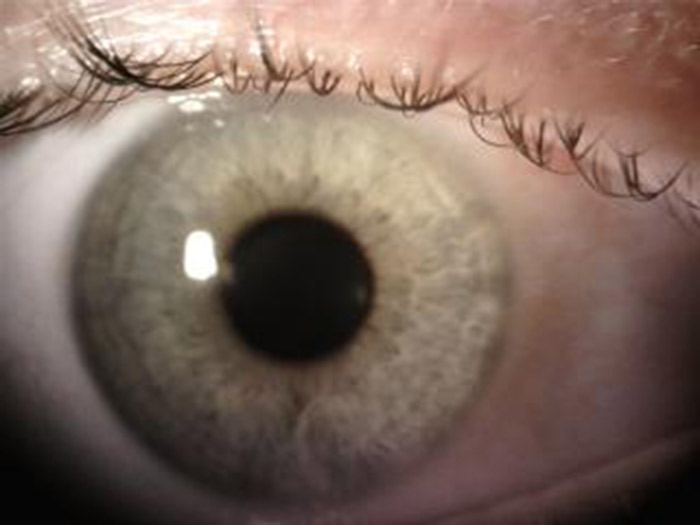
Source: Audrey Talley Rostov, MD
‘There are some fallacies with SMILE’
In Dr. Rostov’s refractive practice, anyone who is a candidate for SMILE gets SMILE. She estimated that it’s upward of 80% of patients who come in for a refractive surgical procedure.
She said that over the years, outcomes with SMILE, LASIK, and PRK have been shown to be very similar. “There isn’t a significant difference among laser vision correction procedures, and that’s exactly what I tell patients,” she said. “I tell them that when we look at laser vision correction, any of the three procedures will give you a great outcome.”
Dr. Rostov said there are a few factors that she particularly likes about SMILE. First, she said it’s less invasive, and she thinks there is less dry eye than with LASIK. There is no flap with SMILE, so you don’t have to worry about late flap dislocation. You also don’t have the concern about haze that you get with PRK or the delay in healing, she added.
“I think there’s some fallacies with SMILE, mostly from people who haven’t done it and think you’re not going to get the same results as LASIK and PRK, and that’s just not true,” Dr. Rostov said. “I think that as you refine your technique with SMILE, you can get those nice first-day 20/20 results.”
Dr. Rostov said that SMILE has similar criteria as LASIK and PRK. SMILE is approved for up to 3 D of astigmatism. “I find that above 2.0–2.25 D, when it gets to the higher amounts of astigmatism, in my practice LASIK does a better job.” She added that if the patient has a small superficial scar within the SMILE treatment zone, she will choose LASIK because you need a pristine cornea with SMILE. “You can’t have any scars or opacities within the treatment zone, and the reason is that the femtosecond laser is not able to go through opacities.”
Dr. Rostov noted that she might choose LASIK instead of SMILE for smaller prescriptions because the lenticule would be very thin in these cases and might be harder to dissect. You could do it, but it depends on the patient. “Especially if it’s a thicker cornea and very low prescription, I might do LASIK instead,” she said.
Dr. Rostov agreed that there may be complications that come up, as with any procedure. She had one case where she was unable to get the lenticule out, and she proceeded with PRK.
Another potential complication is a suction break. Dr. Rostov said to try to prevent this, she might use medications or “verbal anesthesia.” “I tell patients to listen to my voice. I tell them ahead of time what to expect. I tell them just to listen to what I’m saying and to hold as still and be as quiet as possible,” she said, adding that she’ll let patients know when it’s particularly important to be very still.
Dr. Rostov has only had a handful of suction breaks in more than 1,000 cases, and they occurred late in the procedure. With SMILE, there are four cuts that the laser does. The first is the refractive cut. “If you get a suction break during the refractive cut, you cannot do SMILE,” she said. The second cut determines the thickness of the lenticule. The third is the cap, which is the top of the lenticule and is a non-refractive cut. Dr. Rostov has experienced suction breaks during the cap cut. “You can redock and redo it,” she said, and in her cases, the procedure was still successful.
There could also be problems during lenticule dissection, Dr. Rostov said. “If the epithelium is irregular or you have too much meibum on the surface, you can get ‘black spots,’ which are places where the laser is not going to be able to go through,” she said. “When you see the laser pattern, you’ll notice these spots where there was meibum or something like that, and if there’s too much, that will make the lenticule dissection too difficult.” Dr. Rostov has not experienced this complication in her SMILE cases and noted that she’s very careful in looking for it. “If I see it ahead of time, I’ll rinse or wipe the surface,” she said.
In terms of a learning curve for SMILE, Dr. Rostov said it’s a slightly different skillset than with LASIK. “I think for cornea-trained physicians, it’s straightforward. If you’re not cornea trained, it’s fine, too,” she said.
There have also been updates to the laser platform to improve the SMILE treatment. It’s now faster, so suction break is less likely to happen, and tissue cutting is more powerful, she said.
“I think it’s fun to be able to offer patients different options for refractive surgery, and I think SMILE is an excellent option. It’s not for every patient, just as LASIK isn’t for every patient. It expands the offerings for patients and gives a LASIK-like outcome while preserving greater corneal integrity.”
About the physicians
Lance Kugler, MD
Kugler Vision
Omaha, Nebraska
Audrey Talley Rostov, MD
Northwest Eye Surgeons
Seattle, Washington
Relevant disclosures
Kugler: None
Rostov: Alcon, Carl Zeiss Meditec, Johnson & Johnson Vision
Contact
Kugler: lkugler@kuglervision.com
Rostov: atalleyrostov@nweyes.com