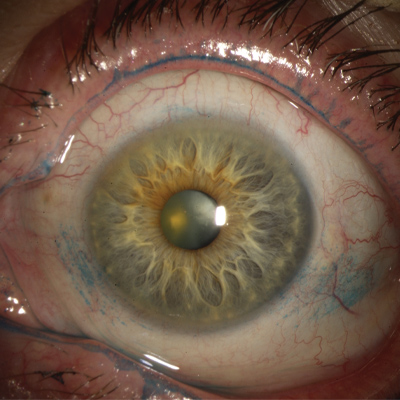
Browse articles from EyeWorld.org related to the ocular surface. EyeWorld is the award-winning member publication of ASCRS. The magazine provides news and updates from the Society as well as clinical features in the areas of cataract, refractive, cornea, glaucoma, and practice management. It publishes quarterly with editorial direction from its medical editorial board and staff.
Numerous studies have looked at different approaches to using bevacizumab and other anti-VEGF agents for anterior segment surgery. Several experts discussed their use and study of bevacizumab, particularly relating to corneal neovascularization and in corneal transplants.
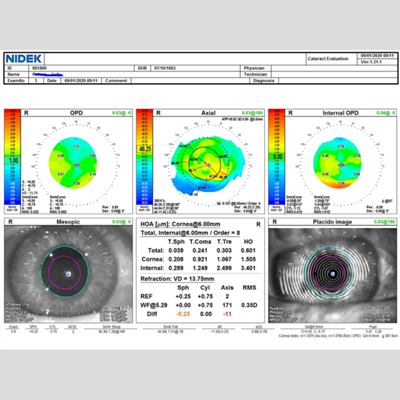
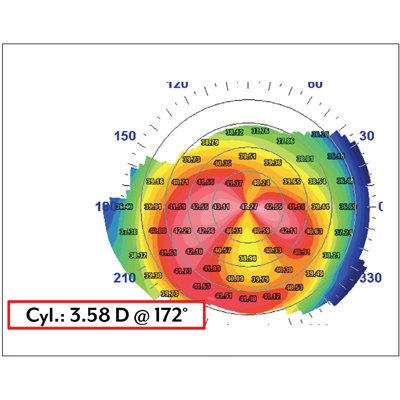
A recent patient of Dr. Ristvedt’s presented for cataract evaluation wanting a trifocal IOL. Blurred Placido images indicated dryness, which was then treated before she returned for repeat measurements. The power and orientation of the patient’s astigmatism changed after treating the dry eye. Source: Deborah Ristvedt, DO
Managing astigmatism at the time of cataract surgery is a weighty topic with many variables. What technology to measure astigmatism—power and axis? How many measurements to take for reliability? How to ensure accuracy and consistency of measurements? What course of correction to take?
“In the day and age of refractive cataract surgery, optimizing outcomes is extremely important,” said Kathryn Hatch, MD, as she introduced a webinar hosted by the ASCRS Refractive Surgery Clinical Committee earlier this year. “We have increasing patient expectations, and it’s extremely important that we obtain ideal biometry measurements. To do so, we need to pay specific attention to the ocular surface, especially when treating astigmatism and presbyopia.”
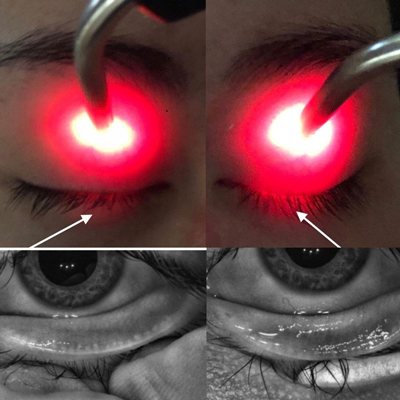
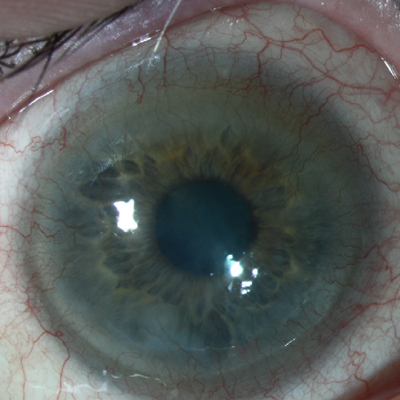
This 20-year-old college student with meibomian gland dropout and lid seal insufficiency had dry eye complaints. The student reported long computer hours, poor sleep, poor nutrition, excessive contact lens wear, and use of multiple over-the-counter and prescription acne treatment products.
Source: Laura Periman, MD
When teens come into the clinic, it’s important to consider that they might have dry eye or meibomian gland disease. Investigators in a recent study found that among minors coming in for eye exams, 15% were experiencing dry eye discomfort and 9% had signs of meibomian gland dropout, according to lead investigator Anna Tichenor, PhD.1
The COVID-19 pandemic has affected all areas of medicine, including eye banking. While much more is known about SARS-CoV-2 and the illness it causes, there are still several unknowns that continue to be investigated as they pertain to the safety of donor tissue.
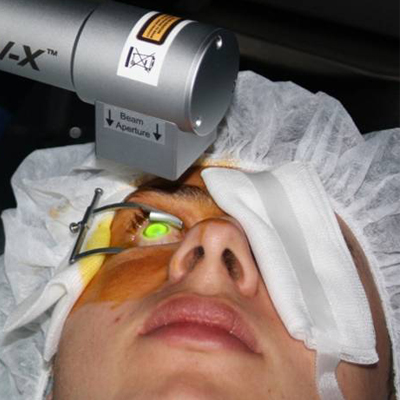
The success of any surgical intervention depends as much on postoperative care and management as it does on the surgical procedure itself. This undoubtedly also holds true for corneal crosslinking. At our hospital, we have been performing corneal crosslinking with the IROC illumination system since the development of the first prototype and continue to use the latest UV-X 2000 crosslinking device.
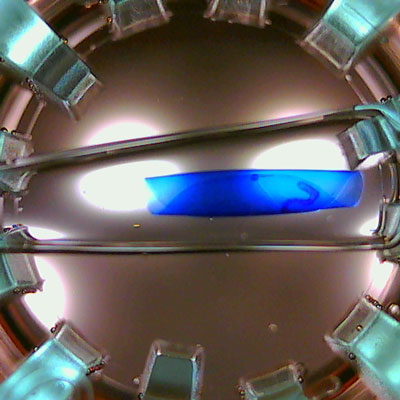
Three different staining patterns can help practitioners determine dry eye severity.