Browse articles on EyeWorld.org. EyeWorld is the award-winning member publication of ASCRS. The magazine provides news and updates from the Society as well as clinical features in the areas of cataract, refractive, cornea, glaucoma, and practice management. It publishes quarterly with editorial direction from its medical editorial board and staff.
While pandemic-related effects and lessons learned will be a thread throughout much of the content of the ASOA Annual Meeting, courses continue to cover the important things that all members of a practice need to know.
“Ophthalmology Quicksand Chronicles,” an ASCRS podcast hosted by Nicole Fram, MD, and Elizabeth Yeu, MD, features an expert guest on each episode who shares their “quicksand moments” in the OR, lessons learned from those moments, and how these vulnerable situations ultimately helped them evolve as surgeons.
Recaps of a few recent papers from the Journal of Cataract & Refractive Surgery

Rosa Braga-Mele, MD
Cataract Editor
Rosa Braga-Mele, MD, Cataract editor, introduces some of the articles in the issue and shares what she is most excited about at the upcoming ASCRS Annual Meeting.
Three physicians discuss how they help patients on their journey as they seek out a toric or presbyopia-correcting IOL.
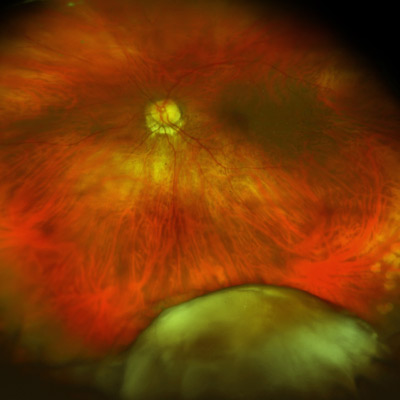
Dropped nuclei are one of the more unpleasant complications that can happen during cataract surgery. While uncommon, the consequences of a dropped nucleus are significant. Three experts shared their experiences and management strategy.
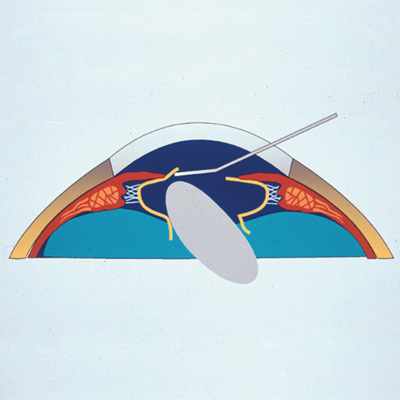
Hydrorupture of posterior capsule; the nucleus does not usually drop immediately, only when the phaco tip is inserted, pressurizing the anterior chamber
Source (all): Ronald Yeoh, MD
Ronald Yeoh, MD, first coined the term “pupil snap sign” in 1996. Since then, he has been calling attention to the somewhat subtle sign to help surgeons recognize when there has been a posterior capsule rupture that puts the nucleus at risk of dropping into the vitreous.
When a patient comes in prior to cataract surgery, it’s important to do a careful evaluation to see what conditions they might have and how this could impact IOL selection. Two physicians discussed conditions to be aware of when considering presbyopia-correcting IOLs and how to talk to patients prior to surgery.
There are many potential complications cataract surgeons need to prepare for in the OR. One of them is zonulopathy. “Recognizing zonulopathy and adopting strategies to mitigate zonular damage is critically important not only for short-term success but perhaps more importantly, long-term success to reduce the risk of late IOL dislocation,” said D. Brian Kim, MD.
Vance Thompson, MD, Refractive editor, discusses highlights of the section and how this issue is “a wonderful invitation to our extended family in ophthalmology and a representation of important topics that will be represented at the Annual Meeting.”