Browse articles on EyeWorld.org. EyeWorld is the award-winning member publication of ASCRS. The magazine provides news and updates from the Society as well as clinical features in the areas of cataract, refractive, cornea, glaucoma, and practice management. It publishes quarterly with editorial direction from its medical editorial board and staff.
One of the authors of the recently published study “Analysis of intraocular lens packaging weight and waste,” which highlighted the differences between packaging waste of various IOLs and their paper or e-IFUs, discussed the study and the disparities in packaging across different IOL models, identifying key opportunities for reducing waste.
The ASCRS Foundation Board proudly announced its selection of Elena Barraquer, MD, for the 2025 Chang-Crandall Humanitarian Award. For many years, Dr. Barraquer has led the Elena Barraquer Foundation, a nonprofit organization that fights avoidable blindness due to cataract in developing countries.
Regardless of surgical experience level, iris prolapse is something that happens to all surgeons occasionally. As such, knowledge of the risk factors that could predispose a patient to iris prolapse, how to handle the event, and postop considerations are an important refresh from time to time.
Progressive pediatric myopia, its increasing prevalence, and possible treatments are important topics for eyecare providers, even if their primary patient population isn’t pediatric.
One pediatric ophthalmologist said it’s important to understand the research that’s going on in this area because it affects a large percentage of the population globally.
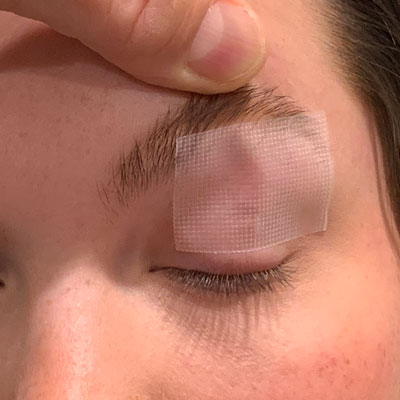
Three cornea specialists and one oculoplastics specialist agreed that, in some cases, closing the eyelid with either a permanent or temporary tarsorrhaphy is among the best treatments for corneal healing; the procedure is, in many ways, “the cornea’s best friend.”
Steroid-induced glaucoma can present a number of issues, most notably increased IOP. Several ophthalmologists discussed identifying when and why this occurs and how to react to help improve the pressure.
The ASCRS Foundation is honoring Foundation Board member Michael Colvard, MD, by posthumously naming him co-recipient of the 2023 Chang-Crandall Humanitarian Award, along with Helena Ndume, MD, his long-time partner with SEE International in Namibia. Dr. Colvard, a beloved ophthalmologist, humanitarian, and educator, passed away in September 2024.
“The articles in this issue’s Cornea section focus on challenging situations in cornea and the tools that we have to address them,” said Cornea Editor Julie Schallhorn, MD. She expressed her frustration with the current healthcare environment in meeting the needs of these more challenging patients.
Manjool Shah, MD, gave an overview of the articles in the Glaucoma section, noting, “The insights shared by our contributors serve as a reminder of the importance of continuous learning and adaptation, and there is no place better to feel the energy of lifelong learning like the ASCRS Annual Meeting.”
Pseudoexfoliation syndrome is a systemic, age-related disease, with patients needing more frequent monitoring due to an increased risk of developing secondary open angle glaucoma from the condition. Two physicians provided their perspectives on the condition and advice for its identification, management, and considerations for surgery.