Browse archived articles on EyeWorld.org. EyeWorld is the award-winning member publication of ASCRS. The magazine provides news and updates from the Society as well as clinical features in the areas of cataract, refractive, cornea, glaucoma, and practice management. It publishes quarterly with editorial direction from its medical editorial board and staff.

Xiidra out of the comfort zone

Many practitioners are now reaching for Xiidra (lifitegrast, Shire, Lexington, Massachusetts) 5% for dry eye cases, but sometimes a patient may not initially be considered a success. Here’s what leading practitioners are doing to help more patients find respite with Xiidra.

Comments Off on Xiidra out of the comfort zone

What to know about the Light Adjustable Lens

Though FDA approved, the Light Adjustable Lens (LAL, RxSight, Aliso Viejo, California) is not yet currently available in the U.S. Robert Maloney, MD, Los Angeles, John Doane, MD, Leawood, Kansas, David F. Chang, MD, Los Altos, California, and Kevin Waltz, MD, Indianapolis, discussed their experience with the lens in clinical trial, how it works, and for what corrections it has approval.

Comments Off on What to know about the Light Adjustable Lens
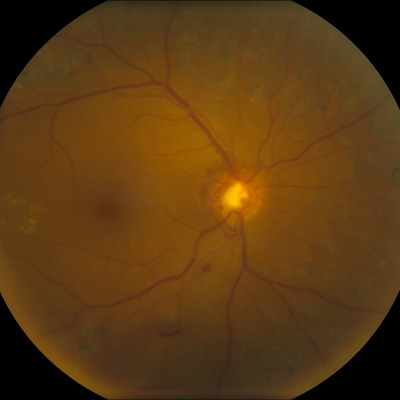
Read more about the article Optic neuritis: When it is and when it isn’t
Severe optic disc swelling with heme, as shown in this picture, is highly atypical for optic neuritis and should raise concerns about an alternate diagnosis. Source: Gregory Van Stavern, MD

Optic neuritis: When it is and when it isn’t

Two experts share diagnostic pearls to follow and pitfalls to avoid to accurately diagnose this condition.

Comments Off on Optic neuritis: When it is and when it isn’t
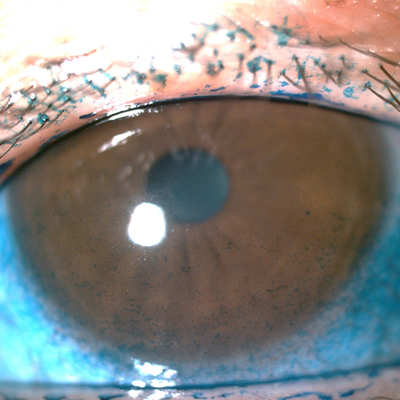
Read more about the article Diagnosis and treatment of hyperacute bacterial conjunctivitis
Extensive conjunctival chemosis and swelling and a central corneal ulcer in a patient with Neisseria gonorrhoeae conjunctivitis Source: Vincent de Luise, MD

Diagnosis and treatment of hyperacute bacterial conjunctivitis

Hyperacute bacterial conjunctivitis requires prompt diagnosis and treatments because in some cases, the organisms at fault could cause a life-threatening secondary condition.

Comments Off on Diagnosis and treatment of hyperacute bacterial conjunctivitis

Understanding spherical aberration

Today the goal of cataract surgery is to provide patients with the best possible quality of vision. While it is common to see patients post-cataract surgery with a visual acuity (VA) of 20/20, many patients remain dissatisfied with their quality of vision. This is due to several factors, including problems with the ocular surface, pseudophakic dysphotopsia, and optical aberrations in general.

Comments Off on Understanding spherical aberration

IOL exchange for the young eye surgeon

Missed target, dysphotopsia, malpositioning, patient dissatisfaction: There is a myriad of reasons for an IOL exchange. In these cases, the surgeon needs to give the patient hope for a better outcome while also setting realistic expectations.

Comments Off on IOL exchange for the young eye surgeon

How sleep position may affect dry eye

Dry eye is the single most common reason that patients come into a practitioner’s office, with a prevalence of around 40% of those seeking ophthalmic care, according to Hank Perry, MD, Ophthalmic Consultants of Long Island, New York. What may not be clear in an office visit is that the patient’s sleep position may be a prime factor in his or her condition.

Comments Off on How sleep position may affect dry eye