Boost your mindset for better care
Cataract Editor Mitchell Weikert, MD, shared some of his favorite moments from the 2025 ASCRS Annual Meeting and previewed the articles in the section.
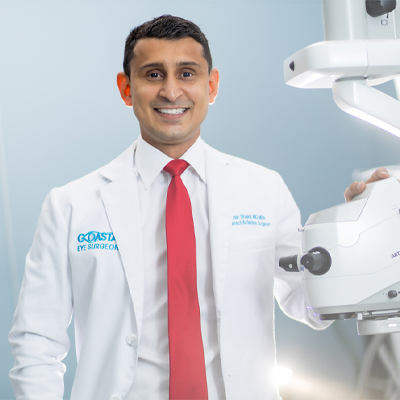
The ASCRS Foundation introduces its Volunteer of the Year, Omar Shakir, MD, and gives a wrap-up of the Party for a Purpose and its symposium at the ASCRS Annual Meeting.
ASCRS Government Relations Committee Chair Susanne Hewitt, MD, gives an overview of the Government Relations activities at the ASCRS Annual Meeting and encourages members to attend the Alliance of Specialty Medicine Legislative Fly-In.
The second Business of Refractive Cataract Surgery (BRiCS) Summit will take place October 3–5 in Chicago, Illinois, giving a new set of surgeon-implementor teams the opportunity to gain insights and resources to enhance their advanced-technology IOL practice.
One of the authors of the recently published study “Analysis of intraocular lens packaging weight and waste,” which highlighted the differences between packaging waste of various IOLs and their paper or e-IFUs, discussed the study and the disparities in packaging across different IOL models, identifying key opportunities for reducing waste.
The ASCRS Foundation Board proudly announced its selection of Elena Barraquer, MD, for the 2025 Chang-Crandall Humanitarian Award. For many years, Dr. Barraquer has led the Elena Barraquer Foundation, a nonprofit organization that fights avoidable blindness due to cataract in developing countries.
Regardless of surgical experience level, iris prolapse is something that happens to all surgeons occasionally. As such, knowledge of the risk factors that could predispose a patient to iris prolapse, how to handle the event, and postop considerations are an important refresh from time to time.
Progressive pediatric myopia, its increasing prevalence, and possible treatments are important topics for eyecare providers, even if their primary patient population isn’t pediatric. One pediatric ophthalmologist said it’s important to understand the research that’s going on in this area because it affects a large percentage of the population globally.
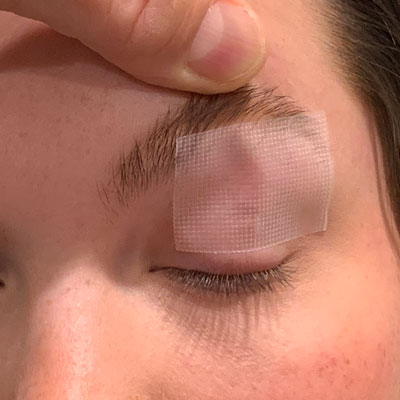
Three cornea specialists and one oculoplastics specialist agreed that, in some cases, closing the eyelid with either a permanent or temporary tarsorrhaphy is among the best treatments for corneal healing; the procedure is, in many ways, “the cornea’s best friend.”
Steroid-induced glaucoma can present a number of issues, most notably increased IOP. Several ophthalmologists discussed identifying when and why this occurs and how to react to help improve the pressure.