ONLINE EXCLUSIVE
August 2022
by Liz Hillman
Editorial Co-Director
It might stand to reason that as drivers get older and start to have various forms of visual dysfunction that it could affect their driving ability. It’s a common conversation among younger family members that their older family members have their vision screened for their safety—and that of others—on the road.
A new study, however, suggests that vision screening might not have the impact that these well-meaning younger family members might think.
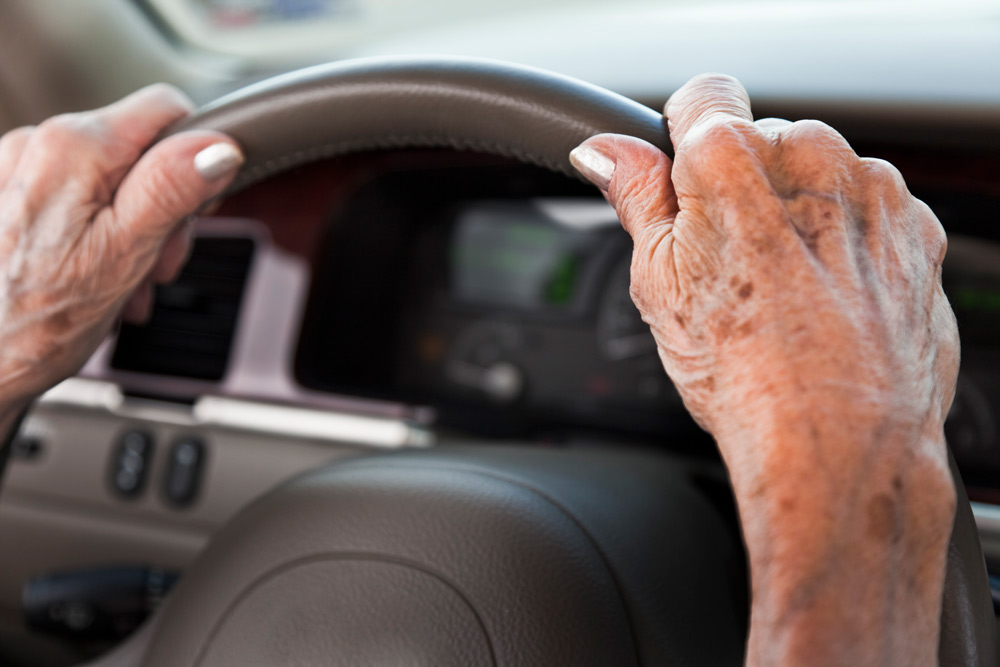
Research published in the journal Ophthalmology as a prospective cohort study included 2,000 drivers age 70 and older living in Jefferson County, Alabama.1 The study evaluated visual acuity, contrast sensitivity, useful field of view, the Motor-Free Visual Perception Test, and visual field sensitivity. After 4 years, the participants were followed up with to determine occurrence of motor vehicle collisions.
The researchers found “for all visual function measures, the [area under the curve] values were only slightly higher than 0.50; additionally, none of the measures exhibited adequate values for both sensitivity and specificity.” There was a statistically significant association between vision impairment and motor vehicle collisions, but the authors wrote that it was weak.
“The negative impact of involuntary driving cessation on mobility and the associated mental health implications likely outweigh the safety benefit of vision screening,” the study concluded. “Alternative approaches to improving older driver safety should be considered.”
In a news article published on the University of Alabama, Birmingham, website, Cynthia Owsley, PhD, professor, Department of Ophthalmology and Visual Sciences, said that “vision screening in older drivers does not identify those who are likely to have collisions in the future.”
“While visual dysfunction in several areas moderately elevates collision risk, it is a significant but small impact, and is not at the level of being sensitive or specific for prevention of collisions,” she added.
The article stated that this study adds to “decades of research” that has not identified a relationship between visual acuity and motor vehicle risk.
Reference
- McGwin G, Owsley C. Vision screening for motor vehicle collision involvement among older drivers. Ophthalmology. 2022. Online ahead of print.