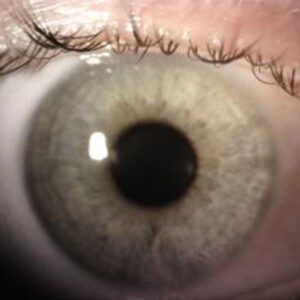
Cornea
April 2022
by Clara Chan, MD
Cornea Editor

One of the most dramatic patient cases I have ever seen was a middle-aged male who was referred to my cornea clinic as an emergency a decade ago. The patient had undergone routine pterygium removal and conjunctival autograft without mitomycin a week prior. On exam, he had a 3 mm knuckle of iris prolapse through a corneal-limbal perforation at the temporal periphery where the head of the pterygium would have been located. Adjacent to the perforation was an avascular area of bare sclera surrounded by inflamed conjunctiva. I remember as I pulled the slit lamp away from the patient that the most striking observations were his prominent rhinophyma and uncontrolled facial acne rosacea throughout his cheeks and forehead.
[The ASCRS Annual Meeting] promises to be a phenomenal in-person meeting with something for everyone, whether you like to listen to lectures or experts debating, watch videos, learn hands-on at a skills lab, or talk to friends and peers.
It was my first time witnessing such an extreme complication resulting from untreated rosacea. The patient underwent emergency lamellar patch graft surgery, and topical antibiotics, steroids, and oral doxycycline were instituted. Eventually, he had femtosecond laser-assisted astigmatic keratotomy, topography-guided PRK, and cataract extraction with a toric intraocular lens. A decade later, he has maintained 20/30 uncorrected vision and requires oral doxycycline 100 mg once daily. Each time attempts to reduce his oral doxycycline are made, his rosacea flares up, and his eyes become inflamed. Since this case, I have seen a handful of patients referred to our cornea clinic for “post-pterygium surgery, new white lesion in area of the conjunctival graft,” and without a doubt, these patients have untreated rosacea. Oral doxycycline 100 mg twice daily initially is prescribed immediately along with topical steroids and intense lubrication. Over the course of a few weeks, the conjunctiva grows back over the necrotic scleral area, the ocular inflammation settles, and the risk for thinning abates.
Rosacea may be one of the most prevalent culprits causing ocular surface disease. Mild cases in females wearing makeup can be easily overlooked. If patients are wearing masks or are being examined in a dark room, rosacea facial changes may also be missed. In this issue of EyeWorld, signs of rosacea and how to best treat it are discussed. We also explore meibomian gland dysfunction and pediatric blepharitis—a very important topic since children can have minimal symptoms, and permanent amblyopia can develop without prompt diagnosis and treatment. Finally, we introduce varenicline, an intranasal spray targeting the trigeminal parasympathetic pathway, as a novel treatment for dry eye disease.
I would like to take this opportunity to welcome those who will be attending the ASCRS Annual Meeting in Washington, D.C. It promises to be a phenomenal in-person meeting with something for everyone, whether you like to listen to lectures or experts debating, watch videos, learn hands-on at a skills lab, or talk to friends and peers. I hope to see you there!