ASCRS News: Government Relations Update
Spring 2024
by Aaishwariya Gulani, MD
ASCRS Government Relations provides important advocacy efforts and resources for ophthalmologists and their patients, fulfilling one of the main pillars of the Society’s mission. EyeWorld will feature this ‘Government Relations Update’ column in each of its quarterly editions, keeping readers up to date on the important issues facing ophthalmologists regarding reimbursement, regulatory issues, and all the efforts of the government relations team.
The healthcare field is an integration of medicine, insurance companies, lawmakers, and pharmaceuticals with patients at the center of it all. As the only part of the field that personally interacts with patients, physicians have a unique role as patient advocates. Advocacy opens the door to making a difference on the macro level of healthcare by being involved in organized medicine and shaping policy for our patients and ourselves.
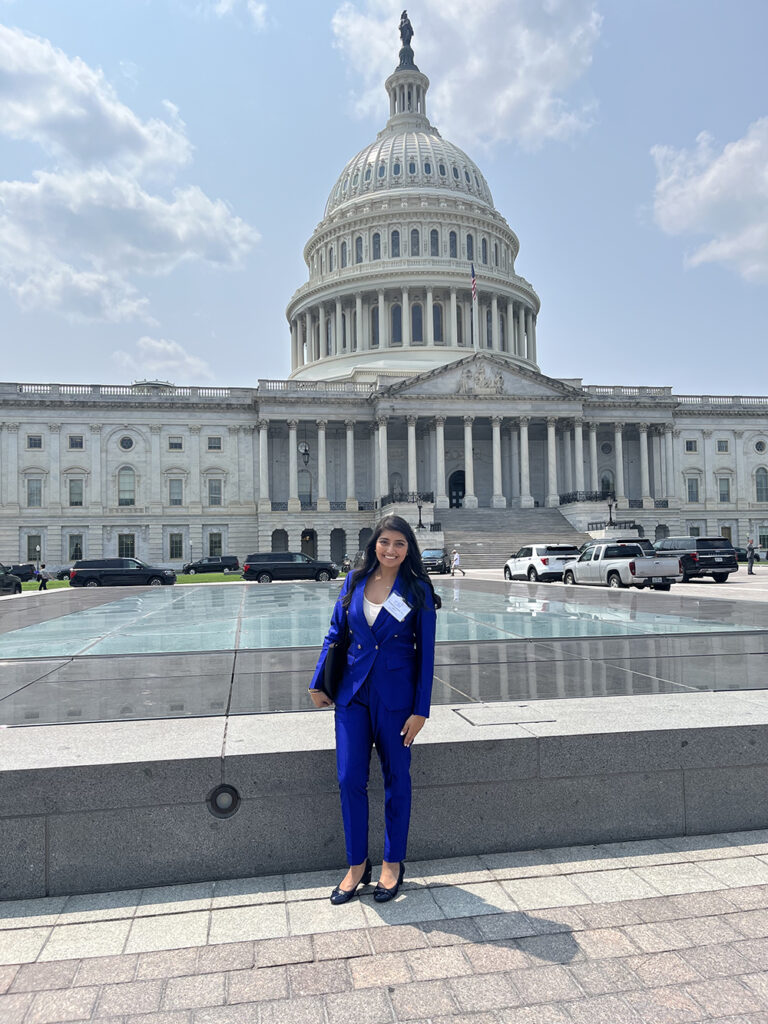
Fly-In experience
Source: Aaishwariya Gulani, MD
My experience at the Alliance of Specialty Medicine Capitol Hill Advocacy Conference, held annually in Washington, D.C., to advocate on current bills in the Senate and the House provided me the opportunity to not only speak with lawmakers representing my state but also to engage with other specialties about their respective issues and how we can work together to improve healthcare. Being able to meet these decision-makers 2 weeks into residency was an incredible opportunity. I was able to not only bring in my experiences with undergraduate medical education and the match process with regards to the current bill on expanding residency slots, but also discuss issues that I will start to face as I progress in my career, including Medicare reimbursements, prior authorizations, and step therapy.
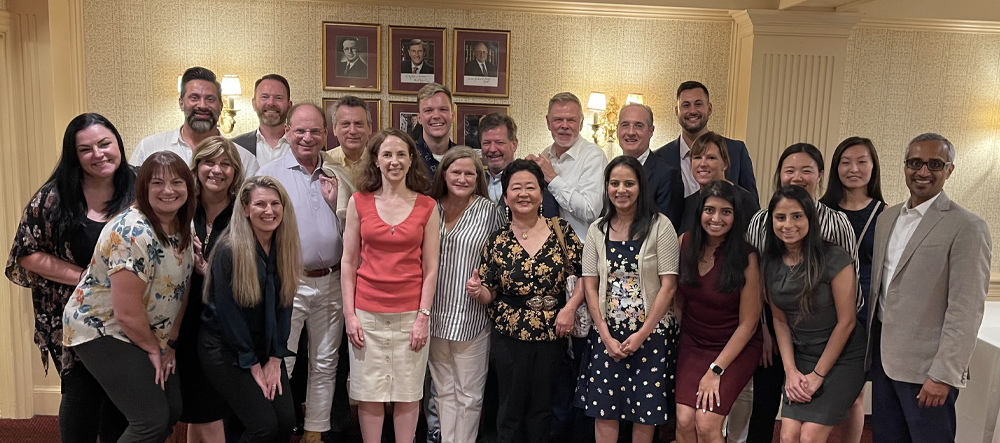
The experience started with an ASCRS dinner the night before to go over the plan for the legislative day and discuss our position on the pertinent policies. It was great to see people who have been coming to the Fly-In for years and hear how the political landscape has changed. As a first-time attendee, I found their insight invaluable.
The next morning we met with the other specialty delegations and heard from some incredible speakers, most of whom had healthcare backgrounds and now were legislators. We were able to bring our questions directly to them. Following were the meetings on Capitol Hill. We had broken into our state groups, so I was with physicians from across the state of Tennessee who were in other specialties. It was amazing to see their different perspectives throughout the day. After multiple meetings, we ended the day as a group to recap how everyone’s meetings went.
One of the greatest parts of this experience was being able to come together as a group of surgeons to advocate for the best outcome for each of our respective fields and patient populations. The discussions over shared experiences and frustrations with the current state of healthcare showed me that advocating makes us a part of a greater community of physicians across the country with one singular goal: improving healthcare.
Advocacy and young eye surgeons
“Every little action counts and brings us, as a group, closer to our goals.”
Aaishwariya Gulani, MD
We, as the younger generation within medicine, deserve a voice in the topics that affect us directly and those that soon will. Our perspective at this crossroads between being trainees and having a career is unique. We are affected by changes to medical education and to Medicare reimbursements alike.
Additionally, learning this skill early in our careers will only help us grow into well-rounded physicians. With advocacy, we will be able to take care of our patients by not only prescribing the right medication but also ensuring they have little to no out-of-pocket cost. We can improve medical education, ACGME requirements, prior authorizations, reimbursements, scope of practice, and so much more. There is no lack of issues we need to improve in healthcare, and with the right strategies and teams, we can take tangible steps for solutions.
Lastly, advocating for yourself and your patients is vital—especially at this stage in our career.
For your patients:
As physicians, we have a unique role where we are decision-makers who work face to face with patients. All other decision-makers in the healthcare field do not interact with patients (insurance companies, pharmaceuticals, lawmakers). Thus, we are the only acting voice for patients. We see the cost barriers firsthand every day. So, when we advocate for improvements, we are advocating for the patients who can’t do it themselves.
For yourself:
We are also affected within this landscape. Many of the issues facing medicine come down to costs and payments and retaining our jobs, which we went thousands of dollars in debt to obtain. We became physicians to heal people, not to fight insurance companies every step of the way. So, when there are bills about increasing physician payment, we should speak up. When there are bills trying to expand scope of practice for others in the healthcare field taking over our roles as physicians, we must speak up.
How to get involved
Now, the real question is how to do all this. It’s actually very simple, as there are multiple avenues to advocate—local, state, national. Every county has a medical society composed of local doctors who address issues that affect their city and county directly and take stances on national bills as well. This is usually a great first step to get a glimpse of current topics being considered in Congress and pressing issues in your very own hospitals. Next, you can get involved in the state medical societies, as well as the state eye society. These also send constituents to the national American Medical Association (AMA), the American Academy of Ophthalmology, and also to their state capitals. ASCRS also has its own lobbying efforts and a political action committee (eyePAC). There are many state-specific issues that you can advocate for or against and see a more tangible outcome because these topics are often more relevant to you and your practice/residency specifically.
On a national level, there is the AMA, which is an organization with many constituents ranging across all fields and all areas of training. This is great to understand and fight national healthcare issues while interacting with various stakeholders. Lastly, you can get involved in your specialty. For ophthalmology, we have the American Academy of Ophthalmology, which represents all subspecialties, but also subspecialty societies including ASCRS. All of these societies work together to advocate for our profession and our patients.
Source: Aaishwariya Gulani, MD
How to advocate
Now, what do you actually do to advocate? Advocacy covers a wide range of actions:
- You can write a resolution for the AMA House of Delegates. Resolutions are policy changes that are considered in the AMA House of Delegates and then brought to Congress. The AAO has a similar process in the AAO Council.
- Attend an AMA meeting and discuss policy firsthand with many stakeholders in the room. This is a great way to see pressing issues and varying opinions to learn how to navigate the political landscape of healthcare.
- You can attend a day on Capitol Hill, like the Alliance of Specialty Medicine Legislative Fly-In, where specific groups have arranged meetings with their federal legislators to discuss current bills in Congress and provide insight on why to pass it or not.
- You can attend the Government Relations Symposium at the ASCRS Annual Meeting in Boston. Also, those who donate to eyePAC at a certain level are invited to attend the eyePAC reception, held in conjunction with the Annual Meeting.
- You can stay up to date on key issues through the ASCRS Advocacy website; write to your representatives about pressing issues by responding to ASCRS Action Alerts; and subscribe to the ASCRS Washington Watch for the latest updates on healthcare issues in Congress and the federal agencies.
- You can reach out to your state legislators as well, especially on scope-of-practice issues, which are governed by state laws.
These are just a few of the many ways to be an advocate. Every little action counts and brings us, as a group, closer to our goals.
Upcoming ophthalmology-related topics
- Medicare reimbursement
- Step Therapy
- Prior Authorization
- Scope of practice in 2024/VA Federal Supremacy Project
Upcoming opportunities
- ASCRS Annual Meeting: April 5–8, 2024
- Alliance of Specialty Medicine Legislative Fly-In: July 2024
- AAO Mid-Year Forum: April 2024
- AAO Annual Meeting: November 2024
- State Days on the Hill: Vary state to state
- AMA Interim Meeting: June 2024
- AMA Medical Advocacy Conference (MAC): March 2024
About the physician
Aaishwariya Gulani, MD
PGY 1
Hamilton Eye Institute
University of Tennessee
Memphis, Tennessee
Contact
Gulani: aaishag14@gmail.com