ASCRS News: Annual Meeting Preview
July 2021
by Liz Hillman
Editorial Co-Director
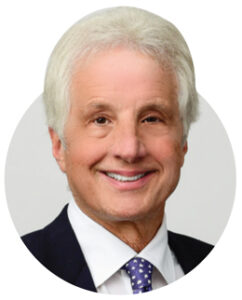
When most people think about innovation, another “i” word comes to mind: invention. While that’s certainly a component of innovation, Stephen Slade, MD, more specifically defined innovation as the creation of value.
“There are multiple ways to create value. I’ve been lucky to be able to participate in value creation in ophthalmology,” Dr. Slade said. “Innovation is the invention, innovation is a KOL and an entrepreneur, doctors, people who get it approved, enhance it, develop it. Innovation is a venture capital company that’s willing to put hundreds of millions or more into it. Then, of course, innovation is education, such as ASCRS. Innovation is the early adopters who try it. There’s no value unless people use it.”
Broadening one’s definition of innovation to include the idea of value creation will be the theme of Dr. Slade’s Charles D. Kelman, MD, Innovator’s Lecture at the Innovators General Session at the ASCRS Annual Meeting. Dr. Slade called being selected to deliver the Innovator’s Lecture a “cap to a career.”
“I was truly surprised, I am very honored,” Dr. Slade said.
Dr. Slade is considered to be among those in the country with the longest experience in LASIK, all-laser LASIK, accommodating IOLs, corneal inlays, and femtosecond laser cataract surgery. He holds several patents/pending patents and has served as medical director for numerous technologies that now have FDA approval, such as LASIK, wavefront and topography-guided LASIK, FLACS, SMILE, accommodating IOLs, and more. In addition, he has a specific emphasis on teaching and has authored numerous textbooks, book chapters, and peer-reviewed papers.
“Where I have been able to add value over the years is with education,” Dr. Slade said, noting that he’s taught courses on LASIK, ICL, inlays, and other technologies. “I’ve been lucky to be able to participate in value creation in ophthalmology, more in the education and refinement or development phase.”
When innovation occurs in ophthalmology, Dr. Slade said it’s to come up with something better, something that improves a patient’s outcomes and/or experience. Examples include innovation from RK to LASIK, from cataract surgery without an implant to that with IOLs.
“Innovation is something that not only gives patients better vision, but it can shift paradigms and it’s what drives our industry,” he said.
With innovation shifting paradigms, though, Dr. Slade said one’s training needs to be kept up to date.
“If you’ve been out of training for 5–10 years, so much of what you’re doing, you didn’t learn as a resident. It’s new technology and techniques. If it wasn’t for innovation, you’d still be doing the same,” Dr. Slade said.
With that, he said ASCRS plays a role in innovation. “ASCRS is our continuing residency. It’s where many of us are introduced to and learn most of what we do now,” he said.
Preceding the Charles D. Kelman, MD, Innovator’s Lecture from Dr. Slade will be other presentations on topics relevant to innovation in ophthalmology: “Human Endothelial Cell Culture and Delivery” presented by Jeffrey Goldberg, MD, “Surgeon-Centered Digitally Enhanced Visualization” presented by Sharon Bakalash, MD, “A Novel, Completely Synthetic Keratoprosthesis” presented by Gilad Litvin, MD, “Opira Accommodating IOL” presented by Ayman Naseri, MD, and “Glaucoma Treatment in Seconds – Direct SLT for OAG,” presented by Yoram Solberg, MD, PhD.
ARTICLE SIDEBAR
The Charles D. Kelman, MD, Innovator’s Lecture honors the work of individuals whose creativity has benefited ophthalmologists and their patients. Charles D. Kelman, MD, (1930–2004) delivered the first lecture in 1985, and in recognition of the ongoing contributions of Dr. Kelman to anterior segment surgery, the lecture was named for him in 2003.
About the physician
Stephen Slade, MD
Slade and Baker Vision
Houston, Texas
Contact
Slade: sgs@visiontexas.com