ASCRS News: ASCRS/EyeWorld Journal Club
July 2021
by Matthew Santos, MD, and Arsham Sheybani, MD
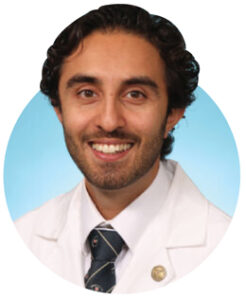
Residency Program Director
Washington University in St. Louis
St. Louis, Missouri
Cataract extraction with IOL implantation is a commonly performed surgery. Efficient and effective postoperative control of inflammation helps ensure the high-quality, successful outcomes expected by both physicians and patients. While many postoperative regimens have been described, the mainstays of therapy include glucocorticoid (steroids) and non-steroidal anti-inflammatory drugs (NSAIDs), either as monotherapy or in combination. Some studies have suggested that NSAID eye drops may be superior in preventing pseudophakic cystoid macular edema.1–5 Postoperative inflammation is seen on slit lamp exam by counting inflammatory cells and in observing the Tyndall scatter, or flare, caused by an increased concentration of protein in the aqueous humor of an inflamed anterior chamber (AC).6,7 This may be objectively measured with a laser flare photometer. In this prospective, randomized, controlled trial, Erichsen et al. used this laser flare photometer to measure early postoperative inflammation, analyzing the effects of different prophylactic anti-inflammatory treatments.
Design and methods
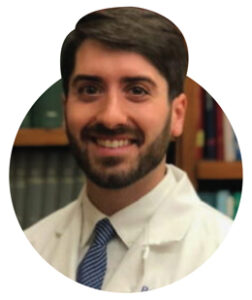
Ophthalmology Resident
Washington University in St. Louis
St. Louis, Missouri
The authors included five different treatment groups in their study. Two used prednisolone acetate and ketorolac in combination, with one group starting drops 3 days before surgery and the other starting drops on the day of surgery (Pred+NSAID-Pre and Pred+NSAID-Post). Two groups used ketorolac alone, with one group starting 3 days before, and one group starting the day of surgery (NSAID-Pre and NSAID-Post). Finally, the Dropless surgery group received a subtenon depot of 0.5 mL dexamethasone at the time of surgery. The Pred+NSAID-Pre group served as the control.
Participants were recruited among patients referred for cataract surgery at a single center, undergoing surgery from early 2018 to late 2019. The exclusion criteria far outnumbered the inclusion criteria. These were routine cataract surgeries performed in otherwise healthy eyes free from ocular comorbidities such as uveitis, glaucoma, or diabetes. Patients with significant complications to surgery such as posterior capsule rupture/vitreous loss, choroidal hemorrhage, or dislocated lens material were also excluded.
The authors described their standard phacoemulsification technique with IOL implantation in the bag performed by surgeons who had performed at least 1,000 cataract surgeries in the 2 years prior to the study. The primary outcome was the objective change in anterior chamber flare as measured by the laser flare photometer. They also examined the number of AC cells at the postoperative visit, change in corrected distance visual acuity, and change in IOP. The authors reported numerous adverse events including pain/soreness, insufficiently controlled AC inflammation, and elevated IOP >25 mm Hg, among others. Physicians were able to initiate additional anti-inflammatory treatment at their discretion if postoperative inflammation appeared uncontrolled.
Summary of results
There were 438 participants providing data for the primary analysis. There was no statistically significant difference among the five treatment groups in CDE, with a median of 7.7 from all cases.
AC inflammation as measured by the laser flare photometer increased in all five groups. Flare increased by 74.0% in the Pred+NSAID- Pre group, 78.8% in the Pred-NSAID-Post group, 103.7% in the NSAID-Pre group, 94.5% in the NSAID-Post group, and 201.3% in the Dropless surgery group. The 201.3% increase in the Dropless group compared to the Pred+ NSAID-Pre control group was the only statistically significant increase among the five groups.
After surgery, visual acuity improved in all five groups, and intraocular pressure decreased in all the groups. From a mean of 14.3 mm Hg, IOP decreased to 13.6 in the Pred+NSAID-Pre group, 13.4 in the Pred+NSAID-Post group, 11.5 in the NSAID-Pre group, 11.0 in the NSAID-Post group, and 10.3 in the Dropless group. Those groups that included prednisolone acetate had a lesser decrease in IOP on postop day 3 compared to those that did not include topical steroids. The authors found this to be a statistically significant difference.
The study reported adverse events occurring in 89 (20.1%) of all participants. The Dropless group included 44 of the participants experiencing an adverse event. Of these, pain/soreness and insufficiently controlled inflammation were most common. The authors found this disproportionate level of adverse events in the Dropless group to be statistically significant. More than a third of the patients in the Dropless groups had an anti-inflammatory drop added to their treatment on postop day 3.
“The authors concluded that monotherapy with NSAIDs may be the preferred prophylactic anti-inflammatory regimen after uneventful cataract surgery, with no added benefit of pre-treating before surgery.”
Discussion
The authors concluded that monotherapy with NSAIDs may be the preferred prophylactic anti-inflammatory regimen after uneventful cataract surgery, with no added benefit of pre-treating before surgery. NSAID monotherapy adequately controlled early postoperative inflammation. This group had a greater decrease in intraocular pressure following cataract surgery when compared to the groups receiving prednisolone acetate. Dropless cataract surgery with subtenon dexamethasone did not control postoperative inflammation well.
There were several limitations to this study. The authors excluded patients with ocular comorbidities, which limits generalizability. While a lesser reduction of IOP was found in groups receiving topical steroids, the clinical significance of this difference is unclear. The most significant limitation was the short follow- up period. During the ASCRS Journal Club discussion, members of the panel mentioned that the study only covered acute postoperative inflammation. Previous studies highlighting the benefits of NSAIDs following cataract surgery cited the decreased incidence of cystoid macular edema (CME) in the weeks following surgery.2,5 This important benefit from NSAID treatment was not captured in this study. Previous studies show a benefit in combination therapy.5 While this trend existed in Erichsen et al.’s study, this did not reach the level of statistical significance.
The ASCRS Journal Club discussion also suggested that dexamethasone may not be the best choice for dropless cataract surgery given its brief duration. Triamcinolone may last longer than the 24–48 hours expected with dexamethasone. Intracanalicular or intracameral delivery devices of steroid medication may be more promising dropless options. While dropless cataract surgery may be a good goal, some panelists suggested “less drops” might be reasonable as well, using intracameral antibiotics in lieu of topicals, prednisolone acetate in the early postoperative period, and using a once daily NSAID for a longer duration to help prevent CME.
Conclusion
Erichsen et al. provided evidence that NSAID monotherapy may be an adequate treatment regimen for early postoperative inflammation following cataract surgery, with no statistically significant benefit from the addition of topical steroids. Dropless cataract surgery with subtenon dexamethasone was ineffective in controlling early postoperative inflammation. We look forward to future data from Erichsen et al. to see more long-term outcomes from this randomized controlled trial.
Effect of anti-inflammatory regimen on early postoperative inflammation after cataract surgery
Jesper Erichsen MD, Julie Forman, MSc, PhD, Lars Holm MD, PhD, Line Kessel, MD, PhD
J Cataract Refract Surg. 2021;47(3):323–330.
- Purpose: To investigate if a combination of topical nonsteroid anti-inflammatory drugs (NSAIDs) and steroids were superior in controlling early postoperative inflammation after cataract surgery compared with topical NSAIDs alone and with dropless surgery where a subtenon depot of steroid was placed during surgery.
- Setting: Department of Ophthalmology, Rigshospitalet-Glostrup, Denmark.
- Design: Prospective randomized controlled trial with masked statistical analyses.
- Methods: Patients undergoing phacoemulsification for age-related cataract were randomized to 1 of 5 regimens: ketorolac and prednisolone eye drops combined (groups Pred+NSAID-Pre [control group] and Pred+NSAID-Post) vs. ketorolac monotherapy (groups NSAID-Pre and NSAID-Post) vs. subtenon depot of dexamethasone (Dropless group). Drops were used until 3 weeks postoperatively, starting 3 days before surgery in the “Pre” groups and on the day of surgery in the “Post” groups. Aqueous flare was measured at baseline and 3 days postoperatively.
- Results: 456 participants, mean age 72.1 (SD 7.0) years, 283 (62%) females, were included. Flare increased significantly more in the Dropless group compared with control (Pred+NSAID-Pre), but none of the other groups differed significantly from the control. Intraocular pressure decreased in all groups but significantly less in groups receiving prednisolone eye drops (Pred+NSAID-Pre and Pred+NSAID-Post) compared with NSAID monotherapy and Dropless. No differences in postoperative visual acuity were found compared with control.
- Conclusion: No differences were found between groups randomized to NSAID monotherapy or combination of NSAID and steroid in controlling early inflammation after cataract surgery, but subtenon depot of dexamethasone was less efficient. Initiating prophylactic eye drops prior to surgery did not influence early postoperative anterior chamber inflammation.
ARTICLE SIDEBAR
The ASCRS Journal Club is a virtual, complimentary CME offering exclusive to ASCRS members that brings the experience of a lively discussion of two current articles from the Journal of Cataract & Refractive Surgery to the viewer. Co-moderated by Nick Mamalis, MD, and Leela Raju, MD, the March session featured a presentation by Divya Srikumaran, MD, co-author of “Impact of reduced elective ophthalmic surgical volume on U.S. hospitals during the early COVID-19 pandemic.” The second manuscript, “Effect of anti-inflammatory regimen on early postoperative inflammation after cataract surgery,” was presented by Matthew Santos, MD, ophthalmology resident, Washington University in St. Louis. To view the March Journal Club session, visit ascrs.org/clinical-education/journal-club/schedule/march-2021.
References
- Kessel L, et al. Post-cataract prevention of inflammation and macular edema by steroid and nonsteroidal anti-inflammatory eye drops: a systematic review. Ophthalmology. 2014;121:1915–1924.
- Wielders LH, et al. Prevention of cystoid macular edema after cataract surgery in nondiabetic and diabetic patients: A systematic review and meta-analysis. Am J Ophthalmol. 2015;160:968–981.
- Lim BX, et al. Prophylactic non-steroidal anti-inflammatory drugs for the prevention of macular oedema after cataract surgery. Cochrane Database Syst Rev. 2016;11:CD006683.
- Juthani VV, et al. Non-steroidal anti-inflammatory drugs versus corticosteroids for controlling inflammation after uncomplicated cataract surgery. Cochrane Database Syst Rev. 2017;7:CD010516.
- Wielders LHP, et al. European multicenter trial of the prevention of cystoid macular edema after cataract surgery in nondiabetics: ESCRS PREMED study report 1. J Cataract Refract Surg. 2018;44:429–439.
- Lam DL, et al. A Rayleigh scatter-based ocular flare analysis meter for flare photometry of the anterior chamber. Transl Vis Sci Technol. 2015;4:7.
- Jabs DA, et al. Standardization of uveitis nomenclature for reporting clinical data. Results of the First International Workshop. Am J Ophthalmol. 2005;140:509–516.
Contact
Santos: mcsantos@wustl.edu
Sheybani: sheybaniar@wustl.edu