ONLINE EXCLUSIVE
Refractive
June 2023
by Liz Hillman
Editorial Co-Director
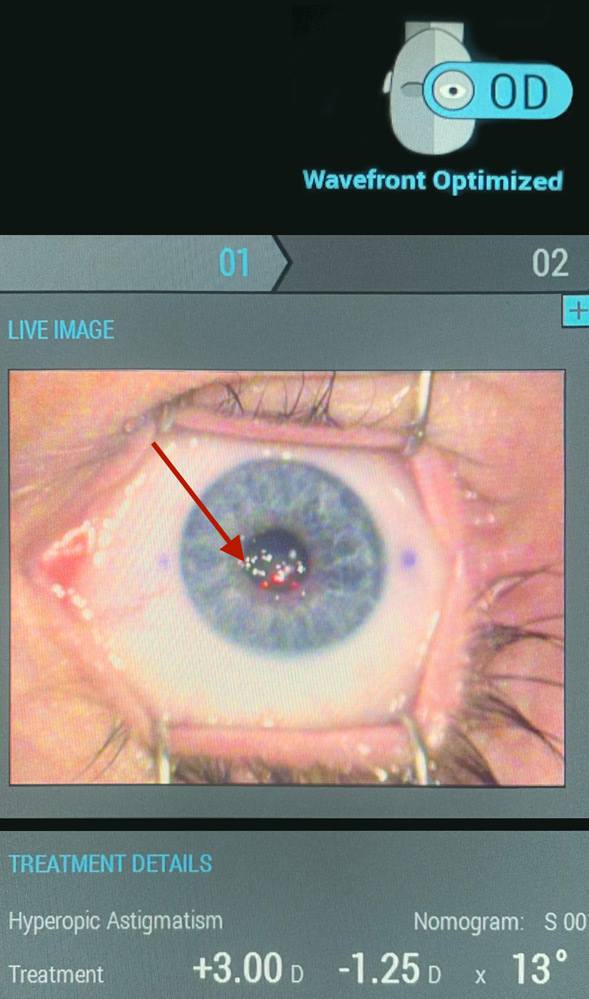
When a patient is scheduled for LASIK, they have high expectations for that postop day 1 “wow” factor that LASIK provides, said Ella Faktorovich, MD. However, in the years following the onset of the COVID-19 pandemic, Dr. Faktorovich noticed increased frequency of epithelial loosening during LASIK flap lift.
Despite the extensive screening for epithelial basement membrane dystrophy (EBMD) and perfect surgery, Dr. Faktorovich said she has seen more patients experience epithelial loosening when the flap is lifted. This is “annoying,” she said because the patient then has to wear a bandage contact lens after their LASIK procedure, which is not the postop result that most of them are expecting.
The uptick, she thinks, could be related to prior COVID-19 infection.
“I started noticing in 2021 and 2022 cases of epithelial loosening almost every month. Prior to the pandemic, it would happen in a couple of patients a year, and we didn’t change anything in our preoperative screening or operative protocol,” Dr. Faktorovich said. Putting some percentages to it, Dr. Faktorovich said epithelial loosening during LASIK pre-pandemic was 0.4%; post-pandemic it’s 1.78%. “It got to the point where we had to add a separate paragraph on the consent form of this being a possibility.”

Source: Ella Faktorovich, MD
So why does Dr. Faktorovich think it could be related to prior COVID-19 infection, other than the timing of the uptick in these cases? After doing some research, Dr. Faktorovich said she learned that the virus binds to ACE2 receptors, which are present in the corneal epithelium. One study showed that there was increased incidence in perioperative corneal injuries in the COVID-19 era.1
Once she started seeing more patients with this issue, Dr. Faktorovich said she looked at past publications to see if there were techniques to make the interaction with the corneal surface gentler. She found a couple of papers that shared a technique Brian Will, MD, used.2 Dr. Will described how he optimized the anesthetic for LASIK patients with a protocol that adjusted proparacaine to a neutral pH and froze it. Dr. Faktorovich said she had been using tetracaine in the decades prior, and it, like proparacaine unadjusted, is acidic. She called Dr. Will to talk through his protocol, and he told her that he has had very little incidence of epithelial disruption in LASIK with it.
“[Several] months ago, I started using that protocol. I have not had a single incident of epithelial loosening since then, so I’m cautiously optimistic,” Dr. Faktorovich said.
Dr. Faktorovich said she’s discussed epithelial loosening during LASIK flap lift post-COVID-19 with a few other physicians who said they haven’t noticed. But she noticed the number of patients had gone up 4 times, becoming very obvious.
She also said with her PRK patients who have clinical EBMD, there is a symmetric bubbling of the epithelium when it is soaked in alcohol and rinsed off. She’s noticed that happening with greater frequency since the pandemic as well.
At this point, Dr. Faktorovich said she wanted to share her observation and the protocol that has worked to improve epithelial stability.
About the physician
Ella Faktorovich, MD
Pacific Vision Institute
San Francisco, California
References
- Yeoh CB et al. Perioperative corneal injury: An unseen casualty of COVID-19. JOJ Ophthalmol. 22;9:555757.
- Will BR. LASIK: A breakthrough in epithelial protection. Ophthalmology Management. Feb 2002.
Contact
Faktorovich: ella@pacificvision.org