Glaucoma
Spring 2025
by Ellen Stodola
Editorial Co-Director
During the COVID-19 pandemic, ophthalmic practices turned to telemedicine to be able to stay in contact with their patients and get them the care they needed. In this article, two physicians discussed their experience with telemedicine, including how they saw its applications evolve, how they’re using it currently, and thoughts on the future potential of telehealth options in the field of ophthalmology.

Source: Amy Fox
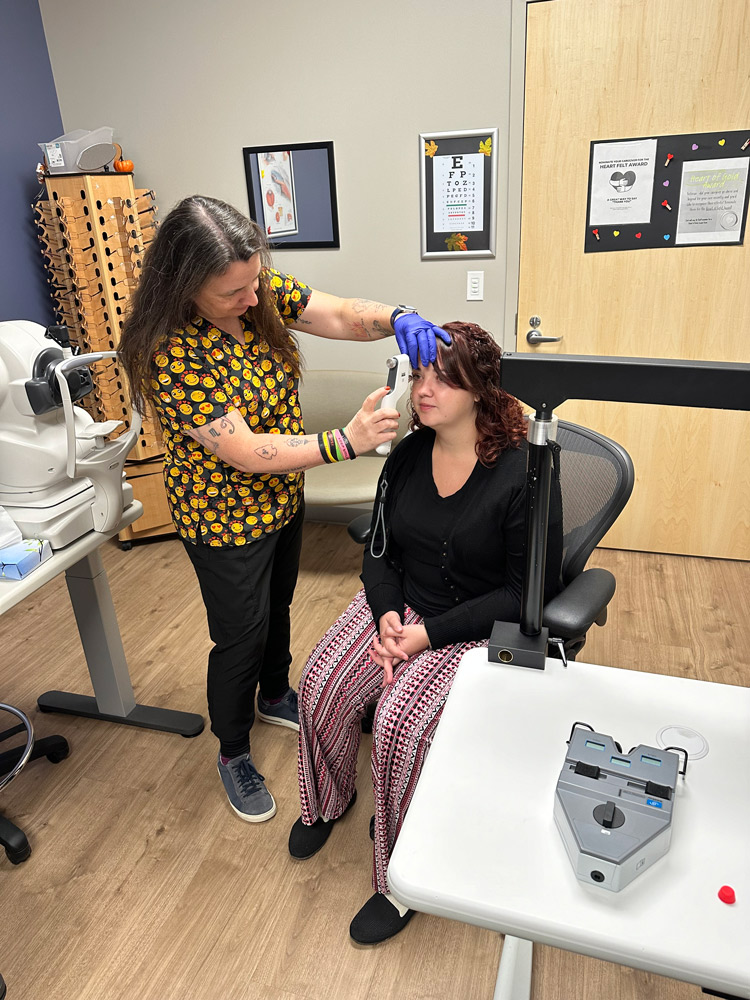
Source: Amy Fox
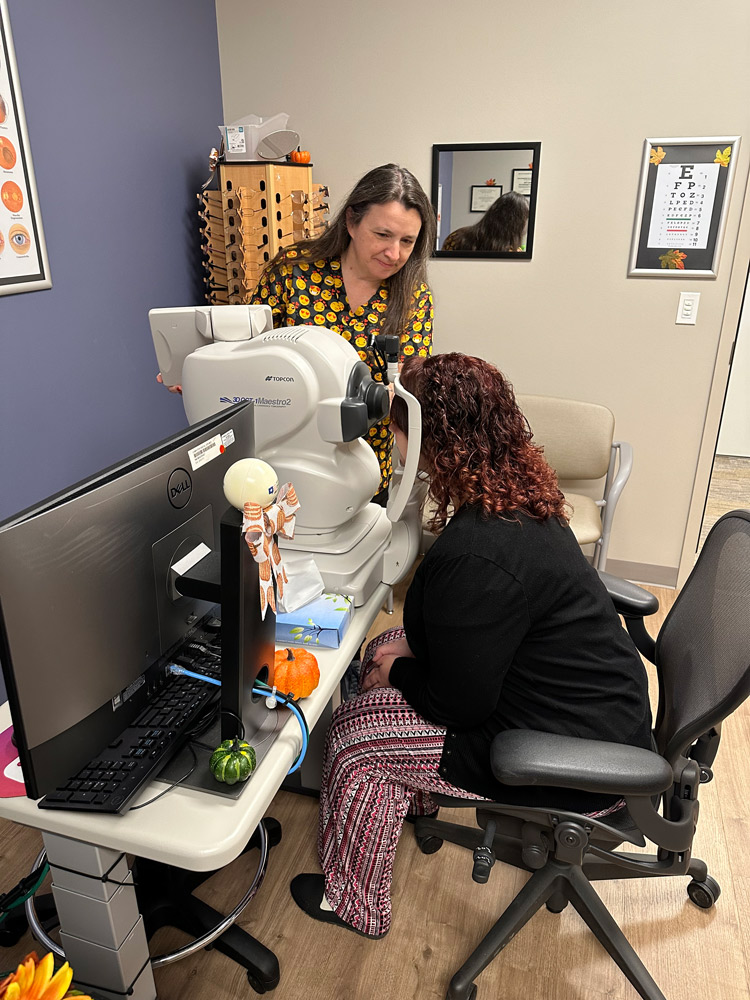
Source: Amy Fox
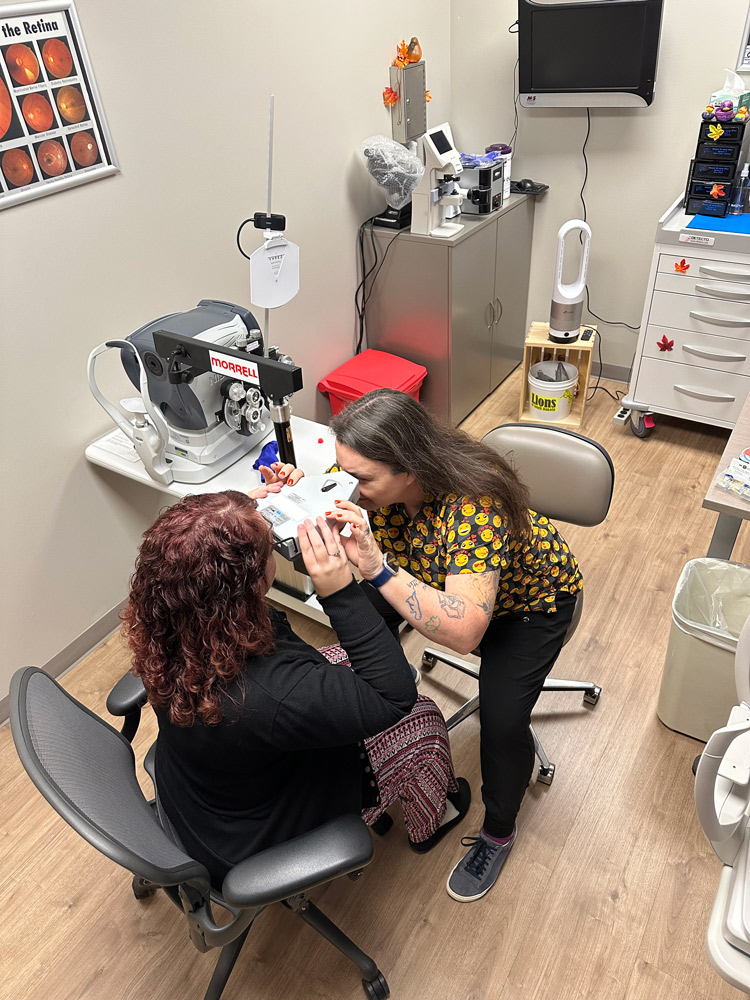
Source: Amy Fox
April Maa, MD
Dr. Maa had experience with telemedicine before the COVID-19 pandemic. “When the pandemDuring the COVID-19 pandemic, ophthalmic practices turned to telemedicine to stay in contact with patients and get them the care they needed. In this article, two physicians discussed their experience with telemedicine, including how they saw its applications evolve and thoughts on the future potential of telehealth options.ic hit, we already had the telehealth infrastructure in place,” she said. “Our telehealth infrastructure, because we’re a national healthcare system, was based at the primary care clinic, so that was helpful to help debulk the main eye clinic because the patients could go to a site that was smaller and less crowded and be seen there. That helped with social distancing and waiting.”
When the pandemic hit, Dr. Maa said care was able to continue in primary care clinics with extra precautions and cleaning. After the pandemic, the same work continued, but Dr. Maa said they expanded the amount of work that they were doing via telehealth because of the workforce shortage that made access to eyecare tighter. The telehealth sites alleviated some of this stress.
“We swapped out some equipment we had at our primary care clinics and made that eyecare access point capable of doing more advanced testing. Before we were only doing glasses and screenings, and now we’re doing even more—visual fields, OCTs—so for people who have disease, we are able to care for them as well,” Dr. Maa said.
Dr. Maa said her center has begun using telehealth for subspecialty care, e.g., retina, specifically managing medical ophthalmology cases that are non-procedural. Currently, they’re using telemedicine for screening and glasses, glaucoma follow-ups, retina follow-ups (dry AMD, epiretinal membrane), and they are exploring options for telehealth methods in non-urgent neuro-ophthalmology cases. “We’re using it for any condition in which we know that the testing we can get at the telehealth site would be equivalent to the testing we would get in the clinic and following that up with a phone call or video call to convey the results after everything is tested.
“The way our system is set up is there’s an ophthalmology clinic in the main hospital, then there’s satellite primary care clinics, and those primary care clinics can be far away from the main hospital, 3–4 hours depending on which region of the country you’re looking at,” she continued. Patient monitoring at primary care clinics can allow them to track vision changes to know when the patient needs to see a doctor at a specific eyecare clinic. “We’re helping to take care of more patients and save them the travel.”
Dr. Maa said communication with patients is key, and lessons learned have improved this over time. “We have done some improvements in which we make sure the patient gets a handout that tells them what the next steps are,” she said, adding that her telehealth hub has set up their own call center. “If we call them and are unable to reach them, we can now give them a centralized phone number, and they’re able to call that number back so they can be educated about what’s going on with their eyes. If they want to talk to the doctor again, it’s a way to let the doctor know that the patient wants to speak with them. It helps facilitate continuity after the telehealth visit.”
Additionally, Dr. Maa said they have recently been looking at sustainability and impact on health equity. “We’ve been looking at the cost effectiveness of this process,” she said. This includes how many patients are reached and what patients are getting diagnosed within the rural communities. That information was gathered across the country and has recently been published in Ophthalmology.1 The paper illustrated that rurality is the number one risk factor for eye disease severity and burden of eye disease and showed that the telehealth sites promoted health equity while also being sustainable after seed funding ended.
Looking to the future, Dr. Maa said she’d like to be able to incorporate a slit lamp exam. “If we were able to get that done, we’d be able to manage some more anterior segment disease.” The other area where innovation is occurring is in different protocols where the technician and doctor are connecting live. “We’re looking at using this live video connection in the evaluation of complex things like double vision,” she said.
During the pandemic, Dr. Maa said they had to do a lot only by Zoom because they weren’t letting anyone except for emergency cases come in. Once the pandemic subsided some and vaccines became available, telehealth care ramped up substantially as part of the effort to reach out to patients and “catch up” on appointments that had previously been canceled. In addition, telehealth has increased clinic organization. “Another thing we have done is we have used telehealth to be our ophthalmology presence to support an optometry-only clinic, and we’ll travel to that optometry clinic to see patients who we initially triaged through telehealth.” They see 100 patients via telehealth and know which patients need laser, gonioscopy, etc. “Patients will come on a day when the doctor is physically there, then we do the procedures and lasers that are needed. We’ve made that doctor’s time efficient and high yield in terms of procedures. That’s also been helpful to make the clinic more efficient.”
Grayson W. Armstrong, MD, MPH
Dr. Armstrong also had some experience with telemedicine prior to the pandemic. “I think when the pandemic hit, everyone started scrambling and figuring out what they needed to do or what they might have at their fingertips,” he said. “At that point, the only thing that we had done before was diabetic retinopathy screening using fundus photos.”
Dr. Armstrong was in a telemedicine fellowship at Mass Eye and Ear during the pandemic. “I had talked to the hospital leadership and negotiated this fellowship and helped create the curriculum for it before the pandemic started. When the pandemic happened, everyone looked to me and said, ‘What can we do?’”
He said they tried implementing hybrid telemedicine, which had varying degrees of success. “The way we define hybrid telemedicine is a patient will come to a testing center or into the office and get testing done in a testing-only visit,” he said. “The doctor will review the testing and hop on a video call or telephone call and talk about the results. In that way, you can get any testing you’d get in the office and have all that data at your fingertips.”
Dr. Armstrong said this was helpful for patients with glaucoma or suspected glaucoma, early or intermediate AMD, and ocular hypertension. Now there are people doing it for keratoconus or ectasia, or preop evaluations for LASIK. “I think it’s a nice way to get clinical data that we need, and the video call is useful because you have clinical data in front of you, you can talk to the patient and show them the testing or images as if they’re in the office, but it saves the patient time and effort, and it saves the physician time and effort, too.”
Dr. Armstrong thinks being part of a larger institution helped with telemedicine implementation. “Because we were part of a big institution, Mass General Brigham, we had their support, so they quickly implemented a secure version of Zoom and Doximity that they encouraged us to use for video and audio calls, and because of that, we didn’t have to go searching for different platforms,” he said.
Dr. Armstrong said there was a lot learned from the experience of using telemedicine during the pandemic. After 2020, they had about 9 months of data. “We looked at all of the data from the year and tried to determine if the patients we were seeing with telemedicine were the same ones we were seeing normally in the office.” He said this data was published in JAMA Ophthalmology.2 It was found that telemedicine was more likely to be used by patients who were highly educated, white, English speakers, and women. There was a whole population of underserved and unrepresented populations that were not getting access to this, and it pushed the institution to adjust.
“We integrated interpreter services to the system, and we educated our providers about this underrepresentation and let them know to try their best to see everyone,” he said “We also realized that video calls were used more often by wealthier people, and audio calls were more frequently used for people of a poorer socioeconomic status because they might not have access to Wi-Fi at home, so we made it a priority to maintain audio-only visits, even if insurance companies rolled that back.”
Initially, Dr. Armstrong said the hybrid telemedicine approach needed to evolve because the EMR being used wasn’t set up to do a multiday visit, where there was the testing on one day and the visit on another. “Now we have a system where the patient can self-schedule the visit on the day they want and the virtual visit on a different day, and that’s all connected in the EMR, so the billing works, too,” he said. The theoretical issue is you’re submitting a visual field test out of the blue on one day and you’re submitting an E/M visit on another day, but because it’s a virtual visit, there isn’t any clinical data linked to it. “I think insurance companies may get a little skeptical about higher billing codes if there’s not data to support it, so this was important to make sure they saw that we were using a lot of data, like applanation tonometry, visual fields, and OCT, to make our determinations of the glaucoma state of the patient, for example.”
Dr. Armstrong also serves as director of Mass Eye and Ear’s emergency room. “[We] always had a high throughput of patients, and even in the pandemic, it didn’t slow down much. There were still real emergencies. We wanted to try to find a way to decompress, so we started using telemedicine for follow-up visits for patients,” he said. This helped to keep in contact with the patient, while saving them travel time, as long as it was an appropriate condition to follow up with remotely.
This telemedicine system was then rolled out for new patient encounters, but a system was put in place to make sure true emergencies still came for an in-person evaluation. “We’ve now set up a hotline that a patient can call in, and there’s a series of questions that the nurse will triage the patient with to make sure they’re appropriate, and we can set up a telemedicine appointment as their first visit before they even come in, assuming they need to come in at all,” he said.
Telemedicine took some adjustment for physicians, not just patients, Dr. Armstrong said. “We realized a lot of physicians weren’t comfortable, so we created a lot of tip sheets and educational materials. We created a whole curriculum to train all the residents at Mass Eye and Ear in using telemedicine, so that curriculum has been through 4 years’ worth of iterations,” he said.
Telemedicine is its own thing, but Dr. Armstrong predicts there will be a time when AI and support technologies are going to play a bigger role. “Right now, the only AI approved in the field of ophthalmology within the U.S. is to autonomously detect diabetic retinopathy using fundus photographs,” he said. “Those tools have been on the market and are meant to be put in a primary care office so you can take a photo and diagnose DR in the office without an ophthalmologist present.”
Work is also being done to help screen for glaucoma. “We’re going to be using virtual reality visual fields and AI to try to screen for glaucoma in that same DR population, since they’re already getting photos, and that’s a population at higher risk,” he said. “If the FDA approves tools like this, it would be helpful to use AI for screening for DR, glaucoma, AMD, and other diseases.”
There’s also a move toward the use of phone cameras and images to perform AI, which Dr. Armstrong said is being looked at domestically and internationally. Tools exist where you can take a photo of the face and tell general health metrics and systemic issues, he said. There’s been a lot of work in the space of systemic health based on a fundus photograph as well. Because the eye gives you access to the nerve tissue and the blood vessels of the retina, it can tell you things that are surprising but make sense, like risk of Alzheimer’s, kidney status, systolic blood pressure, etc. “I think there’s going to be a movement slowly toward this idea that instead of doing blood work, we can do this based on photographs,” Dr. Armstrong said. “I think ophthalmology and the eye will play a bigger role in that space.”
Dr. Armstrong thinks virtual reality and augmented reality will someday enhance this space as well. If you have a patient with a virtual reality headset talking to an avatar of the physician, you can save a lot of time on counseling and education, he said. If you use a ChatGPT-style large language model, it could be trained to answer questions and walk patients through complex decisions. You could have a headset show patients what their vision would look like with different lenses.
The last big technology piece is personalized medicine where you have all of the patient’s health metrics, alongside AI and other tools, and it’s personalizing the decision, the medication, or the prognosis for each patient, Dr. Armstrong said.
Dr. Armstrong stressed that telemedicine is up to the provider to offer and up to the patient to accept. While he recognized that it’s still “not super widely utilized,” he sees value. “It has a huge benefit for patient access, a huge benefit for practice efficiency, and people can get really creative with it,” he said.
About the physicians
Grayson W. Armstrong, MD, MPH
Director of Ophthalmology Emergency Services
Associate Director of Ophthalmology Medical Student Education
Mass Eye and Ear
Harvard Medical School
Boston, Massachusetts
April Maa, MD
Director of the National Subspecialty Ophthalmology Network
VISN 23 Clinical Resource Hub Minneapolis VA Healthcare System
Eagan, Minnesota
Professor of Ophthalmology
Emory Eye Center
Emory University School of Medicine
Atlanta, Georgia
References
- Simon LS, et al. National experience of Technology-based Eye Care Services: a comprehensive ophthalmology telemedicine initiative. Ophthalmology. 2024. Online ahead of print.
- Aziz K, et al. Association of patient characteristics with delivery of ophthalmic telemedicine during the COVID-19 pandemic. JAMA Ophthalmol. 2021;139:1174–1182.
Relevant disclosures
Armstrong: Chart Biopsy, DynaMed, Kriya Therapeutics, McKinsey & Company, Ocular Technology, Optomed, Xenon Ophthalmics
Maa: None
Contact
Armstrong: Grayson_Armstrong@meei.harvard.edu
Maa: amaa@emory.edu