ASCRS News
Spring 2024
by Ellen Stodola
Editorial Co-Director
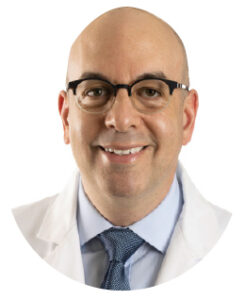
“He has extensive academic knowledge, he is collaborative, and he genuinely cares about his students’ progress, his patients, and promoting research within and outside of his community. Dr. Shoham-Hazon is a professional model and exemplary clinician researcher. He is inclusive and team-oriented and instills a passion for research for those who are fortunate enough to be mentored by him. Dr. Shoham-Hazon is both a leader and collaborator within the ophthalmology community.”
—A nomination for Nir Shoham-Hazon, MD, to receive the ASCRS Educator Award
The embodiment of a teacher clinician scientist, an admirable teacher and physician, a close mentor to his learners: These are just a few descriptions from those nominating the recipient of this year’s ASCRS Educator Award, Nir Shoham-Hazon, MD. He was described as “an approachable person who is patient and does not hesitate to take all the necessary time to allow his students to achieve the best of themselves.”
Dr. Shoham-Hazon has been involved in education and academics even before he got into ophthalmology. “Halfway through medical school, I developed a passion for research and teaching and stumbled across ophthalmology,” he said. Dr. Shoham-Hazon’s interest in ophthalmology stemmed from a LASIK procedure that he underwent. “I thought it was an amazing thing to go from requiring glasses from the moment I opened my eyes in the morning until I shut them at night to being completely independent of glasses for 20 years after that. That was life changing. It was a safe procedure, and my results were amazing, and I wanted to make these life-changing events for patients.”
“It invigorates me to continue and teach more but also learn more myself. With novel MIGS procedures, I too have to stay up to date and learn new technologies, which keeps me abreast in the field through clinical, surgical, and research opportunities.”
Nir Shoham-Hazon, MD
This spurred Dr. Shoham-Hazon to research more about LASIK and ophthalmology. “I interviewed for residency and had a few research projects and papers under my belt, so I was accepted into ophthalmology,” he said.
Dr. Shoham-Hazon completed his residency in Israel. He was interested in both teaching and research and took an early interest in glaucoma. “In 2010, I was accepted and did Ike Ahmed’s fellowship on glaucoma and advanced anterior segment surgery,” he said. As a glaucoma surgeon, one must master complex cataract ‘adventures,’ as those arise frequently in this cohort of patients.
Dr. Shoham-Hazon said he was particularly interested in participating in and teaching skills transfer labs at the ASCRS Annual Meeting, wanting to expand the glaucoma offerings, and he suggested to organizers that a course on trabeculectomies and tube shunts should be added as an option. He led this course for several years and noted that there was a lot of interest. “We had a lot of industry support. Industry was keen on educating comprehensive ophthalmologists about trabeculectomies and various tube shunts,” he said.
Dr. Shoham-Hazon continued to be involved in teaching opportunities with ASCRS skills transfer labs when he introduced MIGS to the programming. “It was an amazing opportunity to transition from the tubes and trabs to teaching minimally invasive glaucoma surgery in the skills transfer labs,” he said. “That has been going on for almost 10 years now, and I’m the lead instructor. I have been doing it because of my love for the profession and my desire to help comprehensive ophthalmologists and younger surgeons acquire the skills to help their patients, not only in cataract surgery but in glaucoma surgical care.” Cataract and glaucoma are common comorbidities; hence, it would be beneficial to the patient to have both diseases treated at the time of cataract surgery. Our glaucoma patients are fortunate to be living in an era where we can treat them with a safe and effective procedure with a recovery time that is similar to cataract surgery recovery, benefiting from a MIGS procedure at the same time. Dr. Shoham-Hazon said he feels fortunate to be able to contribute by leading these labs and is looking forward to adding to the MIGS offerings this year with expanded programming.
In addition to teaching at the ASCRS Annual Meeting, Dr. Shoham-Hazon helps train fellow surgeons year-round in his region. “Practicing in rural New Brunswick, Canada, you develop an understanding that rural medicine and ophthalmology is a little different, and sometimes it’s upon the comprehensive ophthalmologist to deliver all the services they can; that sometimes includes glaucoma as well,” he said.
In his province, Dr. Shoham-Hazon said he is the only fellowship-trained glaucoma and advanced anterior segment surgeon. New Brunswick is a small province, he said, with 26 ophthalmologists. Because of this, it can be difficult for patients to come to a tertiary care center. “Some comprehensive ophthalmologists have the skills and interest to perform these procedures, and I walk them through it in person, in the OR, and on the phone,” he said. “They come to my operating room, or I go to their operating room and teach them.”
Dr. Shoham-Hazon said he has been exposed to MIGS for over a decade. “When I started residency, there was [mostly] only trabs and the rare tubes. Now, we have so many options to offer our patients and cater to their needs,” he said. “In 2018, a comprehensive ophthalmologist friend and I embarked on a start-up to design a MIGS device of our own and through years of experience, bring MIGS to a new level, something I like to term MIGS 2.0.” MIGS 2.0 would take MIGS procedures out of the operating room and into an office setting, allowing faster, more accessible interventional care for those patients that might need it, he said.
Teaching opportunities don’t only apply to those early in their career, he said, adding that you can teach people who have been specialized for 10 to 20 years. “It’s exciting to see that people who are already well established in their careers are still interested in learning and being able to provide something beyond the comprehensive care to their patients,” he said. “It invigorates me to continue and teach more but also learn more myself. With novel MIGS procedures, I too have to stay up to date and learn new technologies, which keeps me abreast in the field through clinical, surgical, and research opportunities. The bottom line is we’re doing this for our patients. We want the best patient care, and if we can educate others to provide the best care they can, it makes it all worthwhile.”
Glaucoma is challenging; it’s a chronic disease, Dr. Shoham-Hazon said. It’s not an easy fix, and it’s a long-term relationship with the patient. Being able to offer them more and for them to feel comfortable with someone who has been treating them for decades and is now able to offer them a surgical procedure, it reassures the patient and gives them hope for the future, he said. “Sometimes we associate glaucoma with blindness, but if you’re able to offer comfort and reassurance and a structure in the therapy with one surgeon or caregiver, that’s advantageous for patient care.”
Dr. Shoham-Hazon said he considers the ASCRS Annual Meeting his top choice of conferences to attend. “There’s so much to learn, and it’s a mutual thing. You get a lot of information, and you can provide colleagues with a lot of information, so it’s an amazing meeting.”
For Dr. Shoham-Hazon, it’s an honor for ASCRS to recognize his efforts as an educator. “It’s not something I was looking for or thought I would get. I’m doing it because this is what I see my mission in life to be, to educate surgeons and the younger generation into loving the profession and being able to help save sight.”
About the physician
Nir Shoham-Hazon, MD
Assistant Professor
Dalhousie University, Halifax NS, Miramichi NB Campus
Clinical Assistant Professor
Memorial University of Newfoundland, Miramichi NB Campus
Eye Physician and Surgeon
Glaucoma & Advanced Anterior Segment Surgery (GAASS)
Director, Miramichi EyeNB & Surgical Centre of Excellence
Miramichi, New Brunswick, Canada
Contact
Shoham-Hazon: dr.SH@eyeNB.ca