ONLINE EXCLUSIVE
September 2023
by Liz Hillman
Editorial Co-Director
A 14-year-old boy who had significant vision loss due to a rare genetic condition recently had his sight restored due to a first-of-its-kind topical gene therapy.
According to an article published on the UHealth Collective website of the University of Miami, Antonio Vento suffers from dystrophic epidermolysis bullosa (DEB). The National Library of Medicine describes this as a condition that causes the skin to be fragile and blister easily with severe cases resulting in “blistering that can lead to vision loss, scarring, and other serious medical problems.” It estimates its prevalence at 3.3 million people worldwide.
Antonio had one of the more severe cases. According to the UHealth article, he had surgery in 2016 and 2017 to removed scarred corneal tissue, but it came back. A couple of years ago, Alfonso Sabater, MD, PhD, medical director of the Bascom Palmer Eye Institute Ocular Surface Program and director of the Corneal Innovation Lab, began researching whether a drug that was being used to treat Antonio’s skin condition could be reformulated for ocular application.

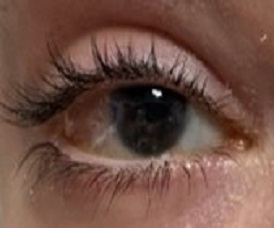
Source: Krystal Biotech
The UHealth article explained that after 2 years of safety and efficacy testing, the FDA granted compassionate use approval to try this reformulation as a drop for Antonio. The company helping develop this therapy is Krystal Biotech. A press release from the company described the therapy as topical beremagene geperpavec (B-VEC), which is designed to deliver two copies of the COL7A1 gene to DEB wounds. Further, the company described how the drug provides the patient’s cells with a “template to make normal COL7 protein, thereby addressing the fundamental disease-causing mechanism.” B-VEC has orphan drug designations from the FDA and EMA and has a fast-track designation and rare pediatric disease designation from the FDA.
According to the company’s press release, the patient dosed with B-VEC (identified as Antonio in the UHealth article) presented with cicatrizing conjunctivitis; he had symblepharon lysis with pannus removal in his right eye, after which B-VEC was administered along with routine postop care. B-VEC was well tolerated, and full corneal healing was observed at 3 months. The patient’s visual acuity went from hand motion to 20/40 after 7 months of ongoing treatment. The UHealth article stated that Antonio’s vision is now 20/25 and stable.
“I’ve seen the transformation in Antonio’s life,” Dr. Sabater said in the UHealth article. “He’s always been a happy kid. Now he’s very happy. He can function pretty much normally. He can read, he can study, he can play video games.”
Read the full article on the UHealth Collective.