ONLINE EXCLUSIVE
ASCRS News
June 2023
by Ellen Stodola
Editorial Co-Director
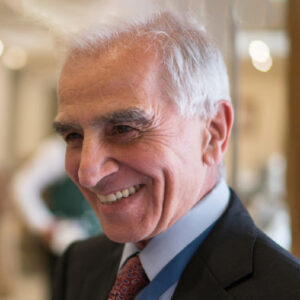
ASOA President Patti Barkey, COE, began the second General Session of the 2023 ASOA Annual Meeting by recognizing ASOA Executive Director Laureen Rowland, CAE, who is retiring at the end of the year, after 12 years with the organization. “She exemplifies leadership, which is what we’re all trying to do,” Ms. Barkey said. “She also wants to see us do good, and that’s what made her such a wonderful leader. She allows everyone else to shine.”

Source: ASCRS
Ms. Rowland took the stage to give some remarks. “My career has spanned more than 40 years in association management,” she said. “The last 12 years with ASOA have truly been the pinnacle of my association management career.” Ms. Rowland thanked the ASOA leadership, members, and her staff, adding that she is “so thrilled with where ASOA is today and can’t wait to see where it goes.”
Ms. Rowland also introduced the new ASOA Executive Director Megan Odell, MHHR, who will begin the transition in the fourth quarter of this year.
Next, Hayley Boling, MBA, COE, introduced the session’s keynote speaker, Leslie Riley. “We’ve had 4 days of incredible education,” she said. “There are takeaways and nuggets in every session we attend.” But now, she continued, everyone is going back to their practices and will be faced with the daily challenges and fires to put out. You don’t want to lose the excitement you gained at the meeting, she said. “We want to help you prioritize all that you’ve learned so that your practice owners know that the ASOA Annual Meeting provides information that you can take back to the practice, implement, and use to make a difference on a daily basis,” Ms. Boling said.
She then spoke about goal setting. An article she read indicated that people who have goals are 10 times more successful than those who don’t.
Goal setting changes over time, Ms. Riley said, mentioning how she was a different person last year because of her father’s cancer diagnosis. “My goals took a backseat,” she said. “When we think about goals, we have to think that we’re setting a direction for where we want to go, but we might have to hit the brakes sometimes.” There are statistics and studies that show when you set goals and put some structure behind it, you can achieve more.
Ms. Riley shared a story about how trees in the rainforest are their own ecosystem. Leaves fall to the ground around these trees, and these leaves help nurture the trees because the soil is shallow and doesn’t have enough nutrients. The leaves decay, and the nutrients from the leaves nurture the trees. Ms. Riley likened the attendees in the room to these leaves, helping the industry to grow. “Whether you’ve been in the industry a decade or a day, you have a perspective, and you know things,” she said.
She went on to discuss the shape of a conversation. “When you use your voices, you tap into your inner wisdom, and when you do that as a team, magic can happen,” she said.
When having a good conversation, there should be a clear purpose and objectives that you’re aiming for. Then you need to know the action items and next steps.
The purpose of a good conversation, Ms. Riley said, is to turn ideas into at least one actionable step you commit to. Her goals for attendees of this session were to listen and contribute; discover new insights about the industry, organizations, teams, and yourself to help perform better in your current role; and to inspire and be inspired. “Have your ears open for something that’s an ‘ah-ha’ or insight,” she said.
Ms. Riley said attendees should have an awareness of models to help define and prioritize useful goals, a list of goals that you are ready or even excited to pursue, and at least one actionable next step you commit to taking.
Ms. Riley highlighted four levels of goal setting.
- Self: What are my career goals? What step is next for me on my path? What skills do I need to be successful?
- Team: How do we tie into the bigger picture? What barriers get in the way of us delivering? What relationship skills do we need?
- Organization: What are our current areas of growth? How do we learn from other practices our size? Where do we want to be in 5 years?
- Industry: What is happening in our industry that may shape future policies? What new technology has been recently introduced or is being worked on? What disruptions have caught us off guard?
Attendees then broke into brainstorming groups to jot down some thoughts. They discussed themes like the impact of private equity on industry, Medicare reimbursement, and emerging technology. Moving on to the organization level, attendees discussed culture, cash pay procedures, and more. Attendees shifted one more time to discuss the team level, bringing up ideas like introverts and extroverts, relationships, and communication. Ms. Riley noted that this level is important because it’s what’s going on every day. People don’t always leave a team because of money; they often leave because of the team, she said, adding that it’s important to learn that people who are different from us aren’t our enemies; they’re just different.
Ms. Riley described goals as a steering wheel of your car; they set the direction. Goals are not necessarily the destination. You may or may not get there. A system, she said, helps you see how it’s happening. You need to put a system in place to achieve your goals.