
ONLINE EXCLUSIVE
Cornea
November 2022
by Ellen Stodola
Editorial Co-Director
During a session at the 2022 AAO Annual Meeting, Christopher Rapuano, MD, and Sonia Yoo, MD, debated the best way to surgically manage recurrent corneal erosions.
The audience was polled ahead of the presentations, with 65% indicating that they thought epithelial debridement with diamond burr polishing of Bowman’s layer is better; 25% said that PTK is better.
Source: Christopher Rapuano, MD
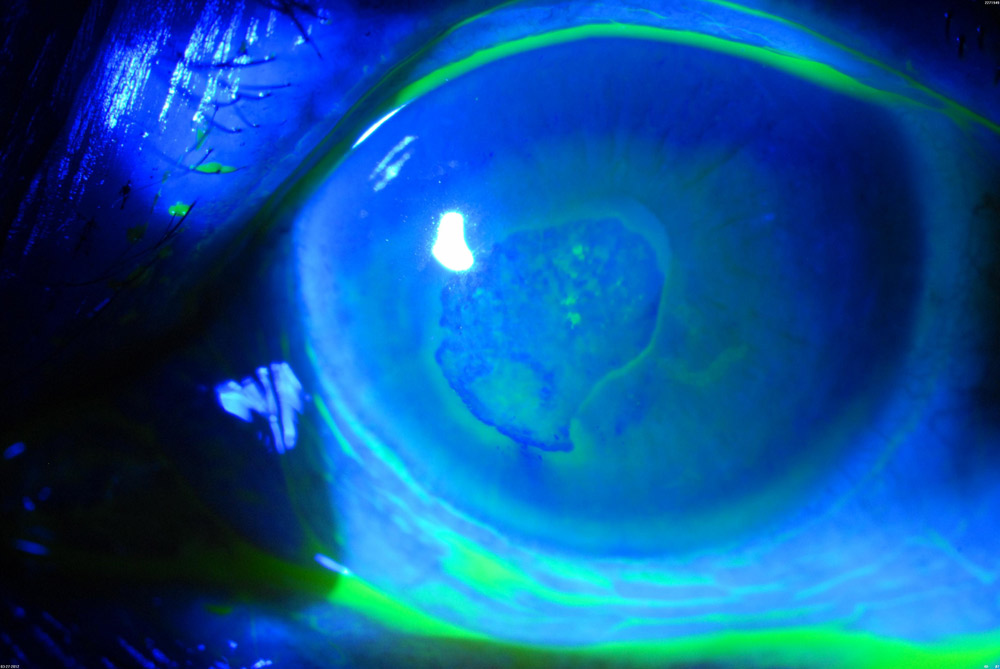
Dr. Rapuano took the stance that epithelial debridement with diamond burr polishing of Bowman’s layer is the better choice. One problem with recurrent erosions, he said, is there is a large spectrum of slit lamp findings, often delaying the actual diagnosis. Medical treatment for recurrent erosions includes tears/ointments, as well as bandage contact lenses and steroids.
Diamond burr polishing of Bowman’s layer entails removing all epithelium from the involved area, including all loose epithelium, and applying the diamond burr to Bowman’s uniformly for 5–10 seconds. Typically, this does not induce much corneal haze or refractive change, he said.
He also spoke about some of the downsides of using PTK. You need an excimer laser, and logistically, this takes longer than using a diamond burr. He added that success with PTK is not as good as with a diamond burr.
Dr. Rapuano cited a retrospective study from 20 years ago comparing PTK and diamond burr.1 The study found a 27% recurrence with PTK and 11% with diamond burr. There was a small number of subjects in this study, so the results were statistically similar. Combining a group of studies, the mean recurrence of corneal erosions with diamond burr polishing was 8.2%. There is a lot of variation in the results of PTK in these patients, he said, but combining a group of studies, mean recurrence rates were 21.2%.

Source: Christopher Rapuano, MD
In conclusion, he stressed that recurrent erosions are a common problem, and recognition is a critical first step. He added that the use of diamond burr is easier, faster, less expensive, as safe, and has fewer recurrences than PTK.
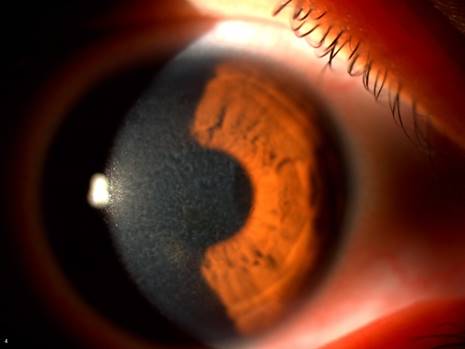
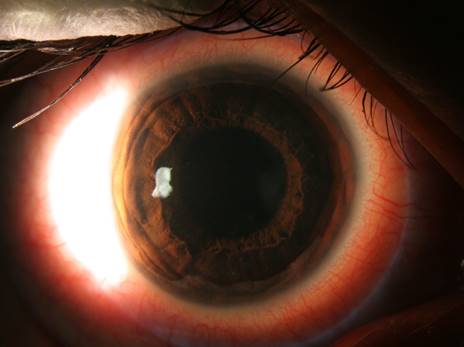
Dr. Yoo spoke about the use of PTK. PTK can be indicated in a number of scenarios, including recurrent erosions. She added that it’s important preoperatively to illicit a history of any conditions that could adversely affect wound healing. It’s also important to know any previous history of HSV keratitis, as this is a relative contraindication to using the excimer laser. On exam, physicians should pay attention to the type and depth of pathology at the slip lamp and surrounding corneal thinning. Looking at corneal pachymetry and performing the corneal sweep test to identify loose epithelium are also important, she said.
Source: Sonia Yoo, MD
Dr. Yoo also mentioned some of the medical therapies, which is the first-line treatment, including lubrication, hypertonic saline, punctal occlusion, bandage contact lenses, and steroids.
When using PTK for recurrent erosions, the epithelium is debrided over the region of the erosion, with 5–10 μm ablation of Bowman’s layer. Dr. Yoo said to avoid placing the edge of the ablation in the visual axis. You may consider using a masking fluid to smooth out the ablation if there is a particularly irregular Bowman’s layer.
Complications could include a hyperopic shift, irregular astigmatism, residual opacity, subepithelial scarring, and HSV keratitis reactivation. However, Dr. Yoo noted that it is because of the hyperopic shift that she prefers using PTK for myopic patients because it reduces their symptoms and improves their uncorrected vision.
The recurrence rate when using PTK is between 6–20%, she said. The most compelling study, Dr. Yoo said, was a large study of 593 eyes in the British Columbia public health authority.2 All patients had been treated medically first and failed, and 5% had undergone surgical interventions. In the study, 78% did not require subsequent therapy after one PTK, and of six patients who did not respond, all were subsequently treated with PTK at a year with success.
Following the presentations, audience members at the session again voted on the best way to manage recurrent corneal erosions, with 81% choosing diamond burr polishing and 19% choosing PTK.
References
- Sridhar MS, et al. Phototherapeutic keratectomy versus diamond burr polishing of Bowman’s membrane in the treatment of recurrent corneal erosions associated with anterior basement membrane dystrophy. Ophthalmology. 2002;109:674–679.
- Bizrah M, et al. P-13 Trans-epithelial phototherapeutic keratectomy (PTK) for recurrent corneal erosion syndrome (RCES). BMJ Open Ophthalmol. 2022;7(Supp 1):A4.
Relevant disclosures
Rapuano: None
Yoo: None
Contact
Rapuano: cjrapuano@willseye.org
Yoo: SYoo@med.miami.edu