ASCRS News: YES Connect
June 2022
by Liz Hillman
Editorial Co-Director
There has been an increase in global ophthalmology fellowship programs in recent years, and a strong need for sustained international outreach continues. EyeWorld spoke with doctors who have extensive experience in this area.

Source: Neda Nikpoor, MD
Neda Nikpoor, MD
What Neda Nikpoor, MD, appreciated most from her fellowship with Stanford University/the Himalayan Cataract Project (rebranded as Cure Blindness) was the clinical and healthcare system learning she gained. She said she loved that “I was just as much of a student as I was a teacher.”
Clinically, Dr. Nikpoor said the surgeries in her fellowship were incredibly complex. She also had the opportunity to staff residents and do a wealth of work that would have taken a decade to experience at a U.S. academic institution. From a public health perspective, Dr. Nikpoor said she learned about where developing countries are on the arc of healthcare development. “I learned that sometimes the limitations of healthcare in a country have less to do with the doctor’s skills and more to do with the infrastructure limitations. For instance, a corneal surgeon may very well know how to do a PKP but can’t due to lack of access to corneal tissue. Skills transfer without system development is not enough.”
Dr. Nikpoor said to think outside of one’s own motivations when considering international work; it’s important to go into these situations not thinking about what you want to do or what you could learn. Rather, think about what the need is and how you can serve that need.
Global ophthalmology meetings are great ways to learn about the current work being done and opportunities available. Think about your own interests and how you could contribute, Dr. Nikpoor said.
Source: Russell Swan, MD
Russell Swan, MD
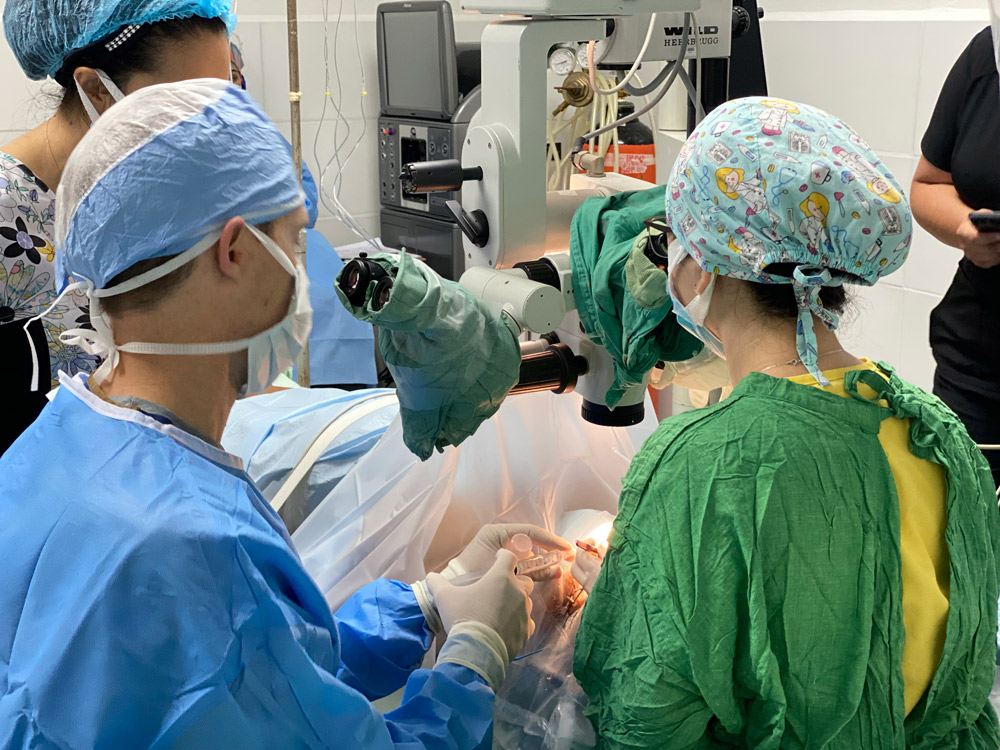
Russell Swan, MD, said international outreach and education has always interested him. He spent a month in Nepal in his fourth year of medical school and in his last year of residency. During fellowship, he started an association and worked in Central America. Over the last 5 years, Dr. Swan has been helping train attending doctors and residents in phaco and SICS.
One thing Dr. Swan said that his international work has given him that he doesn’t think he would have gained otherwise is flexibility. “[You need to have] the ability to improvise and think on your feet. The knowledge you gain in complex disease management and complex surgical care is incredibly valuable,” he said.
If you decide to do international work, Dr. Swan said it’s important to make a conscious commitment to go to that place 1–2 times a year over the course of 2–5 years. “The key to success is relationship development and trust development with a local partner,” he said.
Dr. Swan said one of the most rewarding moments from his work has been to see one of the first residents they started training in Honduras come back from a year-long fellowship and join the faculty at the same training center. “It’s special to see the evolution of her from the beginning of her training and residency through her program and now back on faculty,” he said.
Source: Allison Jarstad, DO
Allison Jarstad, DO
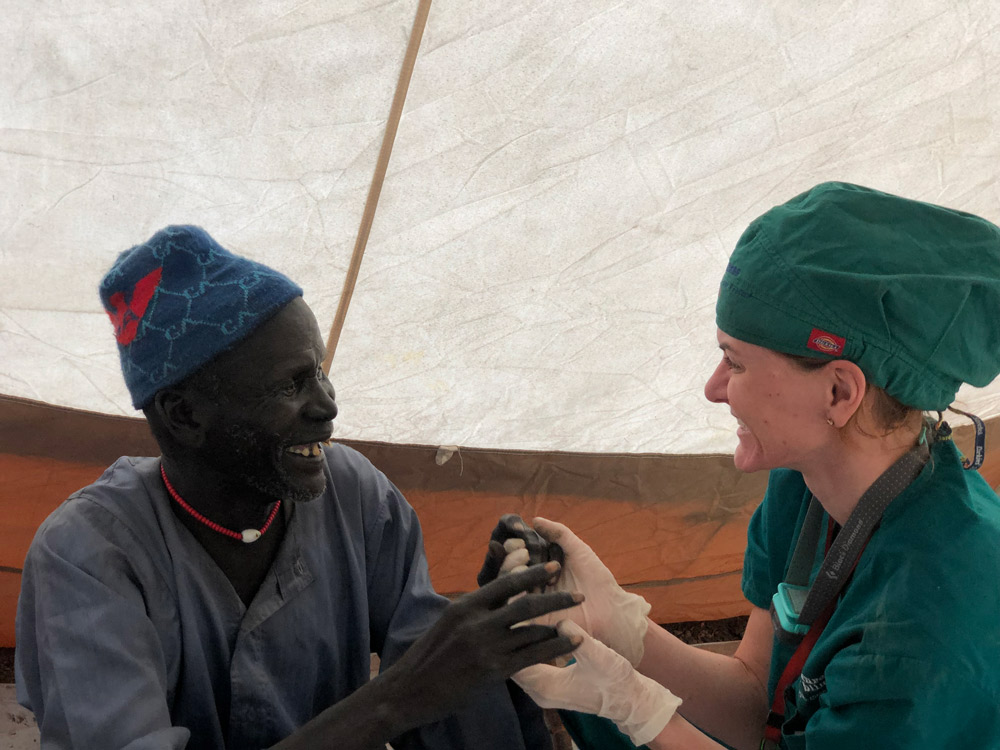
After residency and a cornea/refractive fellowship, Allison Jarstad, DO, did a year-long global ophthalmology fellowship with Stanford University/the Himalayan Cataract Project (Cure Blindness). “I was able to work with some extremely talented ophthalmologists,” she said. With this fellowship, Dr. Jarstad traveled to various places throughout Africa and Asia mostly working with cornea specialists who had already done some cornea training. “After we complete our fellowships, we often get to work with a mentor, but in some of the countries I worked in, there was only one cornea specialist, and for these doctors access to mentorship is limited. Building an ongoing relationship with these doctors was special,” she said.
Dr. Jarstad said she also grew significantly as a surgeon herself. “Whenever you’re teaching, you grow. But when you’re teaching in a location where you have limited access to other subspecialists and equipment, it forces you to improve. Getting through challenging cases in a limited resource setting stretched me as a surgeon,” she said.
Dr. Jarstad said that it’s important to recognize that you can have an incredible impact without doing a lot of high volume surgeries when participating in humanitarian outreach. “When you develop a mentorship relationship with another physician abroad, you can exchange your skills and what you have to offer,” she said.
If you are embarking on international work, Dr. Jarstad said you should take a SICS course, and it is helpful to engage with someone stateside who can mentor you for your first few SICS cases after taking the course.
Source: Soroosh Behshad, MD
Soroosh Behshad, MD
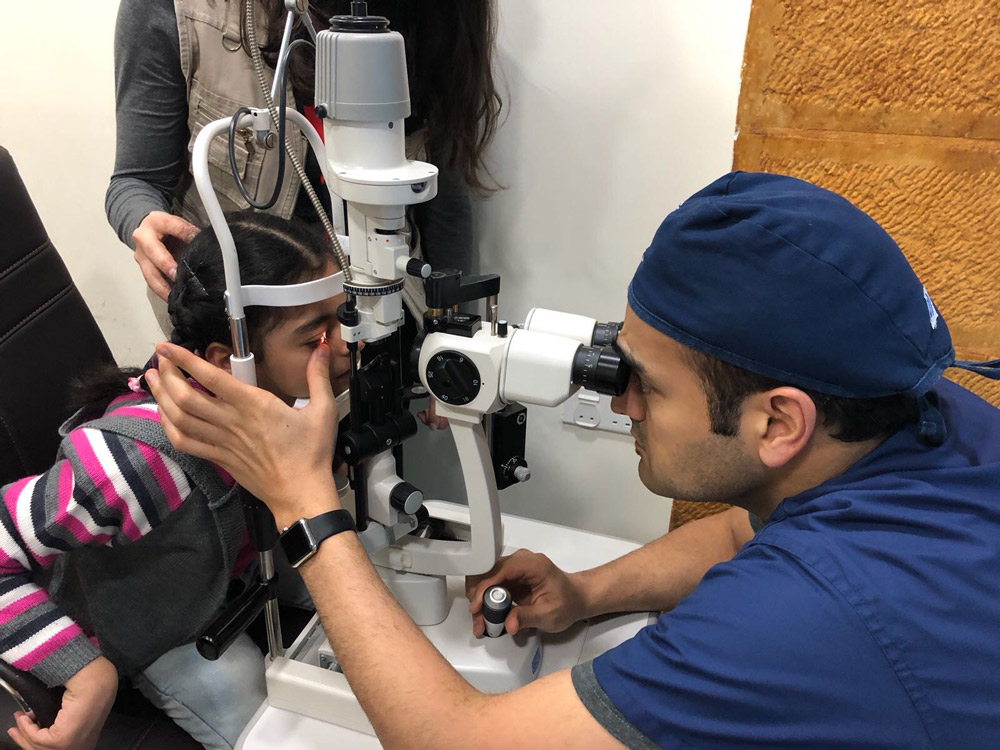
From undergraduate through a master’s degree in public health to being involved with Emory University’s global ophthalmology fellowship, Soroosh Behshad, MD, said global ophthalmology and humanitarian work has changed over the years. “Gone are the days when U.S. doctors would fly across the globe to underserved places to perform hundreds of cataract surgeries, then return home to their own practices and patients,” he said. “What we have seen is that many of these communities now have their own healthcare systems in place and in many cases have local ophthalmologists who can do these types of surgeries in a more efficient and cost-effective manner. Ophthalmology has moved toward ways of magnifying impact and building/strengthening local partnerships.”
Dr. Behshad said that international work gives him a deeper perspective on other cultures but also his own practice in the U.S. “A lot of times here in the U.S. we do not realize how much our healthcare system is focused on things like patient volume and earnings as metrics of success. The international experiences have helped me remember the importance of the doctor’s role serving our patients,” he said, adding that the experiences abroad often improve his own surgical technique at home. “Many of the techniques that I use to do vision screening working in a refugee camp and other places globally I have adapted and use here with local volunteer work,” Dr. Behshad said.
Dr. Behshad also mentioned other important considerations, such as attending lectures on these topics at meetings, increasing your skills in training, finding a mentor, and logistics like getting an up-to-date passport, getting a license to practice medicine where you’re traveling, and making sure you have the necessary vaccines.
article sidebar
View the full YES Connect webinar on global fellowship and international outreach in June at ascrs.org/membership/young-eye-surgeons/webinars.
About the physicians
Soroosh Behshad, MD
Associate Professor of Cataract, Corneal, and Refractive Surgery
Emory University School of Medicine
Atlanta, Georgia
Allison Jarstad, DO
Cataract and Laser Institute of Southern Oregon
Medford, Oregon
Neda Nikpoor, MD
Aloha Laser Vision
Honolulu, Hawaii
Russell Swan, MD
Vance Thompson Vision
Bozeman, Montana
Relevant disclosures
Behshad: None
Jarstad: None
Nikpoor: None
Swan: None
Contact
Beshad: soroosh.behshad@emory.edu
Jarstad: ajarstad@medfordeyedoctors.com
Nikpoor: drneda@alohalaser.com
Swan: russell.swan@vancethompsonvision.com