Browse articles from EyeWorld.org related to meibomian gland disease. EyeWorld is the award-winning member publication of ASCRS. The magazine provides news and updates from the Society as well as clinical features in the areas of cataract, refractive, cornea, glaucoma, and practice management. It publishes quarterly with editorial direction from its medical editorial board and staff.
➤ FDA approves elements of artificial vision system for blind patients
➤ Expanded indication for MIGS device
➤ 5-year pivotal trial data for MIGS device
➤ Topline results from Phase 2 study of investigational MGD treatment
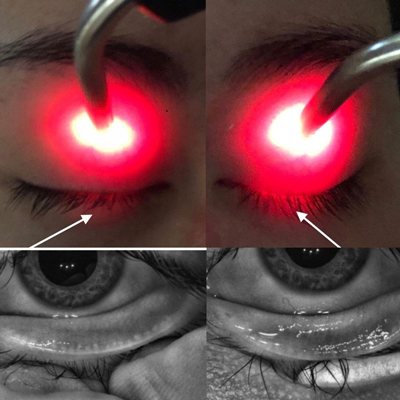
This 20-year-old college student with meibomian gland dropout and lid seal insufficiency had dry eye complaints. The student reported long computer hours, poor sleep, poor nutrition, excessive contact lens wear, and use of multiple over-the-counter and prescription acne treatment products.
Source: Laura Periman, MD
When teens come into the clinic, it’s important to consider that they might have dry eye or meibomian gland disease. Investigators in a recent study found that among minors coming in for eye exams, 15% were experiencing dry eye discomfort and 9% had signs of meibomian gland dropout, according to lead investigator Anna Tichenor, PhD.1
Meibomian gland dysfunction (MGD) is a common finding among patients who seek eyecare. In many patients, the disease is completely asymptomatic. In others, the severity can range from being a mild annoyance to significantly impacting vision and quality of life.

Meibomitis associated with evaporative dry eye
Source: John D. Sheppard, MD
A retrospective analysis suggests oral azithromycin may be beneficial.