Browse articles on EyeWorld.org. EyeWorld is the award-winning member publication of ASCRS. The magazine provides news and updates from the Society as well as clinical features in the areas of cataract, refractive, cornea, glaucoma, and practice management. It publishes quarterly with editorial direction from its medical editorial board and staff.
A paper published online ahead of print in the Journal of Cataract & Refractive Surgery covered the topic of managing iris defects caused by cataract surgery. Gary Foster, MD, one of the paper’s authors, gave EyeWorld insights on the paper, “Management of common iatrogenic iris defects induced by cataract surgery.”
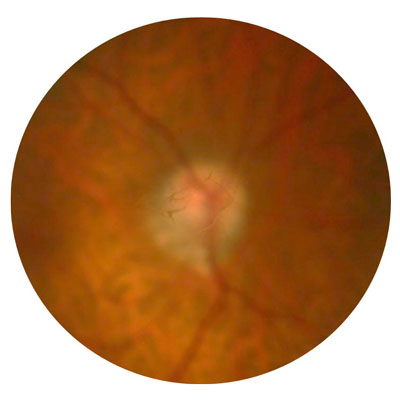
A 75-year-old patient developed a posterior vitreous detachment 3 weeks after uncomplicated cataract surgery in his right eye.
Source: Christina Weng, MD, MBA
When performing cataract surgery, it’s important to be aware of other conditions and comorbidities, including issues with the retina. Several physicians discussed how to handle patients with retina abnormalities prior to cataract surgery.

In an OR in Dr. Cotter’s ASC, a nurse anesthetist delivers pain/anxiety medication through an IV, an RN circulator manages the room environment, and a dedicated ophthalmic technician and surgeon concentrate solely on executing the cataract operation.
Source: Frank Cotter, MD
A hot topic among young eye surgeons that has drawn CMS attention in the past, two ophthalmologists shared their take on office-based cataract surgery.
Ophthalmologists take several measures to prevent endophthalmitis after cataract surgery, but one thing they can’t control could have an impact on endophthalmitis rates: the weather. According to a study published in the Journal of Cataract & Refractive Surgery, endophthalmitis rates peaked in the more hot and humid months.
Refractive Editor Vance Thompson, MD, discusses the impact from COVID-19 over the past year, as well as changes to practice and ophthalmology as a whole.
Astigmatic keratotomy (AK) and limbal relaxing incisions (LRIs) are tools that can be used by surgeons to help correct low levels of astigmatism. Two surgeons discussed how these can reduce astigmatism and how they’re using them in practice.
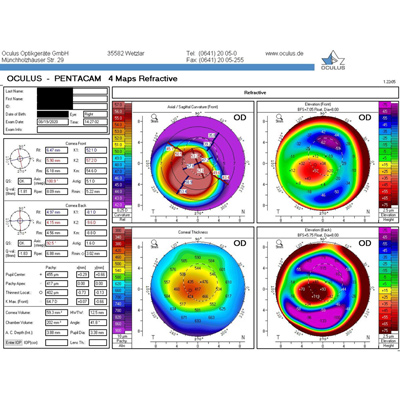
Epithelial thickness mapping was FDA approved in the U.S. in 2017, but awareness about its utility is growing. Three international ophthalmologists shared their experience with the technology and offered insights on where they think it fits in ophthalmic practices now and in the future.
Corneal ectasia after laser vision corrected was first reported in 1998, and since them, preop screening and treatment parameters have improved to help avoid the complication. The incidence of post-LASIK ectasia is not officially known. Experts discussed this incidence and how to determine candidates for refractive surgery.
When it comes to premium lenses, patients have high expectations for great outcomes. Three physicians discussed some of the technologies they use preoperatively, intraoperatively, and postoperatively to help achieve excellent outcomes.

Clara C. Chan, MD
Cornea Editor
Cornea Editor Clara Chan, MD, previews the topics that are explored in the section, including Demodex, vernal conjunctivitis, herpes zoster, and keratoconus screening.