Browse articles on EyeWorld.org. EyeWorld is the award-winning member publication of ASCRS. The magazine provides news and updates from the Society as well as clinical features in the areas of cataract, refractive, cornea, glaucoma, and practice management. It publishes quarterly with editorial direction from its medical editorial board and staff.
Running a clinic floor presents numerous challenges that require a blend of leadership, experience, and practical how-to knowledge. This Practice Management column included 12 key challenges and five success factors essential for effective management of the clinic.
Sumit “Sam” Garg, MD, Chief Medical Editor, expressed his excitement for the ASCRS Business of Refractive Cataract Surgery Summit and shared some of the topics covered in the Fall issue.
Mitchell Weikert, MD, Cataract Editor, promoted the ASCRS Live! meetings and gave an overview of the articles in the section in his introduction.
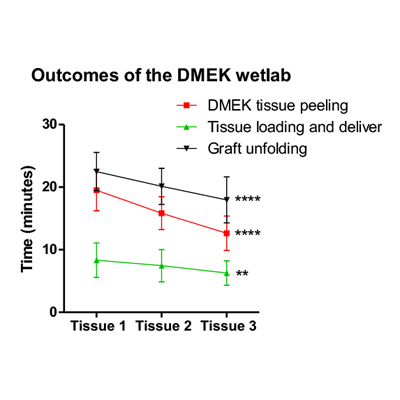
The learning curve for DMEK is steep, but most training opportunities are reserved for those in a cornea fellowship. Objective data on the efficiency of wet labs, which don’t pose a risk to patients, don’t waste valuable tissue, and are available to those at earlier skill levels, was recently published.
It is with sadness that ASCRS has learned of the passing of ASCRS Past President I. Howard Fine, MD. Dr. Fine died Thursday, August 29, 2024.
In this op-ed, Vance Thompson, MD, Chair of the ASCRS Business of Refractive Cataract Surgery Summit (BRiCS), discussed the opportunities that practices have with advanced-technology IOLs and how BRiCS will give practice teams the confidence they need to increase growth in these IOLs.
Vance Thompson, MD, became ASCRS President during the 2024 Annual Meeting and said he is very much looking forward to the role. “Over the years, ASCRS has played such a large part in my education and networking with fellow ophthalmologists and industry and my interest in research and development,” he said.
David F. Chang, MD, gave the Charles D. Kelman, MD, Innovator’s Lecture at the 2024 ASCRS Annual Meeting on “frugal innovation,” highlighting this as “the key to tackling our greatest challenges in cataract surgery.”

This is a photo of a patient with ABMD and cataract. Note the irregular lines that resemble a coastline (map), small punctate opacities (dot), and thickened epithelial ridges (fingerprint)—hence the name map-dot-fingerprint dystrophy. This patient had both irregular astigmatism and recurrent epithelial erosions. Superficial keratectomy with diamond burr polishing was performed to prepare the cornea for future cataract surgery.
Source: Rahul Tonk, MD, MBA
“My eyes are irritated … they weren’t before cataract surgery.” “My vision fluctuates … it goes in and out.” These just a couple of phrases an ophthalmologist might hear when ABMD is missed prior to cataract surgery, causing them to wish they had found and treated it preoperatively.
LASIK volumes in the U.S. have declined in the last year, but this isn’t necessarily a bad thing, according to several EyeWorld Editorial Board members who commented on their recent observations with LASIK volumes compared to refractive surgery volume as a whole.