ASCRS News
December 2021
by Ellen Stodola
Editorial Co-Director
Each year there are changes to the ASCRS Executive Committee and Clinical Committees that reinforce the society’s commitment to advancing leadership opportunities. One-year terms on the Executive Committee and regular rotation on Clinical Committees create an atmosphere where new leadership is fostered and where the changing demographics of the field as a whole are demonstrated.
In order to reflect the importance of gender diversity across the field of ophthalmology, ASCRS now has a number of women at the forefront of the organization, taking on leadership roles in key committees and executive positions. They spoke to EyeWorld about their engagement with the society and how others can get involved as well.
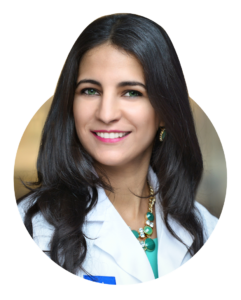
Chair
Young Eye Surgeons (YES) Clinical Committee
Dr. Al-Mohtaseb first got involved with ASCRS when she was a medical student at Baylor College of Medicine. “I did my first poster about 15 years ago at [the ASCRS Annual Meeting],” she said. “This continued throughout residency, then Elizabeth Yeu, MD, who was a fellow at Baylor when I was a medical student, got me involved with the Young Eye Surgeons [YES]. It was a great opportunity.”
Dr. Al-Mohtaseb said when first going to meetings, it can be hard to break the ice. She said getting involved early on in her career with the YES Clinical Committee was an amazing opportunity. “I was able to present in the [YES] symposium, was part of webinars, and I met a lot of committee members and those active in leadership. I think it boosted my career, and it also felt like a great way of giving back on a national scale.”
While Dr. Al-Mohtaseb does a lot with education at Baylor, she said you only affect a certain number of residents at a time. What she loves about ASCRS and the YES Clinical Committee is the opportunity to educate on a national scale and work with people who are getting started in their careers.
She said there’s something amazing about working with people who have the same mentality, who love the field, who want to make a difference in patients’ lives, and who are committed to educating peers.
For those in their first 5 years of practice after training, Dr. Al-Mohtaseb said she thinks joining the ASCRS YES activities is beneficial. “Just saying you’re interested in helping out is a great way to start getting involved,” she said.
As the YES Clinical Committee chair, Dr. Al-Mohtaseb said she can see how supportive everyone is with ideas. She wants to continue the YES Clinical Committee’s prior efforts in clinical and surgical training but would also like to focus on mentorship, networking, working with industry, and other soft skills that aren’t always discussed or taught in residency.
“It’s also important to increase diversity with those on our committee and create opportunities for them,” she said. This includes diversity in gender and ethnicity as well as the type of ophthalmology being practiced and work setting.
“This is my favorite committee position, and I’m excited about it. I hope to make a difference, make my previous mentors and people who have gotten me involved proud, and be able to do the same for others,” she said.
Chair
Cornea Clinical Committee
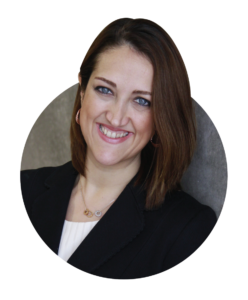
Dr. Farid has been a member of ASCRS since she was a fellow. “I was introduced to ASCRS by Roger Steinert, MD. I was his fellow at the time I became a member. He was a previous president of ASCRS, the program director, and very active in the leadership,” she said. “He was my mentor, and I went to the ASCRS Annual Meeting with him for many years and saw the amount of dedication there is to education, and how fun it is to meet and learn from colleagues and learn about the latest in technology and advancement for anterior segment surgeons.” ASCRS comes up with interesting ways to educate and offers diverse ways to reach out to people, she added.
As far as getting involved, Dr. Farid said you have to be excited to give back. “I think there’s a buzz in this next generation of young ophthalmologists who are interested in leadership,” she said.
Dr. Farid’s advice is to get involved with an attitude of gratitude and service to improve your skills and help patients, but she added that it’s important to give back and help with the broader community and ophthalmic education.
Dr. Farid said she is excited to delve further into her position as chair of the Cornea Clinical Committee, noting that she is honored to be in this role and is following in the big footsteps of previous chairs such as Ed Holland, MD, Terry Kim, MD, and Francis Mah, MD. “I have learned so much from these people and continue to call on them for guidance,” she said.
“I’ve been on [the committee] for many years as a member, and it’s an amazing committee that’s dedicated to increasing corneal education for the ASCRS membership,” she said. “This committee is active in putting together white papers, educational webinars, cornea skills transfer labs, and leading the program for Cornea Day as well as multiple symposia.
“I’m proud to be serving in this role, especially now when there is a big push to involve more women and diversity in the leadership. We’re bringing many different perspectives to the table, and I think this is a step toward advancing and moving the needle on our society, so I’m proud to be a part of that,” Dr. Farid said.
Chair
Refractive Surgery
Clinical Committee
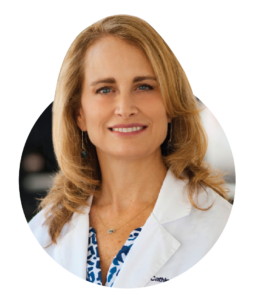
Dr. McCabe began attending the ASCRS Annual Meeting as a resident. “I love the sessions with challenging cataract surgeries and seeing innovative ways of solving problems surgically,” she said.
For Dr. McCabe, “the more you become involved in the process of education and learning, the more you understand that you might have something to share as well.” If you want to get involved, Dr. McCabe said the most important thing to do is to express interest. “Find people who are participating in symposia, skills transfer classes, and instruction courses. The easiest way to get involved to begin with is to submit a case, an interesting video, or find someone who is teaching a course and ask if you can be on the faculty,” she said.
Before becoming chair of the Refractive Surgery Clinical Committee, Dr. McCabe was a member of the Cataract Clinical Committee. “That was a great experience to see how the members of a Clinical Committee get things done and how effective you can be when you have a lot of engaged and excited members,” she said.
Dr. McCabe described her experience so far on the Refractive Surgery Clinical Committee as a pleasure. “I’ve never been involved in a group of people who more readily jump up to say, “What can I do to help?’ I feel fortunate to be leading this committee where we have dedicated and passionate people who are eager to give their time and energy.”
Though she’s been leading the committee for a short time, Dr. McCabe said they are already looking at future opportunities, including a series of educational opportunities that begin virtually and culminate at a live meeting.
“I’m honored to be a part of the leadership and am so excited to have the role with colleagues and friends Zaina, Marjan, Elizabeth, and Christina,” Dr. McCabe said. “I think we’re excited to make some positive changes in the future and keep offering better service to our members.”
Chair
Retina Clinical Committee
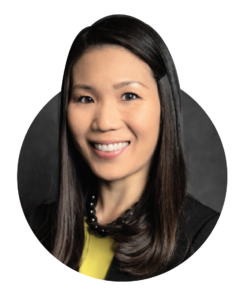
Dr. Weng first became involved with the ASCRS through her work on the Retina Clinical Committee (RCC). “A few years ago, my friend and colleague Steve Charles, MD—former RCC chair who still serves in an advisory position—invited me to participate in the retina symposium at the ASCRS Annual Meeting,” Dr. Weng said. “I enjoyed this cross-collaboration among anterior segment and posterior segment surgeons and think these types of exchanges are beneficial to ophthalmologists as well as to our patients.”
Dr. Weng said she was “truly humbled and honored” when Dr. Charles and the ASCRS Executive Committee asked her to assume the position of the RCC chair in 2019.
For those hoping to become more involved, Dr. Weng said it’s important to let others know of your interest and take advantage of opportunities that arise. “One of the great things about ASCRS is that there is a niche for everyone,” she said. “The society is always looking for eager volunteers, whether that be for their educational initiatives, clinical mission, or advocacy efforts. Oftentimes, once you get involved with one thing, doors open to other opportunities.”
As chair of this committee, Dr. Weng said that one of her responsibilities is to organize the retina symposium at the ASCRS Annual Meeting. “This is a terrific part of the program because it gathers world-class vitreoretinal specialists to speak on various retina topics that are carefully curated for our anterior segment colleagues.”
In her position, Dr. Weng hopes to continue to grow the presence and integration of retina- focused activities in ASCRS programming.

Treasurer
Advisor, YES Clinical Committee
Dr. Yeu first got involved with ASCRS during residency. “I was fortunate enough to submit a poster that was accepted,” she said.
After finishing residency and fellowship, Dr. Yeu was invited to be on what was then called the Young Physicians and Residents Clinical Committee, now the Young Eye Surgeons (YES) Clinical Committee. “It was incredible to be able to give back to the field that I love at such a young age and get involved in helping with the training of other young surgeons,” Dr. Yeu said.
“It was eye opening when we did our first resident survey among our committee and demonstrated that a significant number—more than half of residents—were not getting exposure to a lot of advanced technologies and techniques,” Dr. Yeu said.
She found it empowering to get involved in skills transfer, educational courses, and lectures so that other surgeons could learn from peers and experts through ASCRS.
After several years, Dr. Yeu became the chair of the YES Clinical Committee, which underwent a rebranding effort that saw increased offerings at the ASCRS Annual Meeting and the creation of a regional meeting, a YES column in EyeWorld, and other new YES-specific content. “That was a wonderful experience serving as the YES Clinical Committee chair for 4 years,” she said.
Dr. Yeu then became a member of the Cornea Clinical Committee. She currently hosts the Ophthalmology Quicksand Chronicles podcast with Nicole Fram, MD, in addition to being treasurer of ASCRS.
“I love being able to know that the efforts that we commit to this volunteer organization allow me the ability to have an impact more than a 1:1 ratio as I do with clinical practice, which is also very fulfilling; this allows me to potentially help patients in other parts of the U.S. as well as internationally,” she said.
For those interested in getting involved, Dr. Yeu said to reach out and let it be known that you want to be involved. “Whatever they ask, no matter how small or large, if you’re available to do so, say yes and give 150%,” she said. “When other opportunities and positions open up, your name will rise to the top of the list.”
Contact
Al-Mohtaseb: zaina1225@gmail.com
Farid: mfarid@uci.edu
McCabe: cmccabe13@hotmail.com
Weng: christina.weng@bcm.edu
Yeu: eyeulin@gmail.com