Glaucoma Bonus Issue
February 2025
by Ellen Stodola
Editorial Co-Director
MIGS has continued to expand in its application for a large number of patients with varying degrees of glaucoma. Several physicians discussed where various MIGS procedures fit into interventional glaucoma, including applications for standalone MIGS and how it continues to play a role in conjunction with cataract surgery.
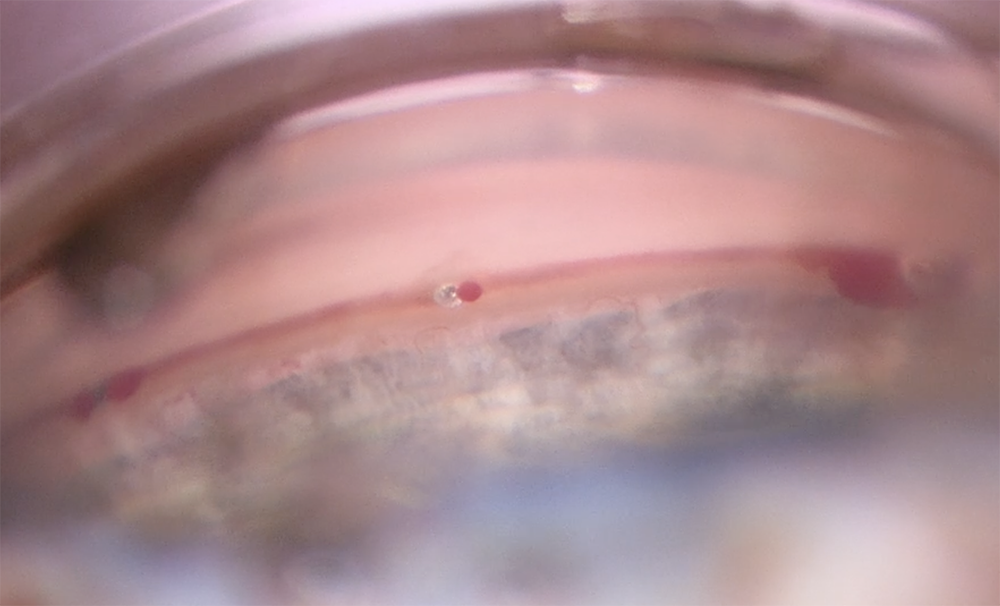
For many years, MIGS was thought about only at the time of cataract surgery, said Inder Paul Singh, MD, adding that this was because of the way the FDA regulated the initial studies of devices like the iStent (Glaukos) and Hydrus (Alcon). “These studies were designed based on the FDA guidelines saying that you have to do these with cataract surgery because no one knew how safe they were,” he said. “But once we realized that these MIGS procedures are very safe and thus safety became a moot point, now we see a lot more studies being done with standalone indications.”
Source: Inder Paul Singh, MD
Where does MIGS fit in interventional glaucoma?
MIGS has typically been discussed at the time of cataract surgery, but that discussion has more recently expanded. “We no longer have to only offer MIGS at the time of cataract extraction. Therefore, from an interventional glaucoma perspective, MIGS is a big part of the picture alongside SLT,” said Arkadiy Yadgarov, MD.
Dr. Yadgarov offers MIGS for patients who have failed one or two drops due to compliance issues, difficulty with instilling drops, intolerances to drops, fluctuating IOPs that exceed target IOP, and those in whom SLT has failed to control IOP. “I also offer MIGS to patients who are showing mild progression on testing despite medications. Typically, in those patients, we would add more drops to avoid the need for major incisional surgery, but due to MIGS safety, I highly recommend MIGS to every patient who shows signs of progression on testing,” he said.
Interventional glaucoma is gaining familiarity and redefining the treatment paradigm as we have multiple ways to intervene earlier in the disease process, with less drop burden, said Deborah Ristvedt, DO. “Our goal is taking on a proactive instead of a reactive approach, with the vision of 24/7 IOP control, effective pressure reduction, less drop dependence, and improved quality of life,” she said. “MIGS has greatly expanded over the last 12 years, including stents that bypass the trabecular meshwork, cutting techniques that remove trabecular meshwork, and viscodilating to reduce herniations of tissue into the collector channels and expanding Schlemm’s canal. Cyclophotocoagulation has been used to reduce aqueous production, working on the inflow pathway. Minimally invasive bleb surgery (MIBS) has also become available, bypassing the angle. With all of these options, we are now seeing more of a staged approach to treating glaucoma, starting earlier in the disease process.”
Dr. Ristvedt added that SLT and pharmaceutical procedures that reduce drop dependence are becoming more first line. “In the MIGS space, with having options for interventions in phakic eyes, in combo with cataract surgery, and in pseudophakic eyes, I am always looking and evaluating IOP goal, stage of disease by visual field loss, quality of life issues, drop compliance, and determining the best plan based on the individual in front of me,” she said. “Our new algorithm is starting to look like this: SLT<–>Drug delivery<–>MIGS–>Second MIGS–>MIBS–>Tube or Trab.”

Source: Inder Paul Singh, MD
Expansion of MIGS and options
The expansion of MIGS use is due to evidence that shows they work and that they are safe options, Dr. Yadgarov said, adding that interventional glaucoma prior to MIGS consisted of tube shunts and bleb surgeries, which are high risk and highly invasive. “Due to the introduction of various MIGS into the market and the backing of peer-reviewed evidence supporting their efficacy and safety, interventional glaucoma has taken off and has empowered doctors to provide these options to patients,” he said. “The overarching reason we need MIGS is that medications have too many inherent flaws, such as intolerances, forgetfulness, cost, and lack of long-term adherence, which is a big contributor to glaucoma progression. Therefore, we need MIGS as an option to circumvent the inherent drawbacks that eye drops are associated with. Interventional glaucoma allows the doctor to treat the glaucoma instead of relying on daily patient adherence.”
Dr. Ristvedt said she continues to celebrate the many options and how the treatment paradigms have expanded over time. “We now have procedural pharmaceuticals that can be used across ocular hypertension and all stages of POAG, giving us options to bridge our surgical procedures. SLT has become accepted as first-line therapy, avoiding a long-term commitment to daily drops. We now have the option of doing a standalone procedure like the OMNI Surgical System [Sight Sciences], which dilates and opens up the meshwork, or iStent infinite, which uses three stents to bypass the trabecular meshwork,” she said. “MIGS has allowed us to look at the long-term game and judge what we can do now and what we will be able to do down the road to lessen medication burden, provide more stable reduction in IOP over a 24-hour period, and hopefully reduce the amount of blindness from glaucoma.”
She said that is why interventional glaucoma is so important—to treat the whole person and being in it together. “I continue to believe that we still need more invasive procedures available, like trabeculectomy and tube shunts. However, with this shift in mindset and more options available, it is my hope that we see less progression in visual field loss by optimizing treatments that are more safe and still effective. This will allow those who really need an IOP in the single digits to low teens to have the opportunity for intervention, hopefully further down the road, to decrease failure rates.”
Dr. Yadgarov said that current options for interventional glaucoma include SLT, procedure pharmaceuticals (such as bimatoprost intracameral implant, Durysta, AbbVie, and travoprost intracameral implant, iDose, Glaukos), and MIGS. The current standalone MIGS are goniotomy blades, catheter-based canaloplasty with or without trabeculotomy, and the iStent infinite.
He stressed that MIGS should be offered to all patients who have either intolerability to medication, suboptimal compliance to medication, or signs of progressive disease.

Source: Deborah Ristvedt, DO
MIGS can work in all stages of glaucoma, but surgeons need to be mindful that in moderate to advanced stages, patients need to be monitored closer, he said. “I would not try to reduce medication burden, but instead use MIGS as an adjunct to medication to prevent further progression.” Meanwhile, for mild to moderate glaucoma, Dr. Yadgarov said MIGS can be a great way to control IOP and reduce medication burden.
At this time, Dr. Ristvedt said standalone options include viscodilation with trabeculotomy (like OMNI or iTrack, Nova Eye Medical), goniotomy (like the KDB, New World Medical, TrabEx, MST, and SION, Sight Sciences), three stents (iStent infinite), cyclophotocoagulation (like ECP or MicroPulse, Iridex), and minimally invasive bleb surgery (XEN, AbbVie).
“There are some nuances to know about coding and definitions that guide our treatment options,” she said. “Refractory glaucoma means that patients are on maximal tolerated medical therapy and need IOP reduction, such as with a XEN. iStent infinite is for those with POAG who have failed medication and surgical treatments,” she said. “It really comes down to the individual. For example, I have had patients in their 50s who are phakic, have failed SLT and medical therapy, and do beautifully with restoring the outflow pathway with OMNI and iStent infinite. I have had pseudophakic patients who are struggling with ocular surface disease, economics of buying drops, compliance issues, looking for less drop dependence. For those who are progressing who need IOP reduction and have had angle-based surgery with cataract surgery, I am looking toward a MIBS like XEN, as long as I do not think they need single digit pressures.”
When taking a step back and looking at all the options in the standalone space, it allows us to continue to treat this disease in a safe and effective manner, Dr. Ristvedt said. “I love the opportunity to be able to improve the quality of care and quality of life more than ever before. Patients are happy that there are options for them and are more willing to be honest about how they are really doing with their disease as well as management,” she said. “The challenge continues to be the lack of guidance when it comes to who is going to progress and who will be stable for the rest of their life. We are looking at all of the risk factors, prior data, and what we know about quality of life to determine this staged approach to glaucoma. When the procedure is more risky than the disease itself, it is a no-brainer that we are cautious and wait until later to intervene. I am hopeful that all of our options will allow us to balance IOP stability, safety, less side effects, and improved quality of life from earlier intervention.”
Dr. Singh sees many opportunities to address patients either before or after cataract surgery, and he said it’s important to assess if you should go in before or wait until after cataract surgery. He noted, however, that there are surgeon-focused issues to address with standalone MIGS, such as the fear of complications or the fear of not delivering on the expectation of either reduction of medications or reduction of IOP. With combined cataract surgery, patients are usually happy with the postop visual improvement from the cataract removal, but with standalone MIGS, our patient satisfaction is tied to the expectation and goal settings we set ahead of time.
Dr. Singh noted there is now a plethora of data to back up the efficacy of MIGS. A key definition of success for him is decreasing the topical drop burden, despite the same level of IOP reduction; this can be helpful because if people are off drops, they tend to maintain a higher quality of life and have less negative effects of poor compliance, thus the potential for less visual field progression, less secondary surgeries, and less cost to the whole healthcare system.
MIGS with cataract extraction has now become standard of care, Dr. Yadgarov said. “There is enough literature and evidence that supports its use to stabilize glaucoma, and all surgeons who are planning cataract extraction in a patient with glaucoma should be offering a MIGS. The benefit to the patient is tremendous since there is a high chance the patients would not need daily glaucoma medication afterward, providing them an improved quality of life.”
On average, Dr. Ristvedt said that 1 in 5 patients who come in for cataract surgery also have glaucoma. “This has become the perfect opportunity to address both,” she said. “We now have years of data to show that intervening at this stage reduces drop dependence, improves the ocular surface, and provides for stability in IOP, leading to less need for more incision-based surgery over time.” She added that this combination therapy is becoming more widely accepted over time due to these key factors. “With this mindset shift, it is vital that anterior segment surgeons see the value add in committing to learning angle based-surgery or to give their patients the option of combination surgery with their colleague,” she said.
Dr. Yadgarov said that the “hang up” for many surgeons to enter the interventional MIGS space is how to bring it up to the patient. “It may seem difficult to convince a patient to go to the operating room to do a surgery when there are so many medication options available that they can try,” he said. After informing them of the safety and speedy recovery that is associated with MIGS and benefits of avoiding daily medication, most patients will not hesitate to heed the surgeon’s recommendations to undergo a MIGS procedure. The patient scenario of suboptimal compliance is where surgeons new to MIGS should initially focus on, he said.
Dr. Singh emphasized how important the patient discussion is and understanding patient expectations. “I think it’s important to tell patients, ‘Glaucoma is a long-term condition, but I’m with you for that journey, and I’m going to use multiple treatments to help keep that pressure down to a safe range and maintain the highest quality of life.’” He said this could require one or several interventions, and it also depends on the type of glaucoma the patient has. But emphasizing to the patient that you’ll try one thing at a time and that you have multiple options in the future is key. “I set the stage and say, ‘There’s not one procedure that’s going to cure you; there’s a lot of different options because there’s no perfect surgery or perfect procedure for every patient.’”
Dr. Ristvedt added that education and passion around interventional glaucoma has started to change the mindset. “This is not possible without other doctors coming together to lead this movement in their community,” she said. “We have held many educational seminars to keep eyecare providers and patients updated on how glaucoma is evolving and changing. This team effort, in my opinion, leads to better communication and patient care when we are all on the same page and operating at the highest level of our skillset. Nothing makes me happier than when a patient comes in for an SLT and explains that their doctor gave them options and they would love to start here.”
About the physicians
Deborah Ristvedt, DO
Vance Thompson Vision
Alexandria, Minnesota
Inder Paul Singh, MD
The Eye Centers of Racine and Kenosha
Racine and Kenosha, Wisconsin
Arkadiy Yadgarov, MD
Omni Eye Services
Atlanta, Georgia
Relevant disclosures
Ristvedt: AbbVie, BVI, Glaukos, Johnson & Johnson Vision, Osheru, RxSight, Sight Sciences
Singh: AbbVie, Alcon, Bausch + Lomb, Glaukos, iStar Medical, New World Medical, Nova Eye Medical, Sight Sciences, ViaLase
Yadgarov: Alcon, Glaukos, Iantrek, Sight Sciences
Contact
Ristvedt: deborah.ristvedt@vancethompsonvision.com
Singh: ipsingh@amazingeye.com
Yadgarov: yadgarovmd@gmail.com