ASCRS News
Spring 2024
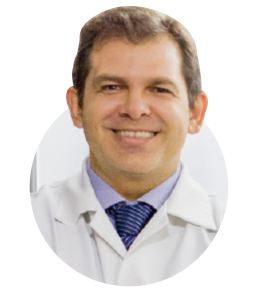
Prof. Renato Ambrósio Jr., MD, PhD, will present the 2024 Richard L. Lindstrom, MD, Medal Lecture at the ASCRS Annual Meeting.
Dr. Ambrósio has a well-established international legacy of refractive surgery innovation as a world-class refractive surgeon-scientist. He has authored over 500 scientific publications with more than 15,000 citations. His clinical practice and surgical expertise involve elective and therapeutic refractive surgery, including custom laser vision correction, corneal rings, crosslinking, phakic IOLs, refractive cataract surgery, and corneal transplantation.
Dr. Ambrósio’s lecture will highlight the positive influence of refractive surgery on the developments related to diagnostics and management of corneal ectatic diseases. He has delved into evolving paradigm shifts in diagnosing and treating keratoconus and other ectatic corneal diseases. His work has explored the evolution of keratoconus diagnostics, including detecting mild cases and characterizing ectasia susceptibility for enhanced preoperative risk assessment in refractive surgery. Advanced diagnostics are also relevant for classifying and staging the disease severity and providing prognosis and follow-up. Such approaches enable individualized treatments, which is essential for successful patient management, along with patient education.

Source: ASCRS
Ectasia diagnosis is also relevant for refractive cataract surgery, as it can impact IOL power calculations, quality of vision after premium IOLs, and planning of laser vision correction enhancements.
Dr. Ambrósio has continued learning and researching multimodal refractive diagnostics throughout his career, exploring ocular wavefront, corneal topography, biomechanical assessment, and anterior segment tomography using Scheimpflug and OCT.
He helped develop the Belin/Ambrósio Enhanced Ectasia Display (BAD), combining elevation maps and pachymetric data in a comprehensive analysis available on the Pentacam (Oculus). Also, he contributed to the Ambrósio-Roberts-Vinciguerra (ARV) display that integrates Scheimpflug-based tomography and biomechanical assessment with the Corvis ST (Oculus) with the application of optimized artificial intelligence for augmented ectasia diagnosis.
Dr. Ambrósio also collaborated on building the BrAIN (Brazilian Artificial Intelligence Networking in Medicine) software that applies AI to quantify the impact of laser vision correction in a relational thickness-altered (RTA) approach, combined with the characterization of ectasia susceptibility.
About the physician
Renato Ambrósio Jr., MD, PhD
Adjunct Professor of Ophthalmology of the Federal University of the State of Rio de Janeiro (UNIRIO)
Affiliated Professor of the Post-Graduation Stricto Sensu of the Federal University of São Paulo (UNIFESP)
President of the International Society of Refractive Surgery (ISRS): 2020–2024
President of the Refractive Surgery Alliance (RSA): 2022–2024
Rio de Janeiro, Brazil
Contact
Ambrósio: dr.renatoambrosio@gmail.com