ONLINE EXCLUSIVE
Glaucoma
October 2022
by Liz Hillman
Editorial Co-Director
While some studies have found that femtosecond laser-assisted cataract surgery does not offer a significant benefit over traditional phaco,1 many surgeons still find it helpful in the setting of certain comorbidities. For Robert Noecker, MD, one of these is glaucoma.
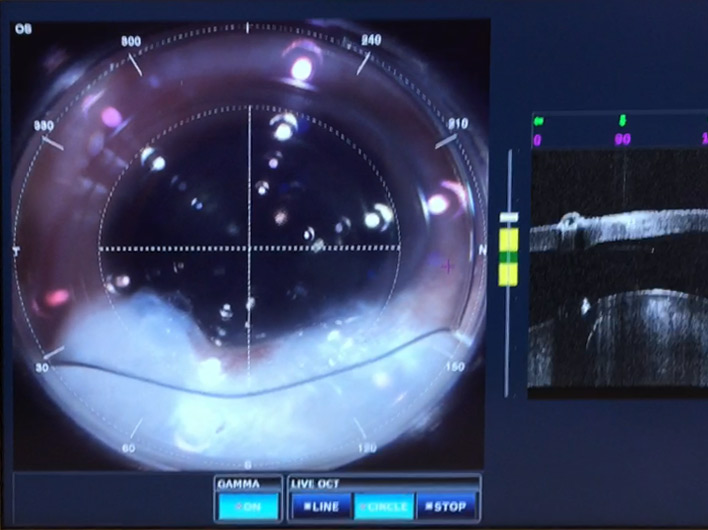
“There are a few populations that probably benefit the most,” Dr. Noecker said. “The most common population are patients with narrow angles or shallow anterior chambers that we encounter more frequently in those with glaucoma.”
Doing FLACS in these cases, Dr. Noecker said, softens the nucleus so there is less energy being used in a small workspace, and the nucleus can be removed with less manipulation as well, which has advantages in preserving the corneal endothelium and the structures of the angle.
In general, Dr. Noecker said glaucoma patients tend to have other comorbidities and anterior segment disease, whether corneal or in the angle, and using FLACS can be an advantage. For example, in cases of pseudoexfoliation lenses with weak zonules, FLACS can reduce lens manipulation and can provide a complete capsulorhexis with minimal stress on the zonules. In addition, since these patients tend not to have large pupils, the capsulorhexis can be at the pupil margin for maximal sizing without worry of extension underneath the pupil when it might otherwise be difficult.
Glaucoma patients are also more likely to have other procedures performed in combination with cataract surgery. Dr. Noecker said he has done a number of studies with MIGS in combination with FLACS. From ECP to canal-based procedures to angle-based stents, Dr. Noecker said that he has found these done in combination with FLACS do not detract from the refractive or efficacy outcomes.
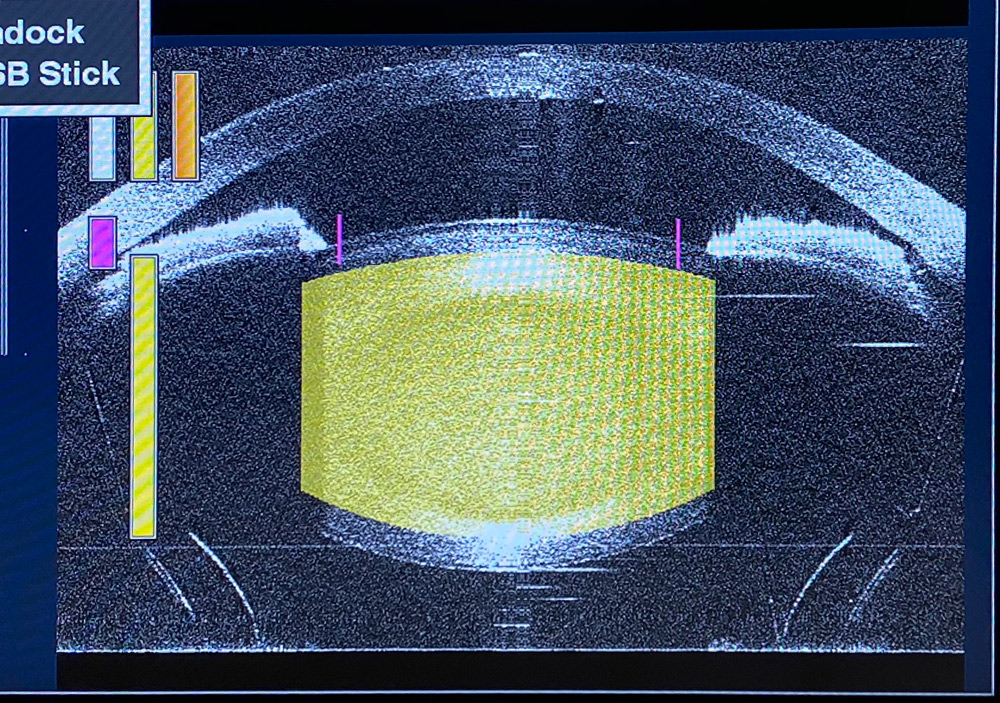
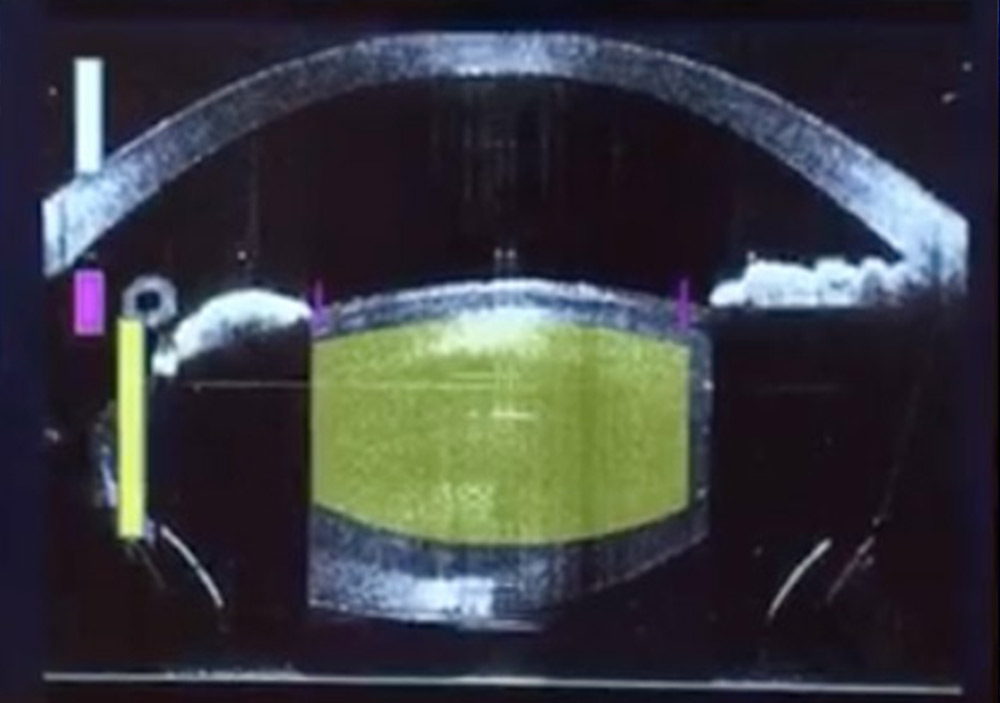
“I tell my patients that if we do a MIGS procedure in combination, they usually have a little more inflammation, a little more corneal swelling, and they might have a little blood in that first postoperative day,” he said.
When FLACS is done in combination with MIGS, Dr. Noecker said he’ll do the cataract procedure first, followed by the MIGS procedure.
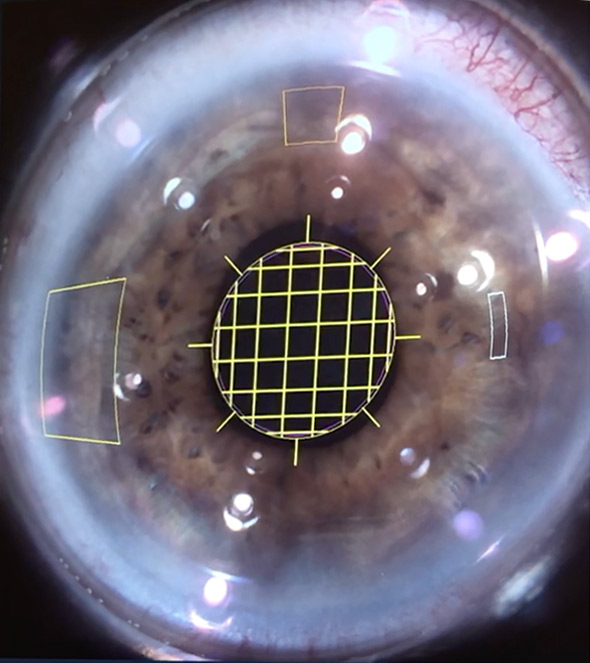
In terms of eyes with prior glaucoma surgeries and FLACS, Dr. Noecker said that many surgeons worry about bleb trauma or erosion over a tube shunt. He’s looked at cases with blebs and found that, even with a variety of blebs, FLACS is still safe and doable. The suction pushes on the bleb temporarily, but he’s never experienced a bleb leak as a result.
“They can get a little subconjunctival hemorrhage, but it doesn’t seem to be where it makes the bleb fail,” he said. Dr. Noecker added that he’s been able to achieve suction with even large blebs.
Source (all): Robert Noecker, MD, MBA
The worry with tube shunts is that the procedure could dislodge the tube or that the tube will inhibit suction. Dr. Noecker said he hasn’t experienced this, but he did note that if the tube extends into the eye far enough, it can obstruct laser energy from passing through into the lens, resulting in an incomplete capsulorhexis and necessitating manual completion.
While there aren’t necessarily contraindications for FLACS in glaucoma patients, Dr. Noecker did say that the cost benefit is a consideration. Some patients who, due to comorbidities, might not be able to benefit from all of the capabilities of FLACS might not be worth the cost.
“In someone who has a pupil that won’t dilate so you’re not going to get the benefit of the lens portion of the procedure but they could benefit from the incisions, it might still be worth it for the corneal parts of it, but you lose the lens benefit,” he said. “That’s the plus/minus.”
Dr. Noecker said he’ll often have a conversation with patients in whom he thinks there are positives for the patient, including fewer complications and a quieter eye postop. Also, many patients appreciate having astigmatism addressed so that their vision is even more enhanced after the procedure, even if the primary goal was to better control their glaucoma.
“It’s a great tool and has helped me avoid complications,” he said. “The only barrier is money.”
About the physician
Robert Noecker, MD, MBA
Ophthalmic Consultants of Connecticut
Fairfield, Connecticut
Reference
- Schweitzer C, et al. Femtosecond laser-assisted versus phacoemulsification cataract surgery (FEMCAT): a multicentre participant-masked randomised superiority and cost-effectiveness trial. Lancet. 2020;395:212–224.
Relevant disclosures
Noecker: None
Contact
Noecker: noeckerrj@gmail.com