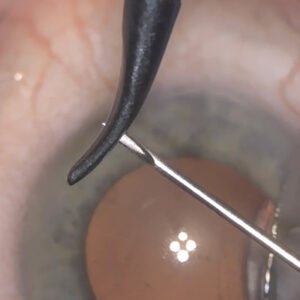
Glaucoma
Spring 2026
by Ellen Stodola
Editorial Co-Director
With expanding lens options in cataract surgery and an increase in combined glaucoma and cataract procedures, Christine Larsen, MD, and Deborah Ristvedt, DO, discussed when the Light Adjustable Lens (LAL, RxSight) can be a good option for glaucoma patients and considerations when choosing it.
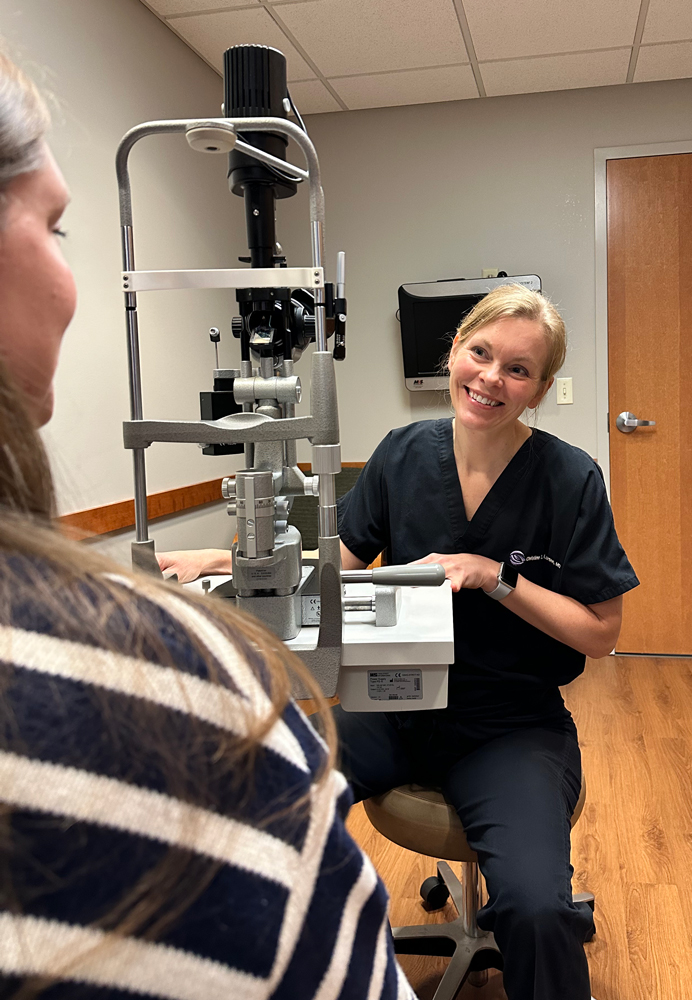
Source: Christine Larsen, MD
“We are fortunate to have numerous lens options today that allow for truly individualized patient care,” Dr. Ristvedt said. “For many years, patients with additional ocular pathology, such as glaucoma, were often excluded from advanced technology options.” She added that having cataracts and glaucoma together presents the challenge of how to offer these patients the clearest vision possible with reduced spectacle dependence.
“The LAL is instrumental in optimizing outcomes, even for those with visual field loss due to glaucoma,” Dr. Ristvedt said. “It is a positive choice for decreasing the risk of common issues like dysphotopsias and contrast loss, while minimizing residual refractive error.”
In carefully selected glaucoma patients, the LAL can be a great option, Dr. Larsen said. “One of the biggest advantages of the LAL in this population is its ability to fine tune refractive outcomes postop, which is particularly valuable given the higher variability in effective lens position and refractive predictability seen in many glaucomatous eyes.”
She added that patients with glaucoma often have less tolerance for residual refractive error, especially astigmatism, because reduced contrast sensitivity or visual field loss can magnify the functional impact of even small refractive misses. “The LAL’s postop adjustability allows surgeons to optimize uncorrected vision once the eye has stabilized, rather than relying solely on preop biometry that may be less reliable in these patients,” Dr. Larsen said. “That said, the LAL should be framed as a refractive-enhancing option that will not reverse the impact of underlying disease. Patient counseling is essential to align expectations.”
Candidates
Dr. Ristvedt said that the LAL works well in most patients with ocular hypertension, as well as mild and moderate stages of glaucoma. “Candidates are evaluated case by case based on their visual goals, current glasses prescription, potential need for future surgery, and crucially, the ability of the patient to provide a reliable manifest refraction necessary to dial in their vision post-surgery,” she said.
“Patients I would consider good candidates for LAL implantation would include glaucoma suspects or ocular hypertension, as well as early to mild primary open-angle glaucoma,” Dr. Larsen said. “More advanced stages could also potentially benefit from this technology, although it is important that their disease be stable and well-controlled with preserved central vision. These patients typically retain good contrast sensitivity and central acuity, making them more likely to appreciate the refractive precision the LAL offers.”
Dr. Larsen said that those with advanced glaucoma, especially those with central field involvement or significantly reduced contrast sensitivity, may derive less functional benefit from premium refractive accuracy. “In such cases, the value proposition of the LAL should be weighed against cost, treatment burden, and visual potential.”
Dr. Larsen listed several situations where she would advise caution or avoidance:
- Advanced glaucoma with significant visual field loss involving fixation
- Unstable or rapidly progressing disease, where visual outcomes are less predictable
- Patients unable to comply with strict UV-blocking eyewear prior to lock-in
- Those unable to attend multiple postop visits required for adjustments
- Eyes with significant zonular weakness or pseudoexfoliation, where IOL centration may be less predictable
Dr. Ristvedt also noted some patients to avoid or those where precautions are needed. “For patients with pseudoexfoliation, I ensure adequate dilation for postop adjustments,” she said. “In cases of severe glaucoma with central vision loss, the difficulty in obtaining accurate treatments (as the patient must fixate straight ahead) and the necessity of additional appointments must be carefully considered.” She added that being a silicone lens, it is necessary to consider alternative IOLs if additional procedures that involve intraocular gas are anticipated.
Combined MIGS and LAL
Dr. Ristvedt said the LAL can also be a good option when doing a combined cataract and MIGS procedure. “I am passionate about interventional glaucoma and find that the LAL is a suitable choice when combining it with MIGS,” she said.
Dr. Larsen agreed that the LAL can be combined with MIGS, and she said this has become increasingly common in clinical practice. “Procedures such as the iStent [Glaukos], Hydrus [Alcon], or goniotomy-based MIGS generally do not preclude LAL use,” she said.
However, Dr. Larsen said that timing and expectations are important considerations. “MIGS-related changes in IOP and the reduction in topical medication burden can subtly affect refractive outcomes in the early postop period,” she said, adding that the LAL’s adjustability can be advantageous because it allows refractive refinement after IOP has stabilized.
“That said, surgeons should be cautious with more invasive glaucoma procedures that may induce greater postop inflammation or anatomical change, as this could delay or complicate the adjustment process,” Dr. Larsen said.
Other considerations
Dr. Ristvedt noted that when implanting the LAL, complete capsular overlap is always ideal. “I ensure the capsulorhexis is centered on the Purkinje images, measuring 5.0–5.5 mm in diameter,” she said. “I often combine MIGS with the cataract procedure, not only to prevent further visual field loss but also to help patients get off topical drops.” Dr. Ristvedt said minimizing the need for drops supports a good ocular surface, which is essential for obtaining a sharp manifest refraction and maximizing the precision of the LAL adjustment.
Dr. Larsen also shared some of her pearls for nuances with the LAL:
- OP stability: Dr. Larsen ensures the IOP is stable before initiating light adjustments, particularly in patients undergoing combined surgery.
- Steroid response: Glaucoma patients are more likely to be steroid responders. “Careful monitoring and tailored steroid regimens are important during the adjustment period.”
- Pupil dilation: Adequate dilation is essential for successful adjustments, which may be more challenging in patients on chronic miotics (less common in current practice) or with pseudoexfoliation.
- Patient counseling: “I spend extra time preop explaining the timeline, UV precautions, and need for multiple visits, as adherence is critical to success,” Dr. Larsen said.
The LAL is a meaningful advancement in refractive cataract surgery, Dr. Larsen said, adding that glaucoma should not be viewed as an absolute contraindication. The key is patient selection and expectation management.
“For the right glaucoma patient—particularly those with stable disease, good visual potential, and a desire for refractive precision—the LAL can deliver outstanding outcomes,” she said. “As with all premium technologies, success depends on thoughtful counseling, careful surgical planning, and close postop follow-up.”
“The LAL provides a vital missing link, enabling us to fully optimize visual outcomes and allow individualized care for patients, even those with pathology that historically deterred the use of advanced-technology IOLs,” Dr. Ristvedt said. “It truly puts the patient in the driver’s seat regarding their final vision.”
About the physicians
Christine Larsen, MD
Minnesota Eye Consultants
Woodbury, Minnesota
Deborah Ristvedt, DO
Vance Thompson Vision
Alexandria, Minnesota
Relevant disclosures
Larsen: AbbVie, Alcon, Glaukos, Iantrek, iSTAR Medical, New World Medical, Thea
Ristvedt: AbbVie, Alcon, BVI, Glaukos, Osheru, Rayner, Sight Sciences
Contact
Larsen: cllarsen@mneye.com
Ristvedt: deborah.ristvedt@vancethompsonvision.com