Cornea: Changing mindsets
Summer 2025
by Ellen Stodola
Editorial Co-Director
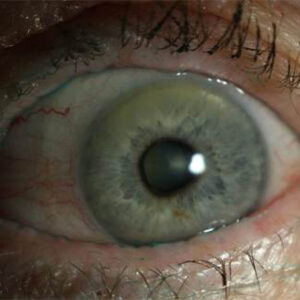
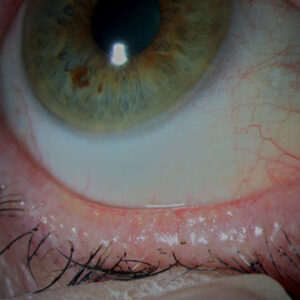
With dry eye presenting as an increasingly common issue, many companies are exploring options to treat these patients. New products in development are seeking to address different aspects of dry eye, with various mechanisms of action.

Source: Christopher Starr, MD
John Sheppard, MD, said discussing the dry eye pipeline at this point in time is intriguing, particularly because of the activity in the area. “Three years ago, the conversation would have been completely different,” he said.
Dr. Sheppard noted some of the more recent approvals in the dry eye space, like EYSUVIS (loteprednol etabonate ophthalmic suspension, Alcon), MIEBO (perfluorohexyloctane ophthalmic solution, Bausch + Lomb), and VEVYE (cyclosporine ophthalmic solution, Harrow). Previously, we had cyclosporine with no competition, he said. “It took a much longer time to get lifitegrast approved for both signs and symptoms.”
The pipeline is expanding dramatically, and there are many with different mechanisms of action, he said. “We have so many different choices and soon will have more, and that will allow us to really customize treatment for patients.”
Dr. Sheppard, along with Christopher Starr, MD, and Preeya K. Gupta, MD, discussed some of the products in the dry eye pipeline, how some of these products are unique in their mechanisms of action, and which patients they will target.
Reproxalap (Aldeyra Therapeutics)
According to the company, reproxalap is a first-in-class small-molecule modulator of RASP, which are elevated in ocular and systemic inflammatory diseases.
This is a potent topical anti-inflammatory drop that works further upstream from steroids and therefore does not share the same side effect profile, Dr. Starr said. Its broad upstream anti-inflammatory MOA provides rapid efficacy and may ultimately provide a novel treatment for dry eye disease, allergic conjunctivitis, conjunctival injection, and other ocular surface inflammatory diseases.
Dr. Gupta called this a “really interesting molecule,” noting that it has been studied in more than 2,000 patients, which is a large number for a dry eye trial. “This will potentially be the first drug to work upstream in the inflammatory process, and I think it’s always nice to have different mechanisms of action. I think that might help it to have a broader application because we can treat inflammation earlier in the pathway. That might have an impact on its ability to treat both signs and symptoms of dry eye disease.”
The company met its endpoint for symptoms using a controlled adverse environment, and that data was submitted in 2024, Dr. Sheppard said. This product can treat both allergy and dry eye.
We are anticipating with great excitement that the approval process will proceed, he added. “I think this is a truly unique pathway. You can specifically inhibit these agents in the body and produce an anti-inflammatory effect,” he said, adding that the side effect profile is negligible.
The fascinating thing about the aldehyde species is there’s a specific biomarker, malondialdehyde, which is elevated in the tears of dry eye patients, he said. With steroids, there are so many different biomarkers, and with lifitegrast, there’s not a true biomarker.
In April, Aldeyra Therapeutics announced that the FDA issued a complete response letter to the company’s resubmission of a New Drug Application for reproxalap. In the letter, the FDA stated that reproxalap “failed to demonstrate efficacy in adequate and well controlled studies in treating ocular symptoms associated with dry eyes,” advising “at least one additional adequate and well-controlled study to demonstrate a positive effect on the treatment of ocular symptoms of dry eye” be completed. The company’s press release regarding the response noted FDA concerns with the data from the trial that could affect interpretation of the results. The letter did not find any manufacturing or safety issues with reproxalap, according to the company. Aldeyra expects to have a Type A meeting with the FDA to discuss the complete response letter and ongoing clinical trials of reproxalap for dry eye.
SkQ1 (Visomitin, Mitotech)
Another interesting drug is SkQ1, Dr. Sheppard said, which is available in Russia. It’s a broad-spectrum agent and has several metabolic effects. The effect on the eye is broad based because metabolic changes can occur in every cell phenotype on the ocular surface. “By enhancing mitochondrial metabolism and reducing inflammation, we can achieve notable sign and symptom improvements in dry eye disease,” he said.
The product is still in trials in the U.S. “I think the FDA approval rigors are guiding the endpoints,” Dr. Sheppard said. “We’re optimistic that the clinical trial design will prove the worth of this mechanism of action, which is different from other products on the market.” He added that the MOA is fascinating because it’s used in animal models for obesity, and it seems to have a persistent effect. Currently, a Phase 3 trial is in the works.
Acoltremon (Alcon)
At the end of May, Alcon announced FDA approval for acoltremon ophthalmic solution 0.003% under the name TRYPTYR for treatment of the signs and symptoms of dry eye disease. Dr. Starr said that acoltremon, a topical TRPM8 agonist, is a novel MOA via ocular surface cold thermoreceptors. It works quickly compared to many currently available immunomodulators, with significant increases in Schirmer’s scores seen at 2 weeks compared to vehicle. Due to its unique MOA, it will be interesting to see if there is an off-label role for patients with chronic ocular pain and other corneal nerve disorders, he said.
Dr. Gupta said that as a TRPM8 agonist, acoltremon activates the trigeminal nerve to stimulate tear production. While there have been other products to physically stimulate the nerve, this a different way to access the trigeminal nerve to stimulate tear production.
Dr. Sheppard noted that TRPM8 receptors detect subtle temperature drops, even between blinks, and because these are cold-sensing stimulation receptors, they can be involved with neuropathic pain. This is a uniquely customized category, he said.
AZR-MD-001 (selenium sulfide, Azura)
According to the product description from the company, AZR-MD-001 “harnesses the power of selenium sulfide (SeS2) in an ophthalmic ointment preparation applied directly to the meibomian glands in the lower eyelid.” It is transferred to the meibomian glands in the upper eyelid when the patient blinks.
Dr. Starr called this product “very promising,” as there is no currently approved disease modifying medications for MGD. By reducing keratin and biofilms on the lid margin and within the meibomian gland ducts, we can improve meibum quantity and quality and the overall health of the meibomian glands, he said. This will be a welcome synergistic complement to procedural treatments like microblepharoexfoliation, intense pulsed light therapy, thermal pulsation, and eye drops that target evaporation (e.g., perfluorohexyloctane).
Dr. Gupta said the product has finished Phase 3 trials. “What’s super novel about this is it’s being studied for the treatment of MGD,” she said, noting that there is not currently a specific treatment option for MGD.
The product is an ointment/gel that’s applied to the eyelids only twice a week, and it works by breaking the disulfide bonds in keratin to allow it to be less viscous. Phase 2 data showed improvements in signs and symptoms of MGD.
Dr. Sheppard called this option a “very intelligent reformulation of a cutaneous medication.” He added that selenium sulfide has been used in dermatology for a long time. In this application, it would be applied to the lid margin to reduce keratinization and allow for better mechanics with the meibomian gland secretions.
Other dry eye pipeline therapies
Another novel therapy that Dr. Starr is looking forward to is the NuVissa plasma pen. “While not a medication, I am excited to start using the NuVissa plasma pen for in-office, non-surgical treatment of conjunctivochalasis, a very common dry eye disease masquerader,” he said.
“The non-contact Corneal Esthesiometer Brill [Brill Engines] has recently been introduced in my practice and has been a game changer in the routine workup of my ocular surface and corneal disease patients,” Dr. Starr said. “Technicians can quickly assess corneal sensation without disrupting the epithelium or ocular surface, allowing me to diagnose and treat neurotrophic keratitis and neuropathic corneal pain much earlier in the disease process.”
Other dry eye products in the pipeline include Surface Ophthalmics’ SURF-100 (targeting chronic dry eye disease), SURF-200 (targeting acute dry eye), and SURF-201 (targeting pain and inflammation following ocular surgery); RegeneRx’s RGN-259, described as a Tβ4-based sterile and preservative-free eye drop, as a novel treatment for dry eye disease and neurotrophic keratitis (NK); and Tear Solutions’ Lacripep, which is a synthetic polypeptide and was found to be effective in a 2-year trial looking at primary Sjögren’s.
Stuart Therapeutics’ ST-100 is a collagen mimetic peptide that repairs damaged helical collagen. Over time, inflammatory issues can damage integrity of collagen, and there have been indications of sign and symptom relief in the Phase 2 trial, Dr. Sheppard said. The company announced earlier this year that it had completed a Phase 3 trial.
Glaukos also has a product in development, GLK-301, which Dr. Sheppard noted is a topical gel for the lids containing pilocarpine, a parasympathomimetic secretagogue. Localizing this in a sustained delivery vehicle so you have a constant low dose makes sense, he said, and this approach of placing it on the eyelid and letting it percolate on the surface in a continuous first order kinetics fashion may be practical because many people do not like putting drops in the eye.
Dr. Gupta said she’s excited about all the options in the dry eye pipeline, noting that many are targeting different things, which is a step in the right direction. She said it’s great to have newer versions of cyclosporine, and all treatments are welcome, but it’s particularly exciting to have novel pathways because not everyone improves with just cyclosporine.
Editors’ note: The products and companies discussed are a representation of some of the many in the dry eye space. This is not an exhaustive list of every dry eye product and company.
Article Sidebar
Changing mindsets

Regarding “Changing mindsets: current solutions and what’s ahead,” Jonathan Rubenstein, MD, EyeWorld Cataract Editorial Board member, said two recent changes he’s made in his practice have been implanting the Light Adjustable Lens (LAL, RxSight) and taking steps to get involved in corneal endothelial cell injection therapies.
About the physicians
Preeya K. Gupta, MD
Cornea, Cataract & Refractive Surgery
Managing Director
Triangle Eye Consultants
Raleigh, North Carolina
John Sheppard, MD
Professor of Ophthalmology
Eastern Virginia Medical School
Medical Director
Lions Eye Bank of Eastern Virginia
Regional Medical Director
EyeCare Partners
Norfolk, Virginia
Christopher Starr, MD
Director, Refractive Surgery
Director, Ophthalmic Education
Co-Director, Cornea, Cataract, Refractive & Ocular Surface Fellowship
Weill Cornell Medicine
New York Presbyterian Hospital
New York, New York
Relevant disclosures
Gupta: Alcon, Azura, Bausch + Lomb, Harrow, Sight Sciences, Tarsus
Sheppard: AbbVie, Bausch + Lomb, Bio-Tissue, Claris Bio, Dompe, Noveome
Starr: AbbVie, Alcon, Aldeyra, Azura, NuVissa
Contact
Gupta: preeyakgupta@gmail.com
Sheppard: docshep@hotmail.com
Starr: drstarr@gmail.com