ASCRS News: Government Relations Update
Spring 2025
by Ellen Stodola
Editorial Co-Director
Current chair reflects on his role ahead of transition
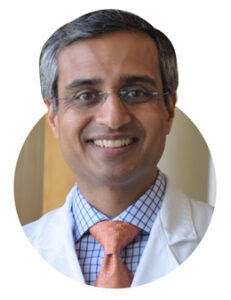
Parag Parekh, MD, ASCRS Government Relations Committee Chair, reflected on his tenure in an interview with EyeWorld. He served two 3-year terms as chair during tumultuous times for ASCRS and the Government Relations Committee and will continue to serve as Immediate Past Chair. Dr. Parekh first started on the committee in 2008, when Priscilla Arnold, MD, was the outgoing Government Relations chair and Brock Bakewell, MD, was the incoming chair. “I had a background in government relations, so Priscilla and Brock asked me to serve as vice chair. I helped represent ASCRS at the AMA and RUC meetings and went on to represent ASCRS at various Quality Payment Program meetings,” he said.
Dr. Parekh highlighted some of the key initiatives, advocacy efforts, and issues that have come up during his time on the committee, noting that the quality measures were a big issue, and ASCRS weighed in on these to try to help position ophthalmology as favorably as possible for reimbursement.
Dr. Parekh took over as committee chair in 2019, just a short time before the beginning of the COVID-19 pandemic. “Just as we were starting to get things set up and make a smooth transition, we were plunged into crisis,” he said.
“We had to [fight] to not lose our Government Relations Committee and our political action committee, eyePAC, and not lose all of this amazing work and success the Government Relations department had done over the past 20 years,” he said. In ophthalmology, only ASCRS and AAO have a political action committee, and this is a valuable tool for us to fight for our members and our patients, he said. In addition, Nancey McCann, who had served as ASCRS Director of Government Relations for 28 years, was nearing retirement. “As small as ophthalmology is within all of Medicare, we do incredibly well because of the effectiveness of the ASCRS Government Relations program and how well we work with others within organized medicine, including AAO, the American Glaucoma Society, the American Society of Retina Specialists, and the AMA,” Dr. Parekh said. “To lose the ASCRS Government Relations program would have been devastating. I fear for how quickly ophthalmology would have been knocked down in terms of compensation, and cataract surgery would have been degraded even worse than it already is.”
With recent updates to the ASCRS bylaws and the implementation of terms limits across all ASCRS leadership, there were also some changes to the Government Relations Committee, with the addition of a number of new members and plans for many of the more senior committee members to rotate off in order to be in compliance with the term limits. The committee is composed of ASCRS members who are well versed and have an interest in these issues, and this can often take years to cultivate. It’s not uncommon, he said, for members of the committee to remain active for 10–20 years because institutional knowledge is so vital to our success.
When Dr. Parekh rotates out of his role as chair, there will be several other longtime ASCRS Government Relations Committee members rotating out as well. “We have a new group of people who have joined us in the last 2 years, so we spent a lot of time getting them up to speed,” he said. The committee has expanded and currently has 24 members, including non-voting liaisons from five ASCRS Clinical Committees and one from ASOA. The Government Relations Committee meets monthly to stay on top of important regulatory and advocacy issues.
With these policies and topics, knowing the details and history is so important, Dr. Parekh said, because the people we’re going up against are smart and have historical first-hand knowledge of the issues. “Sadly, in medicine, a lot of getting more money for your profession requires some other profession getting less money. Often, we’re at odds with primary care. To go up against that, you have to have your ducks in a row and long-term knowledge,” he said.
Dr. Parekh praised incoming chair Susanne Hewitt, MD, who he said is experienced and well versed on the committee, as well as the new ASCRS Government Relations staff, Mark Cribben, JD, and Amanda Wiegrefe.
Finally, Dr. Parekh reflected on some recent wins for ASCRS Government Relations, including successfully fighting back policies where prior authorization for cataract surgery would be required, as well as defeating last year’s threat to MIGS/goniotomy reimbursement that saw ASCRS working closely with other ophthalmological societies to fight these proposals. “We’ve had an amazing amount of success over these past few years,” he said.
Additionally, Dr. Parekh said that eyePAC numbers are up, with donations last year reaching the third highest ever. “Our exposure and excitement within ASCRS is up,” he said, adding that the committee is constantly seeking ways to increase recognition within the membership for “who we are, what we do, and the importance of it.”
Welcoming the new chair
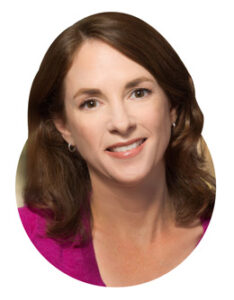
Dr. Hewitt will take over as ASCRS Government Relations Committee Chair this spring. Dr. Hewitt has been a member of ASCRS for more than 20 years, since finishing residency. She joined the Government Relations Committee in 2018 when the committee was expanding and noted her interest in how the Medicare reimbursement process works and how to make that better for patients and physicians.
Prior to getting involved on the committee, Dr. Hewitt said she only had peripheral knowledge of some of the issues by reading Washington Watch Weekly and other email communications sent to members. “I didn’t understand the behind the scenes of how the RUC committee works or how Medicare reimbursement works,” she said. “There are a lot of moving parts. Even now, I still have more to learn.”
Dr. Hewitt said ASCRS Government Relations is critical for keeping members informed of changes and new legislative and regulatory issues coming down the pike that affect the members and their practices.
Upon getting involved, Dr. Hewitt also began to attend the yearly Legislative Fly-In, which ASCRS participates in every July as a lobbying opportunity to meet with members of Congress on Capitol Hill. Involvement on Capitol Hill and forming relationships with legislators is key because when issues important to ophthalmology come up in legislation, it can be helpful to have an ally to turn to. Dr. Hewitt said that one of the committee’s goals is to get members who don’t normally meet with their legislators out in their districts to meet with them. “If we have a donation from eyePAC, we want to have them introduce themselves [to their legislators] so we can have more of those personal relationships,” she said, adding that, “it’s crucial to form these relationships not just with legislators in large cities but in suburban and rural areas as well.”
Dr. Hewitt also highlighted the importance of working with other medical and ophthalmological societies. “I think under Dr. Parekh’s leadership, our collaboration with other societies in ophthalmology and other medical societies has really taken shape,” she said, adding that committee members interface with various organizations, and it’s helpful to be able to divide and conquer different roles to make sure everything is covered. “We always want to have a representative at the table,” she said.
Additionally, Dr. Hewitt noted the recent addition of liaisons from ASCRS Clinical Committees sitting in on Government Relations Committee meetings to ensure there is communication throughout the ASCRS committees.
While government relations topics might not be things that people want to deal with on a daily basis, she stressed that these issues “affect all of us so much.” Particularly for smaller practices, even small reimbursement changes can have a big impact.
Dr. Hewitt is excited to join the ASCRS Executive Committee and said she thinks it’s important to have a representative for government relations in the leadership of the society. “I think it’s important because the government relations issues generally overlap with the concerns of the different committees and the Executive Committee members. Sometimes it might be a cataract issue, sometimes it might be glaucoma. I think it’s important that we have that seat on the Executive Committee so we can keep those issues at the forefront,” she said.
Dr. Hewitt said it’s great for all ASCRS members to be involved, but it’s especially important for leadership because their opinions and presence carry a lot of weight.
Looking ahead to her new role, Dr. Hewitt said that one of her goals is to fight for the fix of physician payments and stabilize the Medicare fee schedule to help avoid the constant 2–3% cuts every year. There has been some movement on this, and some legislators are becoming more aware of these issues. With many new legislators in Congress, it’s imperative to continue to educate them on issues important to ASCRS and ophthalmology. Dr. Hewitt noted that congressional members with backgrounds in medicine can often be allies, as they understand a lot of the background and how physician payment works. “Sometimes they don’t always agree with us on all of the issues, but they’re often helpful advocates,” she said.
Getting members involved and bolstering support for eyePAC is also important. “We want to make sure everyone knows where their money is going and how their donations to eyePAC impact their practices directly,” Dr. Hewitt said. “We want to get members in the mindset of being involved, especially when we need more voices out there fighting for our patients.”
article sidebar
Government Relations and eyePAC at the ASCRS Annual Meeting
The ASCRS Government Relations symposium at the ASCRS Annual Meeting will take place on the Main Stage on Sunday, April 27 from 10:30–11:30 a.m. and will feature William Flanary, MD, an ophthalmologist also known as “Dr. Glaucomflecken.” In his own unique style, Dr. Glaucomflecken will talk about the challenges facing the American healthcare system, the importance of advocacy, and how physicians can advocate for themselves and their patients.
This session will be followed by a VIP luncheon for eyePAC supporters with Dr. Glaucomflecken as the special guest. Attendees who donate $500 or more to eyePAC in 2025 are invited to attend this lunch, ask questions, and take pictures with Dr. Glaucomflecken. Contributions will be accepted at the door.
*Contributions to eyePAC are not tax deductible. Contributions to eyePAC can only be made by U.S. citizens or legal residents of the U.S.
Contact
Hewitt: suehewitt111@gmail.com
Parekh: parag2020@gmail.com