Refractive: I wish I had …
Summer 2024
by Liz Hillman
Editorial Co-Director
The future of corneal refractive surgery is in the works. EyeWorld checked in on various technologies in the pipeline with physicians in the know.
“There is constant innovation,” Y. Ralph Chu, MD, said of the field of corneal refractive surgery. He acknowledged that this innovation is a big investment for companies within the U.S. regulatory environment, but “it’s exciting to see that investment and that these things are coming close to fruition in the U.S.”
LASIK for hyperopia with astigmatism
Dr. Chu spoke about the work being done by Bausch + Lomb to perform LASIK for hyperopia with astigmatism with the Technolas Teneo laser platform. Dr. Chu, who is involved in Phase 3 trials for the technology in the U.S., said “the results look amazing with this technology.”
“Patients and surgeons are happy. The platform represents an advancement over current technology, so that’s exciting for us,” he said.
The Teneo laser received FDA approval for myopia and myopic astigmatic correction in January 2024, with the company stating in a press release that it has an eye tracker that operates at 1,740 Hz and a high-speed laser that operates at 50 Hz (about 1.2 seconds per diopter). It also has a small footprint.
Outside the U.S. where the Teneo is in use for treatment of myopia, hyperopia, astigmatism, and presbyopia, Dr. Chu said it has been shown to have a faster rate of ablation and a high-speed tracker. It remains under investigation in the U.S. for these other indications.
Dr. Chu said his hope for newer lasers incorporating hyperopia correction is that it will remain stable over time. “Hyperopia tends to regress over time, and in the higher ranges of farsightedness, some of the visual results in the past were limited. That’s why a lot of surgeons either held off on doing hyperopic treatments or looked toward lens replacement surgeries because of quality of vision,” he said. “With some of these newer platforms that are under investigation, we’re starting to see amazing results, even with patients with higher degrees of farsightedness that we weren’t necessarily treating with current platforms. There appears to be less regression, and there are amazing results.”
The Teneo is not the only laser moving LASIK forward. Dr. Chu also said that Carl Zeiss Meditec is conducting a trial that will introduce hyperopia and hyperopic astigmatism correction to its platform as well. Dr. Chu is also an investigator on the MEL 90 platform (Carl Zeiss Meditec) Phase 3 clinical trial.
“I think that in the U.S., the introduction of new lasers has been limited because of the incredible investment that it takes to get through the FDA regulatory process. … The fact that Bausch + Lomb and other companies are investing in the next generation is important,” Dr. Chu said. “It’s not just about lasers getting faster; there is so much that is continuously being learned by laser engineers and how to deliver the energy and laser profiles. I think the delivery systems do matter. I think the software changes matter, and you can see that in the patient results.”
Lenticule advancements
Source: Jod Mehta, MD
While Carl Zeiss Meditec has maintained the U.S. lenticule extraction market with SMILE (small incision lenticule extraction), other technologies for lenticule extraction for refractive results are in development.
Johnson & Johnson Vision launched its Elita Femtosecond Laser, which is approved in the U.S. to create LASIK flaps and is under investigation for myopia correction via lenticule extraction in a procedure called SILK (smooth incision lenticule keratomileusis). Edward Manche, MD, said this laser operates at 10 MHz and uses a very short pulse duration of approximately 150 nJ and low energy of less than 45 nJ.
“Lower energy levels have been associated with faster visual recovery in numerous peer-reviewed papers in the published literature. Line and spot spacing is approximately 1 micron on the Elita system,” Dr. Manche said. “This allows for contiguous spot placement, which results in a very smooth optical surface and allows ease of dissection of the lenticule.”
Dr. Manche also noted that the lenticules with the Elita laser are biconvex in shape with the refractive cut on both the anterior and posterior surface of the lenticule, a symmetry that he said may allow for a better fit after lenticule removal with fewer folds in Bowman’s layer.
Dr. Manche is part of the FDA clinical trial for the Elita system to perform lenticule extraction in the U.S. The first phase of the study enrolled 49 participants for feasibility. The second phase of the study, which began in the first quarter of this year, will enroll up to 400 participants at up to 10 U.S. sites. In the U.S., Dr. Manche said the company is targeting sphere up to –10 D and astigmatism up to –5 D.
Dr. Manche said the lenticule dissection with SILK is easier than the current SMILE procedure and should have an easier learning curve, which he thinks could help adoption.
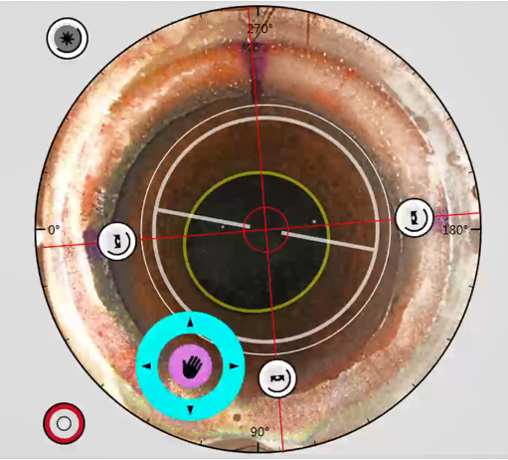
Jod Mehta, MD, spoke about clear incision lenticule extraction (CLEAR) being developed by Ziemer with its FEMTO LDV Z8 and the new FEMTO Z8 NEO laser. Dr. Mehta said the laser uses a low energy, and the applanation on the cornea is flat, as opposed to curved. The advantages of CLEAR are a little more customization and improved surgeon learning curve, he said.
The laser can create two incisions: one that opens in the anterior plane and the other that opens to the posterior plane. This will help with delineating the lenticule’s two planes, which Dr. Mehta said was among the toughest parts of the learning curve for surgeons new to the procedure. Once the surgeon is more experienced, he said they can switch to a single incision and delineating the two planes from there. The CLEAR procedure also is not dependent on patient cooperation for fixation. With the Ziemer laser, the surgeon can mark the cornea and move the system to that position, Dr. Mehta said.
“Those are the current advantages,” Dr. Mehta said. “Going forward one of the newer things that will be coming out is the ability to link the laser to the tomography unit so you can have a tomography-guided procedure. That’s designed to automate the centration and the torsional control straight away. The laser would automatically move the lenticule to the desired position.”
Dr. Manche and Dr. Mehta both said it’s an advantage for so many companies to be working on lenticule extraction capabilities.
“I think it is great to have additional options when performing keratorefractive lenticule extraction,” Dr. Manche said. “Carl Zeiss Meditec has done an incredible job developing SMILE. That being said, SMILE on the VisuMax femtosecond laser has been the only option available for keratorefractive lenticule extraction for more than a decade. Competition spurs innovation, and this should be true with keratorefractive lenticule extraction. We have seen technological advances with excimer laser technology such as wavefront-guided ablations, topography-guided ablations, tracking, and iris registration over the years. I think that competition should lead to more rapid advances in femtosecond lasers used for keratorefractive lenticule extraction surgery. We have already seen this happening with faster lasers, post-docking centration, and cyclotorsional adjustments.”
Editors’ note: This article is not intended to reflect the full breadth of innovation occurring in corneal refractive surgery. It focuses on select technologies as advised by the EyeWorld Refractive Editorial Board.
About the physicians
Y. Ralph Chu, MD
Founder and Medical Director
Chu Vision Institute
Bloomington, Minnesota
Edward Manche, MD
Director of Cornea and Refractive Surgery
Professor of Ophthalmology
Byers Eye Institute
Stanford University School of Medicine
Stanford, California
Jod Mehta, MD
Distinguished Professor of Clinical Innovation in Ophthalmology
Singapore National Eye Centre
Executive Director
Singapore Eye Research Institute
Singapore
Relevant disclosures
Chu: Bausch + Lomb, Carl Zeiss Meditec
Manche: Carl Zeiss Meditec, Johnson & Johnson Vision
Mehta: Carl Zeiss Meditec, Johnson & Johnson Vision, Zeimer
Contact
Chu: yrchu@chuvision.com
Manche: cornea@stanford.edu
Mehta: jodmehta@gmail.com