ASCRS News: 2022 ASCRS Annual Meeting recap
June 2022
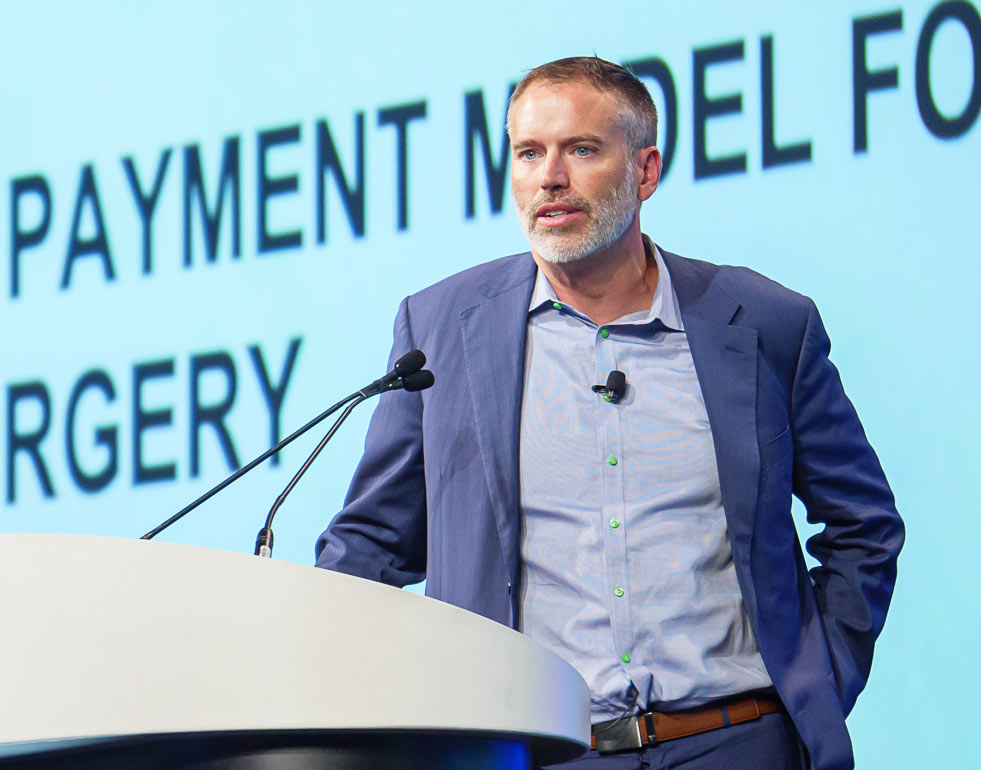
ASCRS, with input from ASCRS and ASOA members, has developed a draft alternative payment model (APM) for same-day, bilateral cataract surgery. The ASCRS Government Relations Committee session held during the 2022 ASCRS Annual Meeting featured a review of the model given by John Berdahl, MD, as well as an overview of the development of APMs and the importance of creating models that work for physicians and patients by Harold Miller. Additional presentations were given by Steve Arshinoff, MD, who discussed the evolution and benefits of same-day, bilateral cataract surgery, and Arthur Cummings, MD, who discussed new technology and algorithms as they relate to perceived IOL power issues with same-day, bilateral cataract surgery.
Dr. Arshinoff highlighted some of the benefits of ISBCS, including decreased cost for the patient, family, and surgical center; better for remote patients, disabled patients, and patients requiring difficult positioning; faster recovery of excellent normal binocular vision; reduced medical visits; and more.
Mr. Miller presented “Creating Alternative Payment Models That Work for Physicians and Patients.” The Medicare cost control strategy has been to cut provider fees for services. But the fee cuts primarily affect physicians, not hospitals.
Payer strategies benefit payers but harm patients and physicians, he said. The newest payer strategy is “value-based payment.” There are problems for payers in fee for service because if the physician does something unnecessary, Medicare and health plans must pay for it. Another problem for payers, but particularly for patients, is payment doesn’t ensure quality.
Problems also extend to physicians. If a physician reduces the rate of complications, does the surgery in a lower cost facility or uses lower cost prosthetics and equipment, the savings goes to the payers or the facility not the physician, he said.
Mr. Miller indicated the most common value-based payment is pay for performance (MIPS), which is based on fee for service. The other option is APMs. In the Medicare Access and CHIP Reauthorization Act of 2015 (MACRA), Congress encouraged the use of APMs in an effort to move physicians out of fee for service and into APMs. He added that physicians who participate in approved APMs at more than a minimum level are exempt from MIPS, receive a 5% lump sum bonus, receive a higher annual update in their fee for service revenues, and receive the benefits of participating in the APM. However, Mr. Miller noted CMS has only implemented a small number of APMs, none of which involve specialists.
What would a good alternative payment model look like? Instead of paying every healthcare provider separately, he suggested a single “bundled” payment to the full care team and let the team divide the payment based on costs. If the care team can reduce the cost of the procedure, it decides how to share the savings among the team members. The team could also offer a lower price to patients and payers.
Mr. Miller discussed how a warranty might fit as part of this payment model, which is not an outcome guarantee. Offering a warranty on care does not imply that you are guaranteeing a cure or a good outcome. It merely means that you are agreeing to correct avoidable problems at no additional charge. Most warranties are “limited warranties,” he added, in the sense that they agree to pay to correct some problems but not all.
From a surgeon’s perspective, with fee for service, if you have a lower-than-average rate of complications, your payment will be lower. The notion of a warranty, Mr. Miller said, flips this. Surgeons make more money for successful procedures and make less money when complications occur. Physician-designed APMs can help solve fee for service problems.
Source: ASCRS
Dr. Berdahl discussed the opportunities that were identified as priorities for a potential APM in cataract surgery by the ASCRS/ASOA task force, particularly: performing more procedures outside of HOPD (ASC or office), reducing unnecessary non-ophthalmic preoperative testing, performing same-day, bilateral surgery, and using intraoperative medications to replace postoperative medications.
The ASCRS draft APM includes a bundled payment for same-day, bilateral cataract surgery to appropriate patients. The surgeon, anesthesiologist, and facility establish a Cataract Surgery Team that accepts a single, bundled payment, which is then divided among team members. The model includes a warranty for complications, whereby the payment covers the cost of surgery, including the anesthesia and facility fee, as well as complications that most commonly occur. Since the payment is fixed, Medicare will not pay more if complications occur, and profits would be higher for a surgery team with low complications. The model excludes services, such as postoperative medications, intraoperative medications, anything beyond 90 days, and non-ophthalmic services. This is limited to uncomplicated cataract surgery, 66984, and includes a limitation on financial risk. Surgeons who have low rates of post-surgical complications and good visual outcomes receive higher net payments than they currently receive, and if the model qualifies as an advanced alternative payment model, the team could receive a 5% bonus.
Source: ASCRS
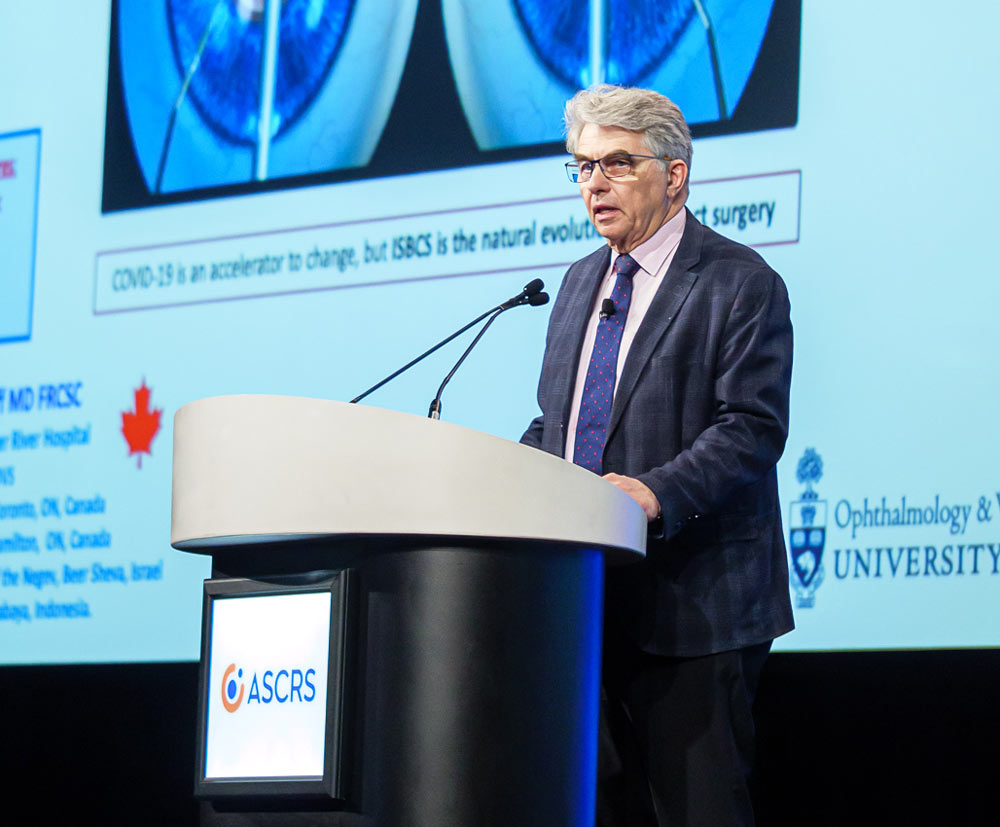
Dr. Arshinoff discussed the history and evolution of immediate sequential bilateral cataract surgery (ISBCS). He noted that intracameral antibiotics dramatically reduce the incidence of postoperative endophthalmitis. Dr. Arshinoff did his first elective ISBCS in 1996.
He cited a paper he and colleagues published in the Journal of Cataract & Refractive Surgery in December 2021 reviewing cases of bilateral simultaneous postoperative endophthalmitis over the past 50 years and said there have only been nine cases during this time. Looking at each of these endophthalmitis cases in detail, five of them seriously breached protocols of how to do simultaneous surgery safely. Some used the same instruments in both eyes, some didn’t autoclave for the second eye. You must treat each eye as a separate surgery. The other four cases seemed to do reasonably well, Dr. Arshinoff said, but also still had some slight differentiations in principles of doing immediate sequential surgery. The risk of bilateral endophthalmitis is not very high. Using an intracameral antibiotic increases safety, accuracy, and efficacy and is the most effective way to prevent endophthalmitis currently, Dr. Arshinoff said.
During his presentation, Dr. Arshinoff also highlighted some of the benefits of ISBCS, and these included decreased cost for the patient, family, and surgical center; patient and family preference; better for remote patients, disabled patients, and patients requiring difficult positioning; faster recovery of excellent normal binocular vision; no anisometropia, no loss of stereo, reduced risk of falls, amblyopic eyes; quicker adaptation to MFIOLs; and reduced medical visits.
In his presentation, Dr. Cummings addressed the concern of needing to have refractive outcomes from the first eye in order to effectively complete the second eye surgery. But he said that modern optical biometry measurements offer excellent results, and other improvements to surgical techniques have helped improve outcomes, as have formulas incorporating artificial intelligence (AI).
Optical biometers increase the success rate of axial length measurements, Dr. Cummings said. He also highlighted other revolutions in IOL power calculations, specifically in AI, which he said can help improve accuracy in formulas. Dr. Cummings shared information on several specific formulas: the RBF formula, Hoffer QST, Kane formula, Pearl DGS, and Ladas Super Formula.
Biometry today using AI allows for optimization, which can ultimately lead to a self-calibrating biometer with your surgical technique. He also mentioned the Light Adjustable Lens (RxSight) and other tunable/adjustable options that could be available in the future.
Dr. Cummings concluded by saying that IOL power prediction need not be one of the barriers to same-day, bilateral cataract surgery.
About the speakers
Steve Arshinoff, MD
Associate Professor
University of Toronto
Toronto, Canada
John Berdahl, MD
Vance Thompson Vision
Sioux Falls, South Dakota
Arthur Cummings, MD
Wellington Eye Clinic
Dublin, Ireland
Harold Miller
President and CEO
Center for Healthcare Quality and Payment Reform (CHQPR)
Pittsburgh, Pennsylvania