In Other News
November 2012
by Matt Young
EyeWorld Contributing Writer
Iconic movie of the ‘80s has eye surgeon to thank for getting off the ground

One of the most famous movies of the 1980s, “Top Gun,” never claimed to be based on a true story. The fact is, it’s based on a series of true stories, many of which originated with someone in ophthalmology’s own backyard: Steven C. Schallhorn, M.D., who was interviewed by the screenplay’s co-writer, Jack Epps Jr., in the early 80s.
“He wanted to talk to several [TOPGUN] instructors,” said Dr. Schallhorn, now a retired Navy captain, and chairman, Optical Express International Medical Advisory Board. “I was one of the instructors he talked to. At the time, I was a bit disappointed because taking the time for an extensive interview means you’re not flying.”
Some in the close-knit eye community might have heard about Dr. Schallhorn’s Navy fighter pilot experience before he became an ophthalmologist. Fewer probably know he was in the United States Navy Fighter Weapons School, more commonly known as TOPGUN.
But to have enjoyed the movie as a quintessential piece of cinema Americana and then realize which of those scenes came directly from Dr. Schallhorn’s experience makes one think, “Wow.”

Mind you, it’s only a fraction of the “wow” Dr. Schallhorn felt when he was flying in an F-14 Tomcat at 1,000 miles per hour on full afterburner. As he told his local newspaper some years back, it was “totally cool.”
Still, the next time you make some popcorn and pop in a DVD of “Top Gun,” feel free to turn to your spouse or kids and relate the following about your colleague in ophthalmology, Dr. Schallhorn.
- Near the beginning of the movie, “Maverick,” played by actor Tom Cruise, is on a Navy ship in the Indian Ocean when he gets orders to attend the TOPGUN school at NAS Miramar. Compare that with:
“I was in the Indian Ocean on the USS Ranger and got a message saying that I was selected to be a TOPGUN instructor,” Dr. Schallhorn said.
- In the opening sequence, Maverick shepherds his wingman, very shaken-up “Cougar,” back onto the aircraft carrier at night. After that, Cougar turns in his wings and retires.
“There was a guy in my squadron who had a very difficult time landing on an aircraft carrier at night,” Dr. Schallhorn confirmed. “He turned in his wings and said, ‘I can’t fly anymore.’ Flying onto an aircraft carrier is strenuous, being very difficult mentally and physically, especially at night.”
- Much later in the movie, Maverick and rival “Iceman” are both chasing another pilot, “Jester.” Iceman finally gives way to Maverick, who then flies through the jet wash of Iceman’s plane and suffers a flameout of his aircraft engines. Maverick’s plane enters what’s known as a flat spin, and he and his co-pilot have to eject from the aircraft. Maverick’s co-pilot “Goose” ejects into the aircraft canopy before it is fully jettisoned, breaking his neck and dying.
Dr. Schallhorn said during his interview for the movie, he explained how a flat spin could actually happen with an F-14 and that it complicates ejection.
“The aerodynamics of the F-14 flat spin affect the timing of the ejection sequence,” Dr. Schallhorn said. “The canopy is jettisoned, followed by the ejection of the back seat, followed by the front seat. In a flat spin, the canopy, when it ejects, bobbles for an extra few hundredths of a second above the aircraft. That upsets the carefully engineered sequence because the guy in the back could then hit the canopy. That sequence made it into the movie.”
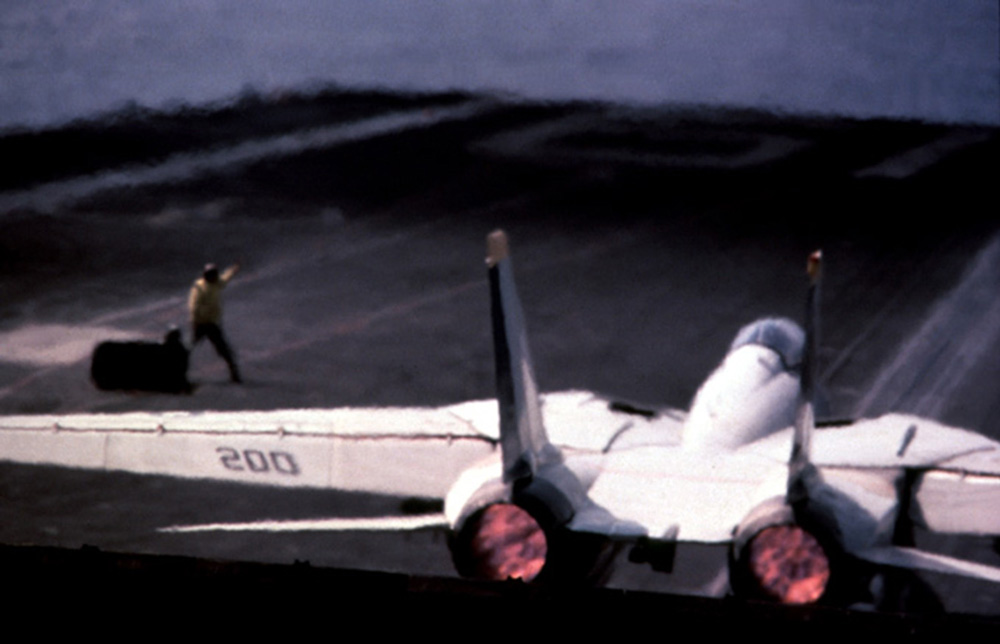
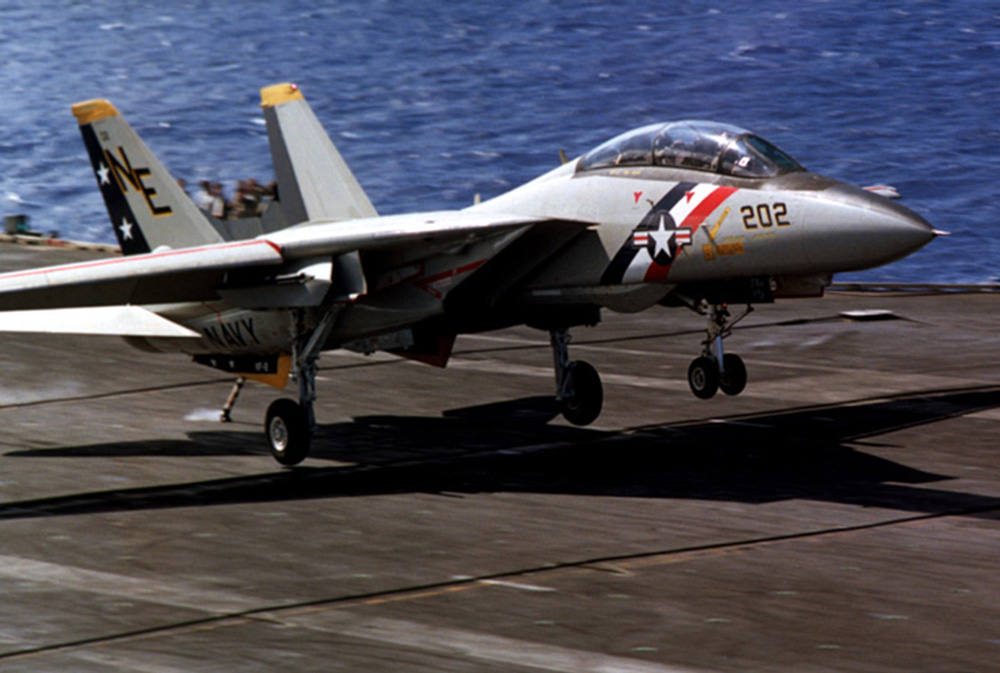
- Also in the movie, Maverick competes for a TOPGUN trophy, which he wins at the end of the film. In real life, Dr. Schallhorn won the semi-annual air-to-air combat exercise fighter derby in 1981 with the highest score ever recorded.
- That all happened at the tactical air combat training range outside Yuma, Ariz.
“It was the best, state-of-the-art training facility when I was flying,” Dr. Schallhorn said. “Right after an air-to-air combat training flight we would go down to the debrief area and replay the flight visually in computer simulated 3D. ‘What were you thinking about here?’ ‘What would you do next time in this and that scenario?’ The movie was filmed in the actual debrief room [with Maverick’s romantic interest and civilian instructor ‘Charlie’ Blackwood].”
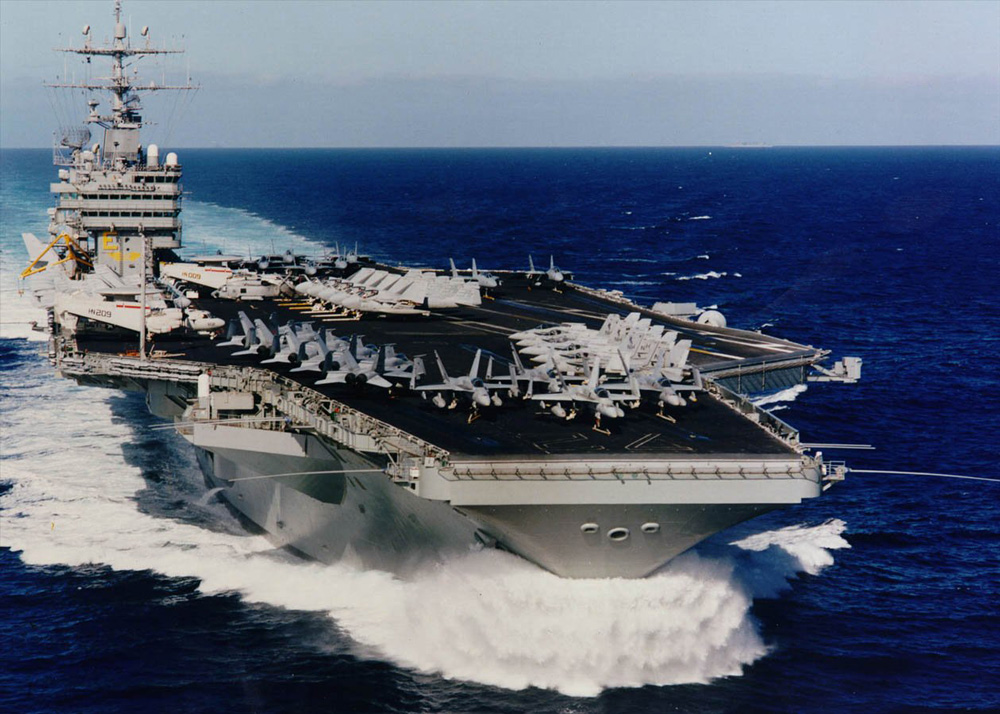
- Speaking of romance, what does Dr. Schallhorn have to say about one of the most famous scenes in the movie, where Maverick sings “You’ve Lost That Lovin’ Feelin’“ to Charlie at an officers’ club?
Source (all): Steven C. Schallhorn, M.D.
Well, he said, there was a Miramar Officers’ Club.
“Wednesday night at Miramar Officers’ Club was the place to be in San Diego,” Dr. Schallhorn said. “I haven’t been over there in many years. I did meet my wife at an officers’ club. I was with a fellow aviator during flight training. I’m not sure what song was playing, but I didn’t grab a mic and sing to her.”
Close enough, Dr. Schallhorn.
Despite the similarities between Dr. Schallhorn’s experience and what unfolded in the movie, he maintains that characters were based on composites of pilots. He wasn’t Maverick, nor was he “Viper,” the chief instructor.
Dr. Schallhorn’s aviator call sign was actually “Legs.” Why?
“That’s something I only share over a beer at the Miramar Officers’ Club,” which has since become a Marine Corps Officers’ Club.
Dr. Schallhorn being a Navy guy, I guess we’ll never know.
Editors’ note
Dr. Schallhorn has no financial interests related to this article.
Contact information
Schallhorn: scschallhorn@yahoo.com